Africa is the only region in the world where the number of stunted children has continued to rise – Joint Malnutrition Estimates 2025.
The iNews Times reports that a new joint report by the United Nations Children’s Fund (UNICEF), the World Health Organisation (WHO), and the World Bank has raised urgent concerns over the rising state of child malnutrition in Africa.
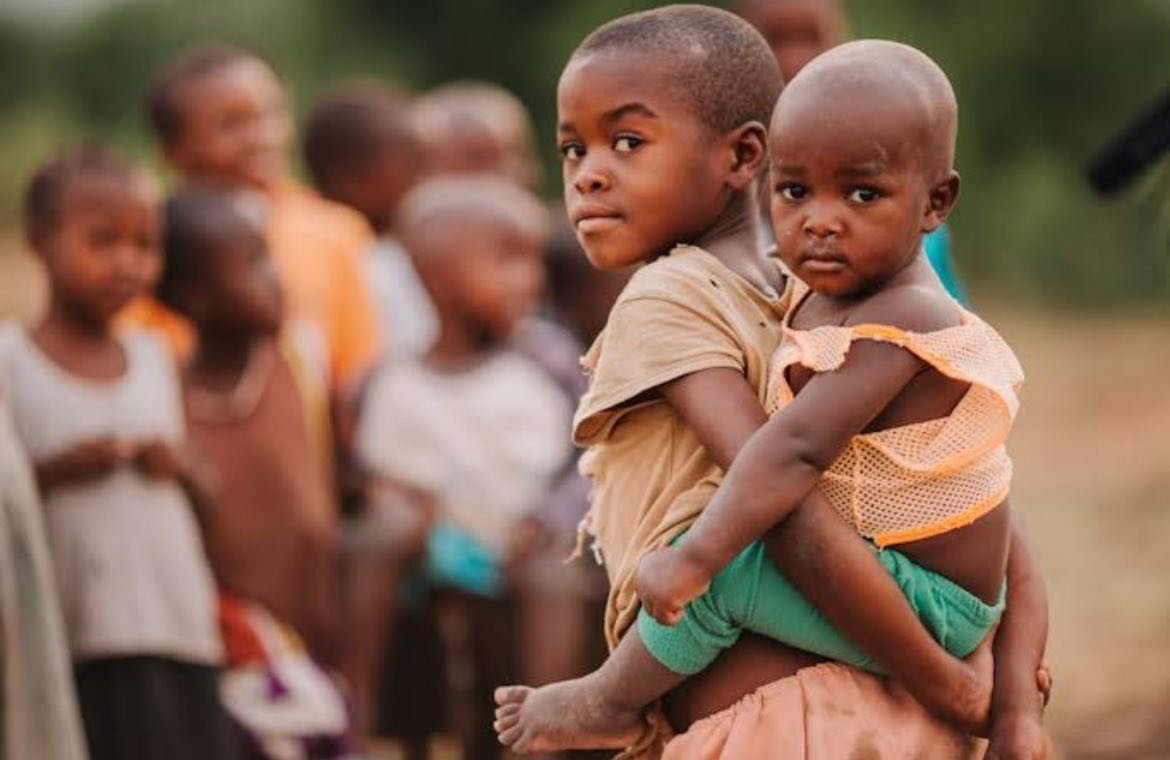
The report reveals that many African children are suffering from malnutrition and stunted growth, even as other regions record significant progress in combating child undernutrition.
According to the Joint Malnutrition Estimates 2025 Edition, released on Thursday, Africa is the only region in the world where the number of stunted children has continued to rise over the past decade. In 2012, the continent had 61.7 million stunted children. That number has now grown to 64.8 million, defying the global trend of decline.
Stunting, a condition defined as low height for age, is a result of chronic undernutrition, frequent infections, and inadequate care in early childhood.
Beyond physical appearance, stunting severely affects brain development, learning capacity, and future earnings, effectively dimming the prospects of an entire generation before they can reach their potential.
The report notes that good nutrition is essential for children to survive, grow, learn, and thrive. However, malnutrition remains a persistent barrier, with tens of millions of children worldwide still trapped in cycles of poor health and limited opportunity.
Globally, an estimated 150.2 million children under the age of five are stunted. Another 42.8 million suffer from wasting, the most life-threatening form of malnutrition, and 35.5 million are classified as overweight. Despite decades of interventions and global commitments, the report warns that progress on all fronts is either slowing or stagnant.
Asia and Africa account for the vast majority of children suffering from stunting, with Asia representing 51 percent of the total and Africa 43 percent. Yet only Africa has seen its numbers grow in the past decade – a troubling development that underscores deep-rooted systemic challenges.
The report warns that less than one-third of countries worldwide are currently on track to meet the 2030 target of halving stunting among children. Only 17 percent are progressing toward reducing childhood overweight. Meanwhile, data gaps in many countries make it difficult to assess the full scope of wasting, with over one-third of countries lacking the information necessary for proper evaluation.
The findings also highlight the world’s failure to meet the 2025 World Health Assembly global nutrition targets, as well as the SDG 2.2 goal of ending all forms of malnutrition by 2030.
The authors call for more ambitious, cross-sectoral efforts to tackle the crisis from health and education to agriculture and social protection, arguing that stronger political will and sustained investment are urgently required.
They also stressed that robust and regular data collection is critical for tracking progress and designing effective interventions. Without timely and reliable data, countries remain ill-equipped to measure the impact of their programs or course-correct where necessary.
As many African children continue to suffer from malnutrition and stunted growth, the report issues a clear warning: unless immediate and coordinated action is taken, the world risks condemning millions of children to a life of disadvantage, and nations to decades of lost potential.