…says the Post-Treatment Surveillance for River Blindness and Elephantiasis aligns with the WHO NTD Roadmap 2021–2030
Awka, Nigeria – The iNews Times reports that no fewer than 259 villages across four local government areas of Anambra State have commenced Post-Treatment Surveillance for River Blindness and Elephantiasis, as part of efforts to eliminate Neglected Tropical Diseases (NTDs) in the state.
The Anambra State Commissioner for Health, Dr. Afam Obidike, disclosed this during a press briefing in Awka on NTD interventions, identifying the affected local government areas as Ayamelum, Awka North, Orumba North, and Anambra East.
Dr. Obidike described Neglected Tropical Diseases as a group of preventable and treatable illnesses that disproportionately affect the world’s poorest populations, noting that about 1.5 billion people globally live with one or more NTDs.
“NTDs are a group of 21 infectious diseases that primarily affect poor and marginalized populations in tropical and subtropical regions and often receive less attention and funding than major diseases such as HIV, tuberculosis, and malaria,” he said.
He explained that the Post-Treatment Surveillance for River Blindness and Elephantiasis aligns with the World Health Organisation (WHO) NTD Roadmap 2021–2030 and the Sustainable Development Goal 3, which targets the elimination of NTD epidemics.
According to the WHO, Lymphatic Filariasis, which causes Elephantiasis and Hydrocele, affects about 25 million men with Hydrocele and over 15 million people with lymphoedema worldwide.
In Anambra State, the NTD programme covers four endemic Preventive Chemotherapy diseases, including Onchocerciasis (River Blindness), Schistosomiasis, Soil-Transmitted Helminthiasis, and Lymphatic Filariasis, the disease responsible for Elephantiasis and Hydrocele.
Represented at the event by the Director of Public Health and Disease Control, Dr. Afam Anaeme, the Health Commissioner said the state, in partnership with the Carter Centre, Sightsavers, and the Federal Ministry of Health, had conducted free Hydrocele surgeries, benefiting 176 men as part of elimination efforts.
He noted that combating NTDs is crucial to global security, stressing that protecting vulnerable populations from these diseases strengthens public health systems and restores dignity to affected individuals.
Dr. Obidike urged residents to report cases of Elephantiasis, Hydrocele, dog bites, snakebites, Onchocerciasis nodules, Yaws, Buruli Ulcer, leprosy, Guinea Worm disease, and bloody urine to the nearest health facility, adding that Elephantiasis is curable at the early lymphoedema stage.
He also encouraged residents to sleep under long-lasting insecticide-treated mosquito nets to prevent mosquito-borne transmission of Lymphatic Filariasis and malaria.
Speaking on cross-border transmission, the State NTD Coordinator, Dr. Emmanuel Obikwelu, said drugs such as Mectizan and Albendazole were distributed to border communities with neighbouring states, including Kogi and Enugu, to curb disease spread.
“We have 14 centres in Anambra where Elephantiasis is treated free of charge through the Carter Centre. Patients also receive mental health support to address depression associated with the disease,” Obikwelu said.
Also speaking, the Programme Officer of the Carter Centre in Anambra, Mrs. Attamah Egeonu, commended the state government for its collaboration, describing the progress recorded as a product of collective effort.
She called on residents to serve as NTD ambassadors, stressing that sustained community participation is key to achieving elimination.
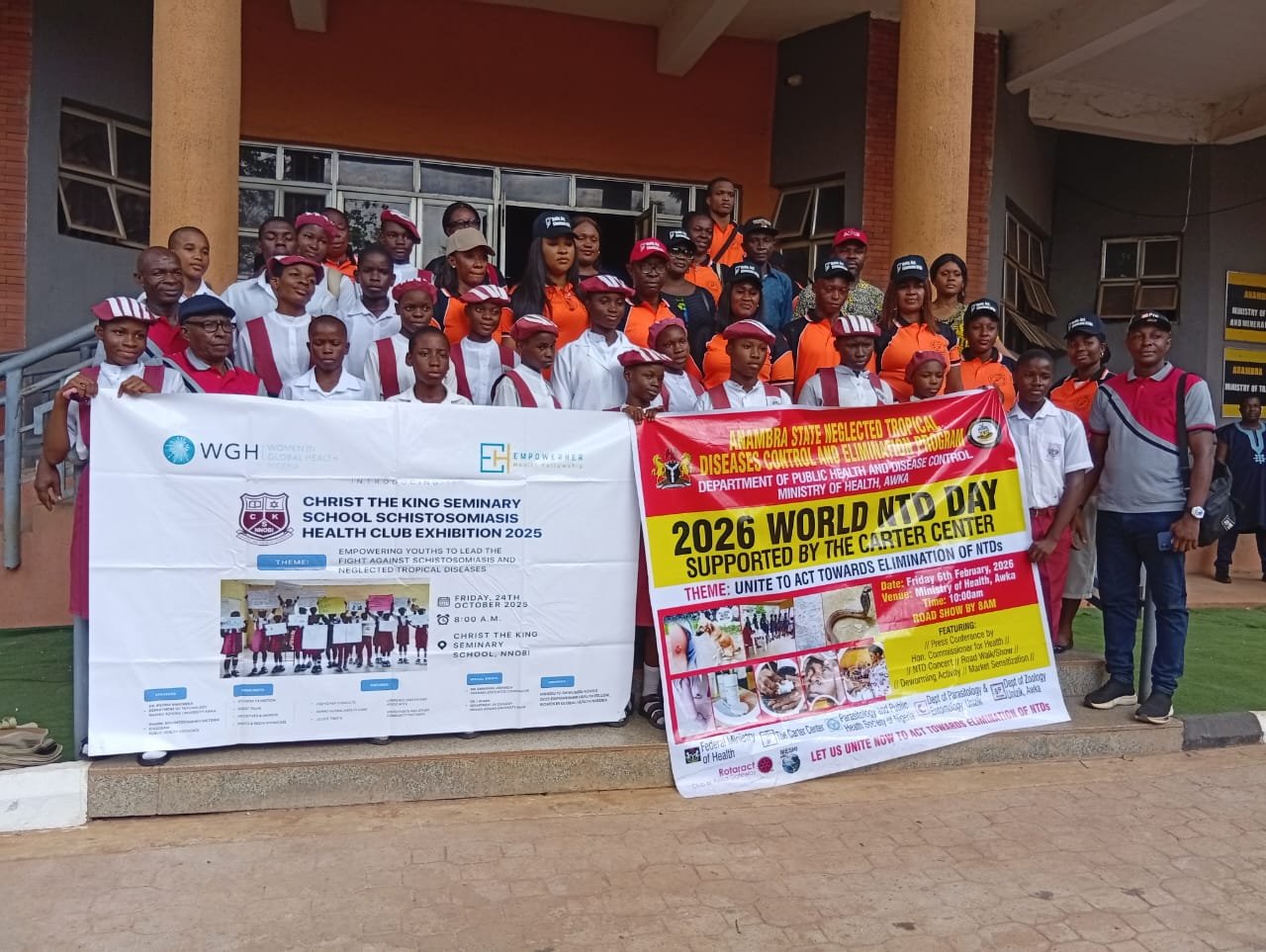
Goodwill messages were delivered by representatives of ASUBEB, Post-Primary Schools Service Commission, Entomological Society of Nigeria, UNIZIK State Technical Advisory Committee, Christ the King Seminary Nnobi, Malaria Consortium, and the Department of Planning, Research and Statistics (DPRS).
The event concluded with a call to action against Neglected Tropical Diseases, highlighted by a drama presentation by students of Christ the King Seminary, Nnobi, on the causes and prevention of Schistosomiasis.