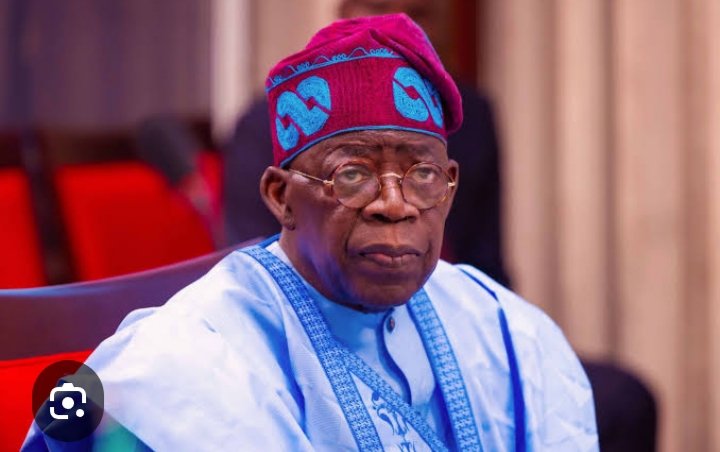
…Tinubu said that with the expansion of federalism, local governments now receive their allocations directly and should therefore be held accountable for how the funds are used.
ABUJA, NIGERIA- The iNews Times | President Bola Tinubu has urged media executives to direct the same level of scrutiny they apply to his administration to state governments and local councils, noting that they now enjoy greater financial autonomy under his government’s federalism reforms.
Tinubu made the call on Friday night while hosting media proprietors and executives at the Presidential Villa in Abuja.
Tinubu said that with the expansion of federalism, local governments now receive their allocations directly and should therefore be held accountable for how the funds are used.
“We’ve opened up the principle of federalism to the extent that local governments are now getting their money. But how they use it is in your hands, so don’t bombard me alone. Look at local government too, and equally, the sub-national,” he said.
The President also claimed that no state currently relies on borrowing to pay workers’ salaries, attributing the situation to reforms introduced by his administration.
“Today, there is no state that is borrowing to pay salaries of employees. Yes, we can complain it’s not enough. We can complain we are not where we should be, but we have to manage what we have to sustain today, survive tomorrow and make progress,” he said.
For years, many of Nigeria’s 36 states struggled to meet salary obligations and often depended on bailouts and loans from the Federal Government, especially during periods of declining oil revenue and economic downturns.
Tinubu said allocations to states and local governments had increased due to higher crude oil production, improved revenue collection by the Federal Inland Revenue Service, now known as the National Revenue Service, and the direct payment of local government funds following the Supreme Court ruling on local government autonomy in Nigeria that granted councils fiscal autonomy.
He thanked media proprietors for their persistent criticism, saying it pushed him to perform better despite the intense scrutiny during the early days of his administration.
“Thank you for inspiring me and challenging me in critical moments of my life. If I looked only at the barrage of negative comments instead of the positive aspects of the assignment, I shouldn’t be standing here today,” he said.
Tinubu also revealed that he reads newspapers daily, describing the habit as “an addiction.”
“There is no morning that I leave my house without going through the newspapers. I read all of you, maybe not in full detail but at least the headlines that catch my attention,” he said.
He admitted that he was initially “a little stubborn” at the start of his administration due to heavy criticism from newspapers and opinion leaders.
The President defended key policy decisions, including the removal of petrol subsidy in May 2023, which drew widespread backlash at the time.
According to him, decisive leadership was necessary to address the country’s economic challenges.
“At that time, we had to confront the subsidy. Nigeria was cheating on the edge of bankruptcy. Having asked for the job and getting it, I couldn’t look back other than make corrections along the way, save the nation and bring it back from the brink,” he said.
Tinubu maintained that Nigeria had since moved away from economic collapse, pointing to improvements in foreign exchange management and efforts to curb inflation.
He also dismissed the idea of labelling critics as enemies, describing them instead as contributors to national development.
“I don’t categorise anybody as arch-critical. I see them as people who can help build the nation. No matter how critical an opinion is, they still want the good of this country,” he said.
The President said he accepts full responsibility for the outcomes of his policies, stressing that he sought the mandate and must deliver results.
He also acknowledged the difficult operating environment facing media organisations, particularly challenges related to funding during tough economic conditions.
“I know you are challenged. It’s very tough out there. The source and application of funds are almost impossible in times like this, and none of us is insulated from global developments,” he said.
Tinubu added that tariffs affecting the media industry were discussed earlier on Friday and promised to review the issue where necessary.
“I cannot report back here whether I took action in the area that affected you or not, but if I missed that, I will go back to rectify it,” he said.
President Tinubu commended media proprietors for introducing innovations despite economic difficulties and pledged to continue working with dedication to improve the country.
“This job I will continue to do with patriotic dedication to improve Nigeria. It is a collective responsibility, you, myself and those we assign,” he said.
The Iftar dinner, the last for the 2026 Ramadan season, brought together media executives from across print, television, radio and digital platforms.


![Fulani Herders Cut Plateau Farmer’s Hand After Dispute Over Fallen Cow [Photo]](https://inewstimes.com/wp-content/uploads/2026/09/Cattle-Grazing-350x250.webp)