…the Strait of Hormuz is one of the world’s most strategically important maritime chokepoints.
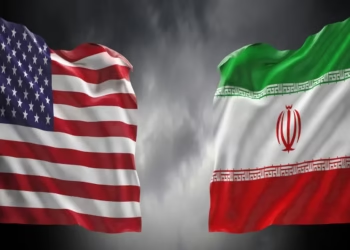
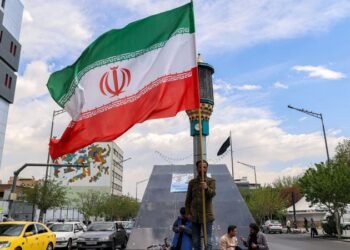
TEHRAN, IRAN — The iNews Times reports that Strait of Hormuz tensions have sharply escalated after senior Iranian official Mohsen Rezaei warned that Iran could sink United States vessels operating in the strategic waterway if Washington continues what Tehran describes as a maritime blockade.
Rezaei, a former commander-in-chief of Iran’s Islamic Revolutionary Guard Corps (IRGC) and newly appointed military adviser to Supreme Leader Mojtaba Khamenei, issued the warning during a televised broadcast. His remarks come amid rising hostilities between Tehran and Washington over access to the Gulf’s critical shipping lanes.
US Blockade Sparks Fresh Strait of Hormuz Tensions
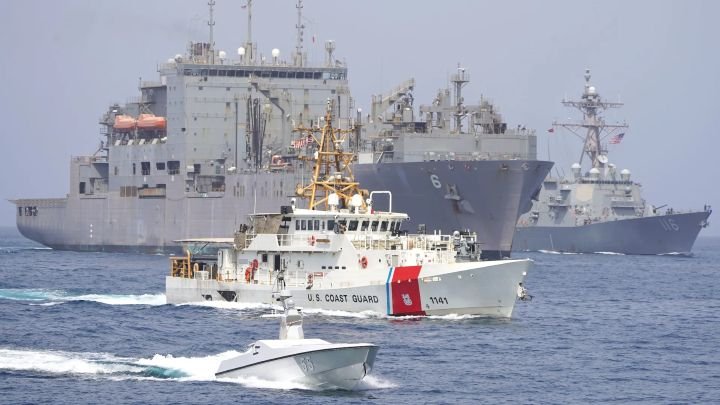
The latest Strait of Hormuz tensions follow the implementation of a United States blockade on vessels utilising Iranian ports in the Gulf. The blockade reportedly began on Monday evening and was introduced as a response to Iran’s near-total closure of the Strait of Hormuz since the onset of the current conflict.
The Strait of Hormuz is one of the world’s most strategically important maritime chokepoints. A significant percentage of global oil shipments pass through the narrow waterway, making any disruption a matter of global economic concern.
By restricting ship movements linked to Iranian ports, Washington signaled a tougher maritime posture in the region, a move that Tehran views as unlawful interference.
Iran Issues Strong Warning to Washington
Speaking on state television, Rezaei declared that the United States has no legitimate authority to “police” the Strait of Hormuz.
“[Donald] Trump aims to act as the police of the Strait of Hormuz, but we will not yield to our ten conditions during the brief negotiations regarding a maritime blockade,” he said, according to reports by the semi-official Tasnim news agency.
Rezaei warned that Iranian launch systems were already positioned toward vessels in the waterway.
“Our launchers are currently aimed at the ships, and we will sink them all,” he stated, further intensifying Strait of Hormuz tensions.
He added that prolonging any ceasefire arrangement would not serve Iran’s interests unless its stated conditions were fully met and formally presented before Iran’s security council.
Threats of Hostage-Taking
In one of the most controversial parts of his remarks, Rezaei threatened that American soldiers landing on Iranian soil could be taken hostage, with Tehran demanding one billion dollars per captive.
Such statements are likely to draw strong reactions from Washington and the broader international community, particularly given the historical sensitivity of hostage crises involving Iran and the United States.
Security analysts say rhetoric of this nature significantly heightens Strait of Hormuz tensions, especially in a region already marked by military deployments and naval patrols.
CENTCOM Response and Conflicting Ship Data
The United States Central Command (CENTCOM) reported that within the first 48 hours of the blockade, it prevented 10 vessels from departing Iranian ports.
However, ship-tracking data reviewed by international observers indicated that at least three vessels departing Iranian ports successfully navigated the Strait of Hormuz. Some ships reportedly reversed course later, according to reporting cited by The Guardian UK.
The discrepancy highlights the fluid and uncertain situation in the Gulf, where military enforcement measures and commercial shipping movements intersect.
Strategic Importance of the Strait
The Strait of Hormuz links the Persian Gulf to the Arabian Sea and the wider Indian Ocean. Because of its narrow width and heavy traffic, it has long been considered one of the most sensitive flashpoints in global geopolitics.
Even minor disruptions can lead to spikes in global oil prices and shipping insurance costs. For this reason, escalating Strait of Hormuz tensions are closely monitored by energy markets and international security bodies.
Iran has previously signaled that it could restrict access to the waterway in response to Western sanctions or military pressure. Meanwhile, the United States maintains that ensuring freedom of navigation is essential for global trade stability.
Ceasefire Conditions and Diplomatic Uncertainty
Rezaei also questioned the value of extending any ceasefire without full compliance with Iran’s demands.
“A ceasefire will only hold significance when all our agreements and rights have been fulfilled,” he said, emphasizing that Tehran seeks formal recognition of its conditions before easing its posture.
Diplomatic observers note that negotiations over maritime security are complex and often conducted through indirect channels. Whether the current Strait of Hormuz tensions will escalate further or move toward de-escalation remains uncertain.
Global Implications
The renewed Strait of Hormuz tensions carry implications beyond the immediate US–Iran relationship. Gulf states, international oil markets, and global shipping operators all have stakes in ensuring uninterrupted passage through the corridor.
Any sustained confrontation could trigger broader regional instability, particularly if naval encounters or miscalculations occur.
The iNews Times will continue to monitor developments surrounding the Strait of Hormuz tensions, including diplomatic responses, military movements, and international reactions.
As events unfold in one of the world’s most critical maritime corridors, The iNews Times remains committed to delivering accurate, timely, and in-depth global security coverage.