…links the current Nigeria fuel price hike to geopolitical tensions in the Middle East.
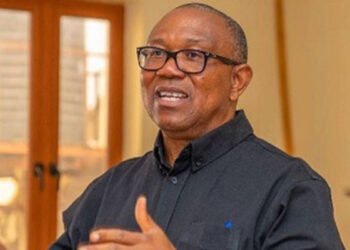
Awka, Nigeria — The iNews Times | The ongoing Nigeria fuel price hike has been blamed on poor national planning and the country’s failure to establish strategic petroleum reserves, according to presidential hopeful of the African Democratic Congress (ADC), Mr. Peter Obi.
In a statement shared on his social media platform, Obi said the current Nigeria fuel price hike reflects the country’s vulnerability to global economic shocks, particularly developments in the international oil market.
He explained that the recent escalation of tensions arising from the conflict involving Iran, the United States and Israel has triggered a surge in global oil prices, which quickly translated into higher fuel prices across Nigeria.
According to him, the rapid increase in petrol and diesel prices demonstrates how exposed Nigeria’s economy remains to external disruptions.
Obi noted that petrol, which sold for less than ₦1,000 per litre just a few weeks ago, is now selling for more than ₦1,200 per litre in many parts of the country.
He further observed that diesel prices have also surged significantly, rising from below ₦1,000 per litre to over ₦1,500 per litre within the same period.
The former Anambra State governor said the development highlights the speed with which global events can trigger a Nigeria fuel price hike, particularly in a country that lacks economic buffers to cushion such shocks.
Lack of Strategic Petroleum Reserves
Obi explained that many countries around the world, regardless of whether they are oil-producing nations or not, maintain strategic petroleum reserves to protect their economies during disruptions in global oil supply.
Such reserves, he noted, are often released when global supply challenges arise, helping to stabilise local fuel availability and reduce the impact of sudden price increases.
However, he lamented that Nigeria does not currently maintain such reserves, leaving the country exposed whenever international oil prices fluctuate.
“Nigeria, however, does not have such reserves, meaning the impact of global market changes is felt almost immediately,” Obi said.
He stressed that the absence of strategic petroleum reserves is one of the major structural weaknesses contributing to the recurring Nigeria fuel price hike.
External Conflicts Driving Local Fuel Prices
Obi also linked the current Nigeria fuel price hike to geopolitical tensions in the Middle East, particularly the conflict involving Iran, the United States and Israel.
According to him, disruptions or uncertainty in that region often trigger volatility in global oil markets, since the Middle East remains a critical hub for global energy production.
When international oil prices rise due to such conflicts, Nigeria quickly experiences corresponding increases in the cost of petrol and diesel.
This, he said, occurs because the country remains heavily dependent on the global market for refined petroleum products.
Broader Problem of National Planning
Beyond the immediate impact of global tensions, Obi argued that the situation reflects a deeper issue of inadequate national planning.
He said countries that anticipate future economic challenges usually establish safeguards to protect their economies, while those that fail to plan often struggle during periods of crisis.
According to him, proper economic planning would have ensured that Nigeria created buffers such as strategic petroleum reserves and stronger domestic refining capacity to mitigate the impact of global oil market disruptions.
The absence of these safeguards, he warned, means Nigeria will continue to experience recurring Nigeria fuel price hike episodes whenever global energy markets become unstable.
Lessons for Economic Policy
Obi concluded by emphasising the importance of long-term planning in national development and economic stability.
He said governments that invest in strategic planning are better positioned to shield their citizens from external economic shocks.
For Nigeria, he suggested, the recurring Nigeria fuel price hike should serve as a reminder of the need for stronger economic planning and energy security strategies.
“The lesson remains clear,” Obi stated.
“When a country fails to plan, it has effectively planned to fail.”