…the US-Iran talks is heightened by the impending expiration of the ceasefire.
WASHINGTON, UNITED STATES — The iNews Times reports that US-Iran talks are set to resume in Islamabad, Pakistan, with Vice President JD Vance leading the American delegation, despite earlier remarks from President Donald Trump suggesting he would not make the trip.
The renewed US-Iran talks come at a critical moment, as a fragile two-week ceasefire between Washington and Tehran approaches its expiration date. The diplomatic push follows escalating tensions in the Middle East, particularly around the strategic Strait of Hormuz.
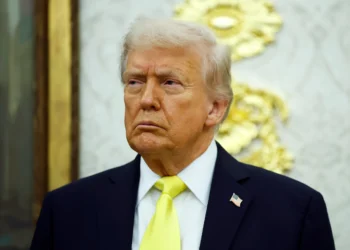
Earlier Sunday, President Trump announced he was dispatching negotiators to Islamabad for fresh meetings with Iranian representatives aimed at ending the latest wave of hostilities. However, he initially indicated that Vice President Vance would not attend due to security concerns.
“It’s only because of security,” Trump told ABC News. “JD’s great.”
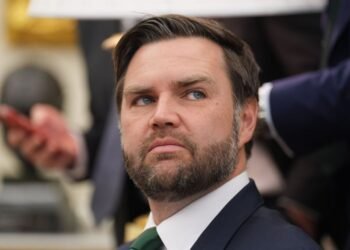
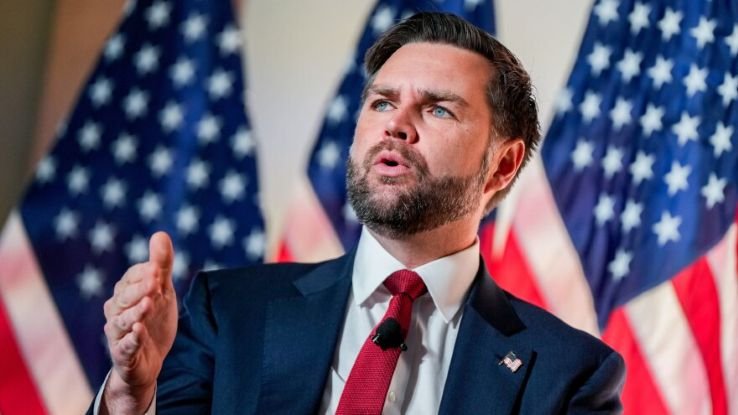
But within hours, the White House clarified that Vance would, in fact, lead the US delegation, alongside special envoy Steve Witkoff and Trump’s son-in-law, Jared Kushner. The trio had previously participated in the last round of US-Iran talks held on April 11–12 in Islamabad, which ended without a formal agreement.
The urgency surrounding the new US-Iran talks is heightened by the impending expiration of the ceasefire, scheduled to end on Wednesday. The agreement had temporarily halted direct hostilities, but recent incidents have placed renewed strain on the truce.
President Trump accused Iran of a “Total Violation” of the ceasefire following reported attacks in the Strait of Hormuz on Saturday. The waterway, one of the world’s most critical oil transit chokepoints, remains closed amid escalating maritime security concerns.
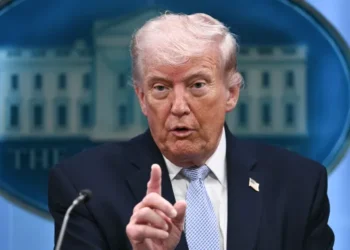
In a strongly worded post on his Truth Social platform, Trump warned Tehran of severe consequences if negotiations fail.
“I am offering Iran a reasonable deal,” Trump wrote. “If they refuse, the United States is going to knock out every single Power Plant, and every single Bridge, in Iran. NO MORE MR. NICE GUY!”
He further stated that if Iran does not accept the proposed terms, it would be his “honor to do what has to be done.”
The rhetoric underscores the high stakes surrounding the US-Iran talks and reflects the administration’s dual-track strategy of diplomacy backed by the threat of military action.
Complicating the diplomatic landscape is the situation in the Strait of Hormuz, a narrow but vital maritime corridor through which approximately one-fifth of the world’s oil supply passes.
Iran declared the strait closed again on Saturday, just a day after signaling it would reopen the waterway. The reversal has triggered fresh concerns in global energy markets and among international shipping operators.
A UK maritime security agency reported that Iran’s Revolutionary Guards fired at a tanker on Saturday. In a separate incident, maritime intelligence firm Vanguard Tech stated that Iranian forces threatened to “destroy” an empty cruise ship attempting to leave the Gulf.
In a third episode, the UK agency confirmed that a vessel was struck by an unknown projectile, causing damage to shipping containers but no reported fire.
These incidents have significantly increased pressure on the upcoming US-Iran talks, as global stakeholders monitor whether diplomacy can prevent broader conflict.
Washington’s envoy to the United Nations, Mike Waltz, told ABC News that he expects the new round of US-Iran talks to yield an “incredibly consequential” outcome.
While specifics of the negotiation framework have not been publicly disclosed, analysts believe discussions may center on maritime security guarantees, ceasefire extensions, sanctions relief mechanisms, and de-escalation commitments.
Diplomatic observers note that Islamabad has emerged as a neutral venue for sensitive back-channel engagements between Washington and Tehran. Pakistan’s geographic proximity to the Gulf region and its strategic relationships make it a practical host for such negotiations.
The decision to send Vice President JD Vance, despite earlier hesitation, signals the administration’s recognition of the talks’ gravity. High-level representation typically indicates that both sides see an opportunity or necessity for a breakthrough.
At the same time, Trump’s public threats add a layer of unpredictability to the diplomatic process. Analysts suggest that strong rhetoric may be intended to increase leverage ahead of negotiations, though it also risks escalating tensions if misinterpreted.
For global markets, the Strait of Hormuz remains the immediate flashpoint. Continued closure could disrupt oil supplies, spike energy prices, and ripple through economies worldwide including Nigeria and other oil-dependent nations closely watching developments.
With the ceasefire set to expire Wednesday, the outcome of the US-Iran talks in Islamabad could determine whether the region edges toward renewed confrontation or steps back from the brink.
The iNews Times will continue to provide detailed updates on the diplomatic engagements, maritime security developments, and global reactions as events unfold.
For now, all eyes are on Islamabad and on whether dialogue can prevail over escalation.