AI-Native ICT Agency: Anambra Unveils Four-Year Digital Transformation Plan.
Agbata outlines strategy to position Anambra as Nigeria’s first AI-driven public technology institution.
AWKA, NIGERIA – The iNews Times | The AI-Native ICT Agency vision has taken centre stage in Anambra State as the Managing Director and Chief Executive Officer of the Anambra State ICT Agency, Chukwuemeka Fred Agbata, unveiled an ambitious four-year roadmap to transform the agency into Nigeria’s first Artificial Intelligence-driven public technology institution.
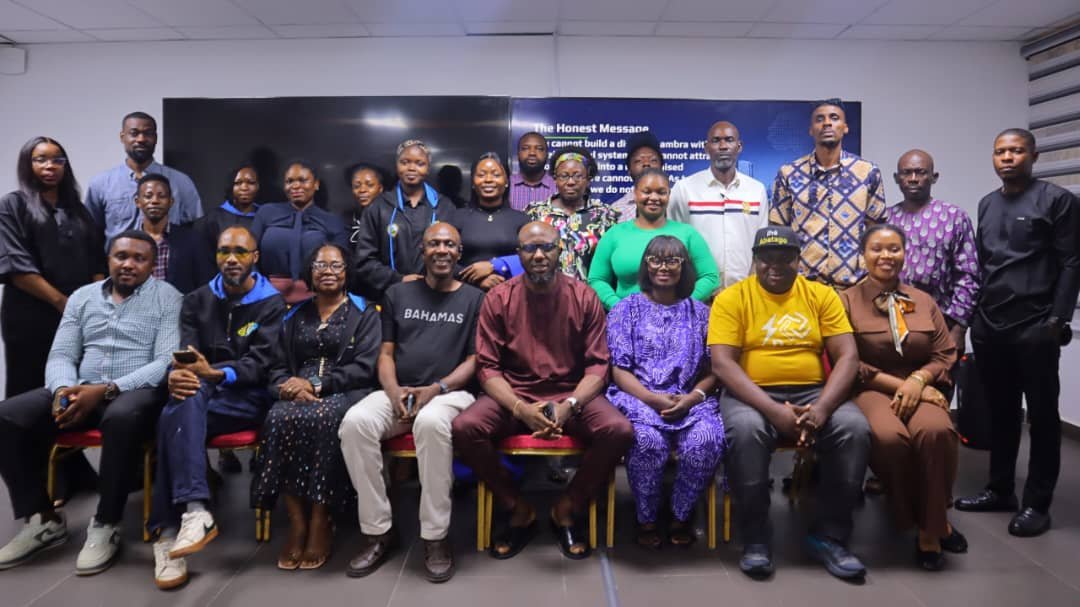
The declaration was made during the Agency’s Second Tenure Team Retreat 2026, held at the ICT Conference Hall in Awka under the theme, “The Next Four Years: Becoming Nigeria’s First AI-Native ICT Agency.” The renewed push aligns with Governor Chukwuma Soludo’s broader goal of building a smart and liveable homeland powered by innovation and digital governance.
In this report, we examine the key developments, reactions from stakeholders, and the broader implications.
Background of the Story
The Anambra State ICT Agency https://innovation.anambrastate.gov.ng has, in recent years, positioned itself as a central driver of the state’s digital transformation agenda. From broadband expansion initiatives to e-governance systems, the agency has played a strategic role in modernizing public service delivery.
Agbata’s reappointment by Governor Soludo signaled continuity in that vision. His leadership over the past four years has focused on institutional strengthening, digital infrastructure expansion, and talent development.
However, the new AI-Native ICT Agency blueprint represents a shift from digital adoption to digital intelligence, emphasizing Artificial Intelligence as the backbone of governance and service delivery in the next phase.
Key Developments
Speaking at the retreat, Agbata expressed gratitude for the opportunity to continue serving and charged staff to adapt to the evolving realities of the digital age.
He emphasized that the next operational phase would be heavily driven by AI tools, automation systems, and data intelligence platforms. According to him, the agency must deliberately build competence in Artificial Intelligence to remain relevant in an increasingly competitive technology ecosystem.
“We must use AI intelligently, execute with speed, and do things differently,” he said, stressing that AI has the capacity to transform governance and digital service delivery not only in Anambra but across Nigeria.
The keynote strategic session, delivered by the Agency’s Chief Technology Officer, Chinonso Okoye, reinforced the AI-Native ICT Agency vision. He urged the institution to evolve into an AI-first public agency capable of competing globally.
Drawing lessons from countries such as Singapore, Ireland, and Estonia, Okoye highlighted how governments are leveraging AI to automate public services, strengthen data governance, and improve efficiency.
The retreat also featured a four-year retrospective review, where staff assessed achievements, challenges, and opportunities. Discussions focused on institutional culture, broadband penetration, operational systems, and collaboration gaps.
Participants later formed strategic working groups covering Smart Government and Infrastructure, Cybersecurity and E-Government, Digital Economy, as well as Human Capital, Institutional Capacity, and Governance.
The Agency’s Technical Adviser, Sunday Folayan, reminded participants that all strategic goals must remain SMART Specific, Measurable, Achievable, Realistic, and Time-bound to ensure measurable impact.
In her vote of thanks, Acting Director Chinyelu Odigbo commended the management for sustaining momentum in shaping Anambra’s digital transformation narrative.
Reactions from Stakeholders
Technology stakeholders in Awka described the AI-Native ICT Agency ambition as timely, particularly as governments globally race to embed AI into public administration.
A senior policy analyst who attended the retreat noted that Anambra’s focus on AI could position the state as a digital innovation hub in the South-East if properly implemented.
“This is no longer about websites or basic automation,” the analyst said. “It is about predictive governance, data-driven decision-making, and intelligent service delivery.”
Staff members also expressed optimism, pledging commitment to continuous learning and mastery of emerging AI tools.
Implications
The AI-Native ICT Agency agenda carries significant political and economic implications for Anambra State.
Politically, it strengthens Governor Soludo’s branding as a reform-oriented leader prioritizing smart governance. Economically, it could attract technology investments, digital startups, and innovation partnerships into the state.
Socially, improved AI-powered systems may enhance public service efficiency, reduce bureaucratic delays, and improve transparency.
However, analysts caution that success will depend on infrastructure readiness, cybersecurity safeguards, data protection frameworks, and sustained capacity building.
What Happens Next
Over the next four years, the agency is expected to consolidate on broadband expansion while integrating AI-driven solutions into governance processes.
Implementation will likely involve partnerships with private sector technology firms, academic institutions, and international digital development agencies.
Continuous staff training and structured performance benchmarks will also be critical to achieving the AI-Native ICT Agency milestone.
As Anambra deepens its digital transformation journey, observers say the real test will lie in translating policy ambition into measurable public impact.
Conclusion
The AI-Native ICT Agency roadmap signals a bold shift in Anambra’s digital governance strategy, moving from conventional ICT deployment to intelligent, AI-driven systems.
If successfully executed, the initiative could redefine how state governments in Nigeria approach technology, governance, and economic competitiveness.
For now, the commitment is clear: Anambra is positioning itself at the forefront of AI-powered public administration, and The iNews Times will continue to track how this vision unfolds in the years ahead.