…says, issue of Anambra PHC underfunding persists even though various funding streams and intervention programmes exist.
Awka, Nigeria — The iNews Times reports that concerns are mounting over persistent Anambra PHC underfunding, as advocacy groups warn that primary healthcare centres (PHCs) across the state remain financially strained despite multiple government interventions and donor-backed support initiatives.
The TB Network State Advocacy Team (SAT) has raised serious concerns that continued funding gaps are undermining healthcare service delivery and weakening health outcomes at the grassroots level.
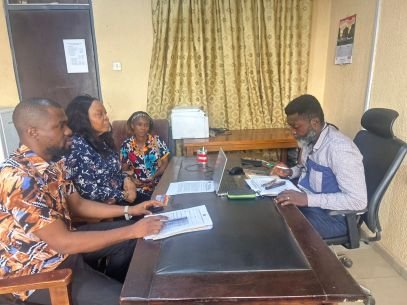
The alarm was sounded by the State Program Officer of the TB Network, Onyekachi Ololo, during a presentation at the Planning, Research and Statistics (PRS) Department of the Anambra State Ministry of Health. The engagement formed part of ongoing collaboration under the Integrated Community-Led Monitoring (CLM) Project, a strategic initiative designed to improve health accountability and strengthen service delivery systems.
According to Ololo, the issue of Anambra PHC underfunding persists even though various funding streams and intervention programmes exist.
“Despite different funding sources and partner support, PHCs in Anambra State remain significantly underfunded. This persistent gap is visible in reduced service output, compromised quality of care, and limited availability of essential medical supplies,” he said.
He noted that the consequences of the funding shortfall are most evident at the community level, where healthcare systems are already fragile and heavily relied upon by low-income populations.
Ololo stressed the urgent need for improved research and documentation on the three major disease burdens in the state, HIV/AIDS, Tuberculosis (TB), and Malaria, particularly in rural communities where primary healthcare centres serve as the first and often only point of care.
He called on the PRS Department to strengthen operational research frameworks, enhance evidence-based reporting, and improve facility-level data collection processes. According to him, better data will help policymakers make informed budgetary decisions and close the gaps driving the Anambra PHC underfunding crisis.
Community-Led Monitoring Expands Across LGAs
Providing insight into grassroots efforts, Ololo disclosed that the TB Network currently operates nine Community-Led Monitors across three Local Government Areas, Onitsha North, Idemili North, and Dunukofia.
The monitors cover nine communities and nine PHCs, working directly with health stakeholders to encourage improved service delivery standards.
He explained that these monitors promote health-seeking behaviour, support treatment adherence, facilitate early case detection and referral, and assess PHC readiness to improve healthcare outcomes.
The initiative, he added, is helping to expose service gaps in real time while encouraging accountability among duty bearers.
State Project Coordinator, Mrs. Ify Unachukwu, further elaborated on the Community-Led Monitoring approach, describing it as a participatory system that empowers trained community actors to assess facility performance, document service deficiencies, and engage authorities for corrective action.
“This initiative strengthens community ownership of PHCs and promotes transparency in service delivery,” she said.
Unachukwu described the PRS Department as a critical institution in tackling Anambra PHC underfunding, noting that accurate and timely data is central to policy formulation, strategic planning, and equitable resource allocation.
She called for sustained collaboration to ensure that grassroots findings are integrated into the Ministry’s planning systems and reflected in future health sector budgets.
Government Response and Commitment
Responding to the concerns, Director of Planning, Research and Statistics, Mr. John Paul Onyekinaso, commended the TB Network for supporting healthcare reforms through structured community participation.
He acknowledged the clarity and strategic alignment of the CLM initiative with the Anambra State Government’s Solution Agenda, which prioritizes strengthening primary healthcare infrastructure.
Onyekinaso assured the advocacy team of the Ministry’s readiness to collaborate in addressing systemic gaps affecting PHCs across the state.
He emphasized the importance of facility-level data, noting that such evidence-based observations can influence programme adjustments, policy reforms, and particularly the next budget cycle aimed at improving PHC funding.
The Director also encouraged the team to sustain the Community-Led Monitoring strategy, describing it as a valuable accountability mechanism capable of identifying operational weaknesses early.
A Critical Moment for Primary Healthcare
The ongoing concerns over Anambra PHC underfunding highlight broader systemic challenges facing primary healthcare systems in Nigeria. PHCs serve as the foundation of public health delivery, especially in rural and underserved communities.
Stakeholders argue that without adequate funding, improved data systems, and sustained government commitment, interventions may fail to translate into tangible improvements for residents who rely heavily on primary healthcare centres.
As advocacy groups intensify calls for evidence-based planning and increased budgetary support, attention now turns to whether future fiscal cycles will reflect the urgency of the funding gaps identified.
For continued updates on health policy, governance reforms, and grassroots accountability in Anambra State, stay with The iNews Times, your trusted source for credible and in-depth reporting.