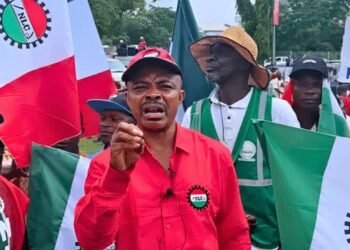
…“the Nigerian people are left to pay for darkness,” Ajaero said.
ABUJA, NIGERIA- The iNews Times| Organised labour has expressed concern over the low-key nature of the 2026 Easter celebrations across Nigeria, attributing the subdued mood to worsening economic hardship, persistent power outages, and rising fuel costs.
The President of the Nigeria Labour Congress, Joe Ajaero, described the festive period as unusually gloomy, noting that many Nigerians were unable to enjoy the holiday due to financial strain and lack of electricity.
In a protest letter addressed to the Minister of Power, Ajaero criticised the continued stagnation in the country’s electricity sector, stating that it has become a heavy burden on workers, manufacturers, and households.
He faulted the current structure of the power industry, alleging that while a few stakeholders benefit from the system, the majority of Nigerians are left to cope with unreliable supply and increasing costs.
“The Nigerian people are left to pay for darkness,” Ajaero said, warning that repeated government interventions, including proposed bailouts for power generation companies, have failed to tackle the root causes of the crisis.
As part of proposed solutions, the labour leader called for a major restructuring of the energy sector, including the merger of the Ministries of Power and Petroleum into a single Ministry of Energy to improve coordination and accountability.
According to Ajaero, the separation of the two ministries has created inefficiencies, particularly in the management of gas supply, which is critical for thermal power generation.
“For too long, these sectors have operated in silos, while the economy suffers. A unified structure will ensure that responsibility is clearly defined and accountability enforced,” Ajaero added.
Meanwhile, several Nigerians also lamented the muted Easter celebrations, citing high costs of food, transportation, and prolonged power outages as major challenges.
A labour affiliate, Fred Egoma, said many families were unable to celebrate or travel due to the harsh economic conditions.
“The situation has taken away the joy of Easter for many families. Without electricity, with rising food prices and expensive transportation, people simply could not celebrate,” he said.
Similarly, another labour member, Tunde Ogundele, linked the rising cost of fuel and transportation to global economic pressures, noting that the impact has further worsened living conditions across the country.
He urged the government to introduce measures such as reducing fuel prices to ease transportation costs and help households cope with unreliable power supply, especially through alternative energy sources like generators.
Organised labour, however, stressed that beyond temporary relief measures, urgent structural reforms in both the energy and broader economic sectors are necessary to restore stability and improve the quality of life for Nigerians.