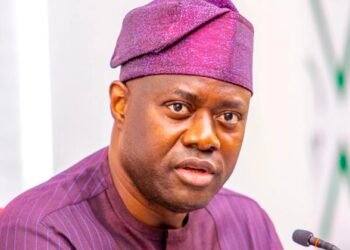
Soludo Awka Peace Call: Governor Vows Law, Order as Indigenes Urged to Unite.
Anambra governor pushes for unity, capital city transformation, and resolution of traditional leadership crisis.
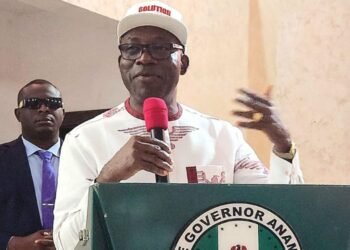
AWKA, NIGERIA – The iNews Times | The Soludo Awka peace call took centre stage in Anambra’s capital as Governor Chukwuma Soludo urged indigenes to embrace unity and responsibility, declaring that while his administration will restore law and order, the people must deliver lasting peace.
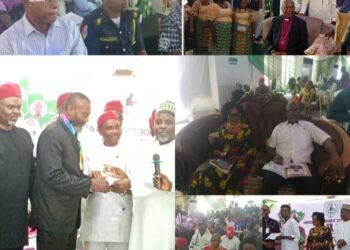
Speaking during a high-level engagement with members of the Ozo Awka Society led by Ozo Sir Chukwujekwu Eze, the governor reaffirmed his administration’s commitment to transforming Awka into a modern, cosmopolitan capital befitting a 21st-century state.
In this report, we examine the key developments, reactions from stakeholders, and the broader implications.
Background of the Story
Awka, despite being Anambra State’s capital since its creation in 1991, has long grappled with infrastructure gaps and internal traditional leadership disputes.
Successive administrations faced criticism over the absence of a befitting Government House within the capital, while prolonged town union and royal stool crises created divisions within the community.
Governor Soludo, since assuming office, has repeatedly described Awka as central to his developmental blueprint, promising to reposition the city both structurally and symbolically.
Key Developments
During the meeting, the governor declared that he had broken a 34-year “jinx” by constructing what he described as a befitting Government House and Lodge within Awka.
He noted that the newly developed Light House complex comprises 57 buildings and forms part of a broader vision to make the city a prime destination.
“I am the governor that decided to make Awka a true state capital in the real sense,” Soludo said, recalling his campaign pledge to reside in the capital.
He also referenced the establishment of Solution Fun City https://solutionfuncity.com, explaining that the project was designed to position Awka as a tourism and leisure hub.
Beyond infrastructure, the governor addressed the lingering traditional leadership crisis in the community. He acknowledged having the option to ignore the turmoil but insisted leadership demanded intervention.
On the controversy involving Chief Austine Ndigwe and Obi Gibson Nwosu, Soludo stated that the state’s Commission of Enquiry determined that Nwosu was never lawfully dethroned and that Ndigwe was never legally enthroned.
Citing the state’s traditional rulers law, he warned that parading oneself as a second traditional ruler in a community constitutes an offence that could attract imprisonment.
He described the crisis, reportedly rooted in burial rites and zoning disagreements, as having become “egocentric,” adding that Awka’s constitution clearly indicates that it is Nkwelle village’s turn to produce the next ruler under the zoning arrangement.
The governor further challenged Ozo titleholders, known as custodians of truth, to demonstrate leadership in resolving the impasse.
Drawing parallels to his intervention in a two-decade dispute in his hometown of Isuofia, Soludo urged Awka’s elite and professionals to project the city positively and rise above factional interests.
He also called for the construction of a grand central palace for the Eze Uzu Awka, comparable to traditional institutions in cities such as Onitsha and Ile Ife, pledging state support for completion within a year.
With the Traditional Imo Awka festival approaching, Soludo clarified that the scheduled May 23, 2026 date would not hold due to a statewide event requiring security presence, stressing the need for a unified festival calendar.
“Government will bring law and order, but Awka people will bring lasting peace,” he declared.
Reactions from Stakeholders
Responding on behalf of the Ozo Awka Society, Sir Chukwujekwu Eze acknowledged the governor’s position and assured that the society would consult widely and take necessary steps, particularly regarding the festival date.
He said the outcome of their deliberations would be formally communicated to the state government in writing.

Top government officials present at the meeting included Secretary to the State Government, Mrs. Chiamaka Nnake; Chief of Staff to the Governor, Dr. Ben Nwankwo; Attorney General and Commissioner for Justice, Barr. Tobechukwu Nweke, SAN; Managing Director of Awka Capital Territory Development Authority, Dr. Ossy Onuko; President General of Awka, Chief Fred Chinwuba; and the Prime Minister of Awka, among others.
Implications
The Soludo Awka peace call signals a dual-track strategy of infrastructural renewal and institutional stability.
By tying development to unity, the governor appears to be positioning Awka not just as an administrative capital, but as a symbol of Anambra’s cohesion and ambition.
Observers note that resolving the traditional leadership crisis could unlock greater investor confidence and social stability, while the construction of major projects may reshape the city’s identity.
What Happens Next
Attention will now shift to how Awka stakeholders respond to the governor’s challenge and whether consultations among community leaders can produce consensus.
The handling of the traditional ruler dispute and the rescheduling of the Imo Awka festival will likely serve as immediate tests of cooperation.
If alignment is achieved, the administration’s broader capital city transformation agenda could gain stronger community backing.
Conclusion
As the Soludo Awka peace call echoes across the capital, the message is clear: development without unity is incomplete.
For Governor Soludo, restoring order is a governmental duty, but securing lasting harmony rests in the hands of Awka’s people. The coming months will determine whether the “giant” he referenced rises to reclaim what he described as its lost glory. The iNews Times will continue to monitor unfolding developments.