…said the Tinubu steady power supply promise remains a major expectation among Nigerians.
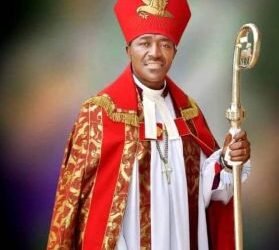
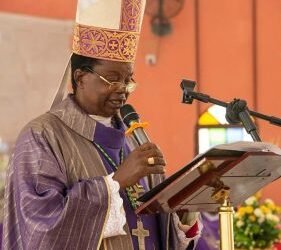
AWKA, Nigeria — The iNews Times reports that the issue of Tinubu steady power supply has again come under public scrutiny as the Catholic Bishop of Awka Diocese, Most Rev. Dr. Paulinus Ezeokafor, expressed disappointment over what he described as the Federal Government’s failure to deliver on the promise of improved electricity across the country.
In his Easter message, Bishop Ezeokafor faulted the situation where President Bola Ahmed Tinubu allegedly enjoys steady solar-powered electricity at the Presidential Villa while millions of Nigerians continue to groan under persistent darkness. According to the cleric, the disparity raises serious moral and leadership questions at a time when citizens are grappling with economic hardship and rising living costs.
The Bishop said the Tinubu steady power supply promise remains a major expectation among Nigerians, stressing that electricity is not a luxury but a basic necessity that drives economic productivity, small businesses, healthcare delivery, and education.
“A situation where Mr. President enjoys steady solar electricity in Aso Villa while Nigerians groan in darkness is unacceptable,” he lamented.
Beyond the electricity challenge, the cleric also decried what he described as incessant and, in his words, “meaningless” external borrowings by the Federal Government to finance national budgets. He warned that the growing debt profile of the nation continues to deepen concerns about Nigeria’s financial future and sustainability.
According to him, borrowing without corresponding visible improvements in infrastructure and public welfare only compounds the suffering of ordinary citizens. He urged political leaders at all levels to align governance with God’s principles and prioritize the overall good of the people rather than personal or partisan interests.
The Bishop further linked the electricity crisis to broader governance concerns, noting that stable power supply remains central to national development. He insisted that fulfilling the Tinubu steady power supply pledge would significantly ease the burden on businesses and households that currently depend on expensive alternative energy sources.
Turning to the political landscape ahead of the 2027 general elections, Bishop Ezeokafor challenged the Independent National Electoral Commission (INEC) to live up to its constitutional mandate as an impartial umpire. He urged the electoral body to treat all political parties fairly and avoid actions capable of eroding public trust.
He specifically condemned the recent derecognition of the African Democratic Congress (ADC) by INEC, stating that the move created the impression among Nigerians that certain scripts were being played behind the scenes. According to him, democracy thrives when opposition voices are respected and allowed to operate within the bounds of the law.
“The ruling party should also accommodate all opposition parties; that is the beauty of democracy. Every political party should be given a level playing ground,” he said.
The cleric described vote trading as another disturbing trend in Nigeria’s electoral process. He lamented that despite sustained voter education and enlightenment campaigns, some politicians still induce voters with money and material gifts, while some citizens willingly compromise their votes.
“It is so painful that after all the voter education and enlightenment, political parties will dangle money before voters who are so gullible and myopic as to sell their votes. This is condemnable,” he stated.
He urged Nigerians to obtain their Permanent Voter Cards (PVCs), revalidate them where necessary, and prepare to vote for candidates of their choice in future elections. He also encouraged citizens to protect and defend their votes to ensure that democracy truly reflects the will of the people.
Bishop Ezeokafor further condemned ethnic and tribal politics, particularly comments suggesting that the South East geopolitical zone is not yet ripe to produce a Nigerian President. He described such sentiments as unfair and divisive.
“The South East has been marginalized in that aspect for ages, and it is not fair. It is even more disheartening that such statements were credited to some South East leaders,” he argued.
While expressing concerns at the national level, the Bishop commended Anambra State Governor, Prof. Chukwuma Soludo, for what he described as sterling performances during his first tenure. He encouraged the governor to build on the achievements recorded so far in his second term.
“I am happy that his budget gave the education sector a good allocation, and I want him to extend his educational development policies to mission and private schools across the state. The pupils and students in those schools are children of Anambra too,” he added.
The Prelate described Easter as the greatest celebration in the world, emphasizing that without the resurrection of Jesus Christ, there would be no Christianity or hope of eternal life. He said the resurrection brought encouragement and renewed hope to mankind.
According to him, the message of Easter should inspire Christians to live righteously and remain steadfast in faith, even amid socio-economic challenges such as unstable electricity supply, rising debt, and political uncertainties.
As Nigerians reflect on issues such as the Tinubu steady power supply debate, economic reforms, and preparations for future elections, Bishop Ezeokafor urged leaders and citizens alike to pursue justice, fairness, and accountability.
While wishing Ndi Anambra and Nigerians a happy Easter, he admonished Christians to make heaven their ultimate goal and to live lives that reflect the victory of Christ’s resurrection.
The Easter message, though spiritual in tone, resonated strongly with ongoing national conversations about governance, democracy, and the urgent need for stable electricity across Nigeria.