…the PDP cautioned that the reasoning in the judgment could be abused to compel political compliance through emergency powers not envisaged by the Constitution.
ABUJA, NIGERIA- The iNews Times | The Peoples Democratic Party (PDP) and an Aba-based lawyer, Mr Emperor Ogbonna, have criticised the Supreme Court’s judgment on the powers of the President to suspend a state governor and other elected state officials.
However, human rights lawyer Inibehe Effiong argued that the apex court did not expressly endorse the emergency rule declared in Rivers State by President Bola Tinubu.
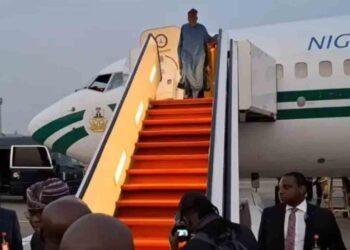
In its decision delivered on Wednesday, the Supreme Court held that a sitting president has the constitutional authority to declare a state of emergency in any part of the federation to prevent a breakdown of law and order or a slide into chaos.
Delivering the lead judgment in a split decision, Justice Mohammed Idris ruled that Section 305 of the 1999 Constitution empowers the president to take extraordinary measures to restore normalcy whenever emergency rule is proclaimed.
The ruling arose from a suit filed by Adamawa State and 10 other PDP-governed states challenging the legality of the state of emergency declared in Rivers State, during which Governor Siminalayi Fubara and other elected officials were suspended for six months.
By a majority decision of six to one, the court held that a president may suspend democratically elected officials under emergency rule, provided such action is for a limited period. The court further ruled that Section 305 does not specifically define the nature of “extraordinary measures,” thereby giving the president discretion in determining how such powers are exercised.
Earlier, the apex court upheld preliminary objections raised by the Attorney General of the Federation and the National Assembly, ruling that the PDP-led states failed to establish a cause of action capable of invoking its original jurisdiction. Consequently, the suit was struck out for lack of jurisdiction, although the court proceeded to comment on the substantive issues before ultimately dismissing it.
In a dissenting opinion, Justice Obande Ogbuinya held that while the president is empowered to declare a state of emergency, such powers do not extend to suspending elected state officials, including governors, their deputies and members of state legislatures.
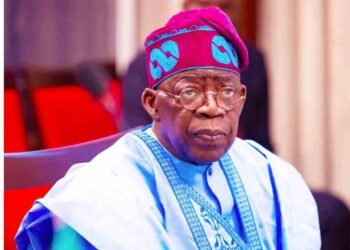
Reacting, the PDP, in a statement by its National Publicity Secretary, Ini Ememobong, warned that the interpretation of the judgment could undermine Nigeria’s democratic gains and render state governors subservient to the Federal Government.
The party said it was deeply concerned that an elected president in a federal system could be empowered to remove elected leaders of a federating unit and appoint replacements, describing such a development as a pathway to authoritarianism.
While affirming respect for the authority and finality of the Supreme Court, the PDP cautioned that the reasoning in the judgment could be abused to compel political compliance through emergency powers not envisaged by the Constitution. It called on the National Assembly to urgently introduce constitutional and legislative safeguards to clearly define and limit presidential emergency powers.
The party also urged Nigerians, civil society groups, the media and the international community to remain vigilant in defending constitutionalism, federalism and the sanctity of the electoral mandate.
Ogbonna, reacting angrily to the judgment, said the Supreme Court had, by its decision, “created a tyrant.” He insisted that Section 305 of the Constitution does not confer powers on the president to suspend a governor, describing the majority ruling as unsupported by law and praising the dissenting opinion as more consistent with constitutional principles.
According to him, the judgment gives both present and future presidents excessive powers, warning that it could be exploited to remove governors under the guise of emergency rule. He described the ruling as a dangerous precedent that weakens democracy and concentrates too much power in the presidency.
In a separate reaction on his verified X handle, Effiong said many reports on the judgment misrepresented the court’s reasoning. He maintained that the Supreme Court did not explicitly validate the Rivers State emergency proclamation, noting that the majority judgment appeared to avoid making a definitive pronouncement on its constitutionality.
Effiong further pointed out that the court held that approval of emergency proclamations by the House of Representatives must be done through a proper division with recorded votes, a procedure he said was not followed in the Rivers case. He argued that this omission rendered the emergency rule unlawful.
He also noted that the court struck out the suit on jurisdictional grounds, holding that the plaintiff states lacked a reasonable cause of action since the emergency rule was not declared in their states and they did not obtain Rivers State’s consent to sue. Effiong added that once a case is struck out, any comments made on the merits do not carry binding legal force.