…Chidoka noted that with Nigeria’s minimum wage at ₦70,000, an average worker would need decades to afford nomination forms,
ABUJA, NIGERIA- The iNews Times | A renewed debate has arisen over the cost of political participation in Nigeria after widely shared figures on nomination fees for the 2027 elections surfaced, even as the All Progressives Congress (APC) denied any link to the claims.
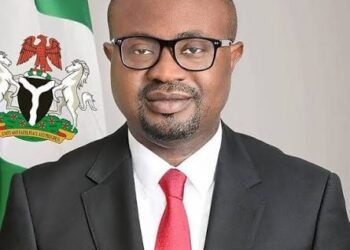
Former Minister of Aviation, Osita Chidoka, in a Facebook post dated March 28, 2026, warned that the rising cost of nomination forms across political parties threatens democratic inclusion.
The controversy followed reports claiming nomination forms could cost up to ₦200 million for the presidency, ₦150 million for governorship, ₦100 million for Senate seats, ₦70 million for the House of Representatives, and ₦20 million for State Houses of Assembly. The APC, however, dismissed the figures as unofficial.
Responding, Chidoka acknowledged the party’s clarification but maintained that concerns about increasing nomination fees remain legitimate.
He argued that such high costs, whether confirmed or speculative highlight a growing trend among major parties that restricts access to elective offices.
Referencing economic realities, Chidoka noted that with Nigeria’s minimum wage at ₦70,000, an average worker would need decades to afford nomination forms, raising concerns about inclusivity. He added that low savings levels among many Nigerians further complicate political participation.
According to him, this trend risks limiting political contests to a small, wealthy segment of society instead of reflecting broad citizen representation.
Chidoka also observed that high nomination fees could generate revenues for political parties comparable to funding in critical sectors like education, healthcare, and security, describing the development as one that warrants serious reflection.
As a solution, he proposed alternative funding models such as membership-based contributions, which could ease dependence on nomination fees and encourage wider participation.
He further noted that Nigeria’s system contrasts with practices in several other democracies, where candidates typically emerge through internal party processes with fewer financial barriers.
Providing context, Chidoka recalled that in 2022, the APC charged ₦100 million for presidential forms and ₦50 million for governorship, while the Peoples Democratic Party (PDP) set its fees at ₦40 million and ₦21 million respectively, with similarly high costs for legislative positions.
He explained that when adjusted for current exchange rates, the newer figures being discussed suggest real-term increases, particularly for legislative offices.
“The issue is not limited to one party,” Chidoka said, stressing that the trend reflects a broader system where access to political office is increasingly shaped by financial capacity.
He warned that if left unchecked, the practice could discourage wider participation and weaken the representative nature of Nigeria’s democracy.
Chidoka urged political parties to reassess their nomination processes to ensure leadership pathways remain open, competitive, and fair.
He concluded that the debate transcends partisan interests, calling it a crucial moment for Nigeria to evaluate whether its democracy is truly accessible in both principle and practice.