…says push for an inclusive electoral process must be holistic and all-encompassing.
Awka, Nigeria — The iNews Times reports that the call for a more inclusive electoral process in Nigeria took centre stage in Anambra State as a university lecturer challenged women across the country to move from lamentation to structured political action.
A lecturer at Nnamdi Azikiwe University, Prof. Dennis Aribodor, has urged Nigerian women to stop agonizing over political marginalization and begin organizing strategically to achieve meaningful participation in elective positions.
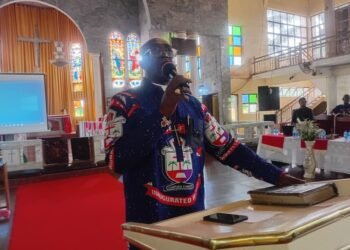
Speaking at a one-day high-level stakeholders’ dialogue on inclusive electoral process organised by the Social and Integral Development Centre (SIDEC), Prof. Aribodor stressed that deliberate structures must be put in place to promote and support competent women aspiring for public office.
The engagement marked the conclusion of Project IMPACT, Inclusive Mobilization for Participation, Advocacy, and Civic Transformation, implemented in collaboration with the Nigeria Civil Society Situation Room, with funding support from the UK Foreign, Commonwealth & Development Office in Anambra and Imo States.
Prof. Aribodor, who also serves as the Owerri Zonal Coordinator of the Academic Staff Union of Universities (ASUU) and is a former ASUU chairman at the Awka-based university, said the push for an inclusive electoral process must be holistic and all-encompassing.
According to him, organizing goes beyond mere rhetoric. It requires popular political education among women, strategic mobilization, and capacity building aimed at challenging entrenched retrogressive practices that have limited female political participation in Nigeria.
He noted that women must leverage their numerical strength and build alliances with credible civil society organisations and reform-minded groups to actualize their political targets.
“It is good to put structures in place to encourage and motivate competent women to occupy elective positions,” Aribodor said. “The organizing should be holistic and all-inclusive. It should start with political education on alternatives to the current practices that have proven to be retrogressive.”
He argued that one of the most significant barriers to an inclusive electoral process in Nigeria remains the exorbitant cost of nomination and expression of interest forms imposed by political parties.
According to him, the high cost of these forms has made the political space largely inaccessible to women, youths and other marginalized groups, while inadvertently empowering individuals with questionable financial sources.
“One way of addressing this is through legislation that will reduce the exorbitant cost of obtaining expression of interest forms for all aspirants, especially women and youths,” he said.
He described the current practice as highly exclusive and warned that it cannot produce the quality leadership Nigeria requires for genuine transformation.
Aribodor proposed that the cost of nomination forms should be tied to the National Minimum Wage and possibly be graduated to reflect economic realities. He maintained that such reform would significantly enhance inclusivity and fairness within Nigeria’s electoral system.
He further stressed that other structural and systemic impediments hindering women’s participation, including discriminatory practices, limited access to funding and entrenched patriarchal norms, could also be addressed through targeted legislative interventions.
The inclusive electoral process dialogue also featured contributions from other stakeholders who examined pathways to achieving gender equity in governance.
Also speaking at the event, Prof. Uche Collins Nwogwugwu, Director of the Institute of Social Policy and Strategic Studies at the Awka-based university, underscored the importance of distinction and competence in women’s agitation for special seats and broader representation.
The Professor of Economics argued that while advocacy for inclusion remains vital, merit and qualification should remain central in appointments and elective positions.
According to him, in a functional society, individuals, whether women, youths, or persons with disabilities, are selected based on their competence, experience, and demonstrated excellence.
“In a civilized society, people are given positions based on merit and qualifications,” he said. “Qualification in this context does not simply mean passing examinations. It means excelling in your field, being experienced and well-versed to the point that you are distinguished among others.”
He added that when individuals distinguish themselves professionally and socially, they are more likely to be singled out for appointments or elective offices, regardless of gender or physical condition.
Earlier in her remarks, the Executive Director of SIDEC, Ugochi Agalaba-Ehiahuruike, explained that Project IMPACT was designed to promote an inclusive electoral process and governance framework where men, women, youths and persons with disabilities are granted equal opportunities to occupy elective public offices.
She noted that the project sought to deepen civic awareness, strengthen advocacy networks, and encourage policy reforms that would dismantle systemic barriers limiting political participation.
The high-level dialogue featured two panel sessions focusing on the inclusive electoral process in Nigeria and an assessment of the journey so far under Project IMPACT, including strategies for sustaining progress beyond the project’s lifecycle.
Stakeholders at the event agreed that while conversations around gender inclusion have intensified in recent years, translating dialogue into measurable political representation remains a pressing challenge.
As Nigeria continues to grapple with low female representation in elective offices at federal, state and local government levels, speakers maintained that the era of passive lamentation must give way to strategic organization, legislative reform and sustained civic engagement.
With renewed calls for structural change, lower nomination costs, and stronger political education, the conversation around an inclusive electoral process appears set to gain even greater prominence ahead of future electoral cycles.
For many participants, the message was clear: the time to organize is now.