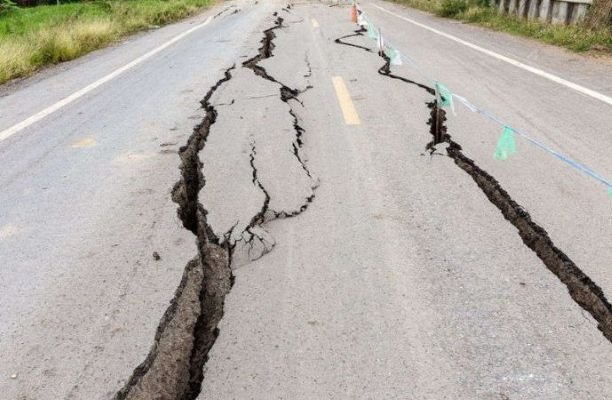
…earthquake threat in Nigeria becomes more serious when viewed against the backdrop of rapid urban expansion.
Lagos, Nigeria – The iNews Times reports that Earthquake Threat in Nigeria is drawing renewed attention after leading structural engineers warned that several major cities, including Lagos, Ibadan, Abeokuta and Benin City, could suffer significant damage if seismic activity occurs.
The Nigerian Institution of Structural Engineers has raised serious concerns about the country’s preparedness for earthquake-related incidents, particularly the vulnerability of buildings constructed without proper engineering supervision or seismic considerations.
A former president of the institution, Olushola Sanni, issued the warning while addressing the growing earthquake threat in Nigeria. He explained that although Nigeria is generally classified as a low seismic-risk region, that classification does not mean the country is immune to earth tremors.
According to Sanni, many Nigerians mistakenly believe that because the country has not experienced a devastating earthquake in recent decades, it is permanently safe. He cautioned that such thinking could create dangerous complacency.
“Earthquakes do not recognise geographical boundaries, and distance from the source does not guarantee protection. The lack of recent seismic events should not give a false sense of security,” he said.
Sanni pointed to recent global experiences where seismic vibrations travelled hundreds of kilometres from their epicentres, causing panic and structural damage in areas that were not traditionally considered high-risk. He stressed that seismic energy can move across borders and geological formations without regard for political lines.
The earthquake threat in Nigeria, he explained, is further complicated by geological realities along the West African coastline. He referenced seismic activity recorded in neighbouring Ghana, particularly around Accra, noting that geological structures in the region extend beyond national boundaries. This means that tremors originating near Ghana could potentially affect parts of southwestern Nigeria.
Cities such as Lagos, Ibadan, Abeokuta and Benin City were identified as areas where the impact of seismic waves could be intensified due to underlying soil conditions. Sanni explained that soft soil formations can amplify ground shaking, increasing the risk of structural damage even when tremors are moderate.
Beyond geological factors, the former institutional president highlighted a more immediate concern: the condition of Nigeria’s building stock. He warned that a large number of structures across the country were erected without adequate engineering oversight, professional supervision or consideration for seismic forces. Many buildings, he said, were designed primarily to withstand gravity loads and wind forces, not earthquake vibrations.
The earthquake threat in Nigeria therefore becomes more serious when viewed against the backdrop of rapid urban expansion. In cities like Lagos, population growth has triggered aggressive real estate development, often outpacing regulatory monitoring. Informal construction practices and weak enforcement of building codes have left gaps in structural safety.
Sanni stressed that most buildings currently standing in Nigeria were not designed to withstand significant seismic activity. While the country may not face frequent tremors, he warned that even a moderate earthquake could expose structural weaknesses in poorly reinforced buildings.
To address the growing concerns, the Nigerian Institution of Structural Engineers is set to introduce new guidelines for earthquake-resistant building design on April 16, 2026, in Lagos. According to Sanni, the framework is intended to align Nigeria’s construction practices with internationally recognised safety standards while providing simplified procedures for local engineers.
He explained that earthquake-resistant structures require balanced design principles, strong structural connections and proper reinforcement detailing. The goal, he said, is not to dramatically increase construction costs but to ensure that safety considerations are integrated into design processes from the outset.
The earthquake threat in Nigeria, experts argue, should be treated as a matter of preventive planning rather than reactive crisis management. They maintain that investing in resilient infrastructure now could prevent loss of life, displacement and economic disruption in the future.
Industry observers believe the renewed warning may prompt stronger collaboration between professional bodies, regulatory authorities and state governments. Improved building approval systems, stricter inspections and accountability for substandard construction are increasingly being seen as necessary steps.
While Nigeria remains categorised as a low seismic zone, engineers insist that preparedness is essential. The absence of recent catastrophe, they argue, should not be mistaken for permanent immunity.
The iNews Times will continue to monitor developments surrounding structural safety reforms and the broader earthquake threat in Nigeria as stakeholders move toward implementing new standards aimed at safeguarding lives and infrastructure.