…the question Will votes count in 2027 Election continues to gain attention.
ABUJA, NIGERIA — The iNews Times Editorial Board | A new chairman now leads the Independent National Electoral Commission (INEC), and with that appointment comes a question that is already echoing across Nigeria’s political space.
Will votes count in 2027 Election?
It is not a slogan. It is a growing national concern shaped by recent electoral experiences.
Across past election cycles, Nigerians have witnessed disputes over result transmission, disagreements during collation, inconsistent figures, delayed uploads, and prolonged court battles. Even after results are declared, arguments often continue.
For many citizens, the issue is no longer just about voting.
It is about what happens after voting.
The arrival of new leadership at the Independent National Electoral Commission (INEC) is seen as a reset opportunity. But public trust cannot be reset by appointment alone. It must be rebuilt through systems.
Distrust did not appear suddenly. It developed over time.
It grew from unresolved questions around technology failures, unclear communication during elections, and inconsistencies between polling unit results and final announcements. These gaps have created lasting suspicion among voters.
One of the most sensitive points remains collation.
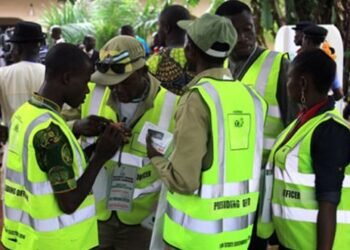
At polling units, voting is visible. Citizens watch ballots counted. Party agents sign result sheets. Observers document the process.
But as results move upward to ward, local government, and state collation centers, transparency becomes less visible. That transition is where doubt often begins.
This is why the question Will votes count in 2027 Election continues to gain attention.
INEC’s new leadership will be judged on how it handles this trust gap.
Electoral experts argue that real-time publication of polling unit results must now be standard practice. They also say election technology must be tested early and explained clearly when issues arise. Silence during technical problems has previously fueled suspicion.
Beyond technology, consistency is critical.
Nigerians are watching to see whether electoral rules will be applied equally across all political parties. Any perception of selective enforcement can damage credibility faster than operational errors.
At the same time, political parties are dealing with internal pressure.
Several parties are currently facing leadership disputes, contested primaries, and factional structures. These internal issues often spill into the electoral process and shape how results are received by the public.
Financial barriers also remain a concern.
High nomination fees running into millions of naira continue to raise questions about accessibility. While INEC does not set these fees, the broader system still influences how inclusive political participation can be.
Security remains another key factor.
Past elections have recorded cases of intimidation and localized violence. For 2027 to be credible, voters must not only be able to cast ballots freely, but also trust that those votes will be protected through collation.
Even with improved logistics, perception will still define legitimacy.
Nigeria does not suffer from a lack of elections.
It suffers from a lack of confidence in outcomes.
When citizens believe results are already determined before voting ends, participation drops and democracy weakens at its foundation.
The new INEC chairman therefore faces more than administrative responsibility. He faces a credibility test.
At The iNews Times, we believe the path forward requires openness. Regular communication from INEC, accessible election data, and clearer explanations of collation procedures will be essential to rebuilding trust.
Collation itself must also be simplified. Nigerians should not need legal expertise to understand how final results are produced. Clarity strengthens democracy. Complexity weakens it.
The judiciary will continue to play a role in election disputes. But when too many results are decided in courtrooms instead of polling units, public confidence suffers.
This is not about politics.
It is about trust in the ballot.
Nigeria stands at a sensitive moment. Economic pressure is rising. Security concerns persist. Political tension is increasing. In such an environment, electoral credibility becomes even more important.
A disputed 2027 election would not only create political disagreement. It could deepen national division.
The new INEC chairman has a narrow but important opportunity to rebuild trust before election day arrives.
Nigerians are not asking for perfection.
They are asking for transparency, consistency, and proof that every vote counts.
And until that is clear, one question will continue to dominate national conversation:
Will votes count in 2027 Election?
The answer will define the credibility of the next election and possibly the future of public trust in Nigeria’s democracy.