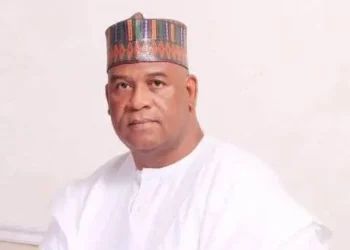
Negotiation with Bandits: Gov Radda Says Katsina Communities Enjoying Peace After Talks.
Governor insists dialogue was community-driven, says over one year without attacks recorded in affected areas.
Katsina, Nigeria – The iNews Times reports that Negotiation with Bandits has yielded over one year of relative peace in some Katsina communities, according to Governor Dikko Umaru Radda, who disclosed that he permitted local residents to initiate dialogue with armed groups at the height of insecurity in the state.
Speaking during an interview on Channels Television’s Sunrise Daily https://www.channelstv.com, the governor clarified that the decision to allow negotiation with bandits was not a formal government policy but a response to appeals from distressed communities seeking immediate relief from persistent attacks.
In this report, we examine the key developments, reactions from stakeholders, and the broader implications.
Background of the Story
Katsina State, like several North-Western states, has faced years of armed banditry marked by kidnappings, cattle rustling, village raids, and displacement of rural populations.
At the peak of the violence, residents in some local government areas complained of inadequate protection despite ongoing military operations. Farming activities were disrupted, schools were shut, and many villages were abandoned.
According to Governor Radda, it was during this period of heightened insecurity that community leaders approached him with a proposal to open local dialogue channels with bandits operating in their areas.
Key Developments
Radda explained that the communities informed him they had already established informal contacts with the armed groups and believed a negotiated settlement could restore peace faster than waiting for security reinforcements.
“The communities approached me saying, ‘Your Excellency, we have met with these people and they are ready to lay down their arms. We have suffered so much and we are not getting what we need from security agencies in terms of protection. Allow us to negotiate if we can find peace,’” the governor recounted.
He said he granted them permission to proceed but deliberately distanced himself from direct involvement.
“I told them you can go ahead, but I will not be part of it,” he stated.
According to him, the outcome has been significant in certain locations.
“As I speak today, there are some communities that have negotiated with these bandits and for over one year there has been no attack in those places. When you see anything, they came from other places, not from that location,” Radda said.
The governor added that most of the local government areas where dialogue occurred have since recorded calm, allowing residents to return to farms and resume daily economic activities.
Reactions from Stakeholders
Governor Radda was careful to stress that negotiation with bandits remains a community-led initiative rather than a state-endorsed security doctrine.
“Majority of these communities that entered into these negotiations have gotten what they want peace. They move around and go to their farms. But me as a governor, I will not call any bandit to lay down your arms or negotiate,” he insisted.
He further argued that as an elected leader, he could not ignore the wishes of his constituents.
“I am here as a governor based on their wish. They have given me a mandate, and who am I to say I don’t like what they want to do? The community has spoken, and I allowed them,” he said.
Security analysts, however, remain divided nationally on the issue. While some argue that community-based dialogue can provide immediate relief in conflict zones, others warn that negotiation with bandits may create long-term risks if not paired with firm law enforcement measures.
Implications
The governor’s remarks are likely to reignite debate over the effectiveness and morality of negotiation with bandits in Nigeria’s fight against rural insurgency.
Supporters contend that localised peace agreements can reduce bloodshed and restore livelihoods in areas where security presence is stretched thin. Critics caution that such arrangements could inadvertently legitimize criminal groups or encourage similar tactics elsewhere.
Politically, Radda’s position underscores a pragmatic approach shaped by grassroots pressure rather than top-down policy design. Socially, the reported one-year lull in violence in some communities suggests that rural populations are prioritising safety and economic survival above broader security doctrines.
The development also raises questions about how federal and state authorities can harmonise military operations with community-driven conflict resolution efforts.
What Happens Next
Governor Radda has not indicated plans to institutionalise negotiation with bandits as official state policy. Instead, he maintains that any dialogue remains at the discretion of local communities.
Observers expect continued monitoring of the affected areas to determine whether the reported peace can be sustained without undermining broader counter-banditry operations.
As insecurity evolves across Nigeria’s North-West, policymakers may increasingly face pressure to balance enforcement with alternative peace-building strategies.
Conclusion
The negotiation with bandits initiative in parts of Katsina reflects the difficult choices confronting leaders in conflict-affected regions. While Governor Radda distances himself from direct participation, he credits community-led talks with delivering over a year of calm in some areas.
Whether this model becomes a reference point for other states or remains a localized solution will depend on its durability and its alignment with national security objectives. For now, as residents return to their farms and markets, the conversation around negotiation with bandits continues to shape Nigeria’s evolving security debate.