ASUBEB Learning Materials Distribution Begins Across Anambra Schools.
Mass rollout of textbooks, furniture and digital tools marks new push to strengthen basic education in the state.
AWKA, NIGERIA – The iNews Times reports that the ASUBEB learning materials distribution exercise has officially commenced across Anambra State, as the Anambra State Universal Basic Education Board (ASUBEB), in partnership with the Universal Basic Education Commission (UBEC) https://ubec.gov.ng, flagged off the distribution of educational resources to public primary and junior secondary schools.
The initiative covers a wide range of learning and instructional materials, including textbooks, exercise books, statutory records, school bags, writing materials, sports equipment, desks, chairs, interactive digital boards and marine craft, all valued at millions of naira. The intervention is part of ongoing efforts to strengthen foundational education and improve classroom delivery across the state.
The ASUBEB learning materials distribution is being described by education stakeholders as a significant step toward addressing long-standing gaps in infrastructure and teaching resources in public schools, particularly at the basic education level.
In this report, we examine the key developments, reactions from stakeholders, and the broader implications.
Background of the Story
Basic education in Nigeria has continued to face challenges ranging from inadequate teaching materials to overcrowded classrooms and limited access to modern learning tools. In Anambra State, the government has in recent years intensified reforms aimed at repositioning public schools through targeted investments and partnerships with federal education agencies such as UBEC.
The latest distribution exercise builds on these reforms, with authorities emphasizing the need to equip learners with modern tools that align with 21st-century education standards.
Key Developments
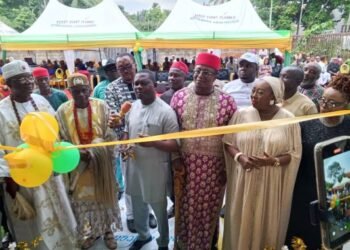
Speaking during the flag-off ceremony in Awka, Executive Chairman of ASUBEB, Dr. Justina Anyadiegwu, said the initiative reflects the state government’s sustained commitment to transforming public education and improving learning outcomes.
She noted that the exercise goes beyond routine distribution, describing it as a deliberate investment in the future of Anambra children and the broader development of society.
According to her, Governor Chukwuma Charles Soludo’s administration has continued to drive reforms aimed at building what she described as “smart schools, smart teachers, and smart learners” capable of competing globally.



Dr. Anyadiegwu also commended UBEC for its continued collaboration with the state, noting that the partnership has consistently produced tangible improvements in classroom infrastructure and learning quality.
She added that investment in education remains critical not only for human capital development but also for long-term security, innovation, and economic stability.
Earlier in the event, Director of Administration at ASUBEB, Mrs Florence Chinweze, stressed that quality education delivery depends heavily on adequate provision of instructional materials, noting that effective teaching cannot thrive in poorly equipped environments.

Reactions from Stakeholders
The State Coordinator of UBEC, Mr. Kingsley Nlewedim, said the materials were designed to improve classroom comfort, enhance teaching effectiveness, and encourage sporting activities among learners.
He urged school administrators and teachers to ensure proper usage and maintenance of the materials for sustained impact.
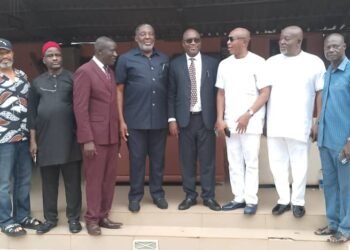
The Chairman, House Committee on Education in the State House of Assembly, Hon. Anayo Okpaleke, alongside the Commissioner for Education, Dr. Ekene Oguguo represented by Permanent Secretary Dr. Ifeoma Agbaizu commended Governor Soludo for prioritising basic education reforms in the state.
They noted that the intervention would help reduce inequality in access to quality education, particularly for children in underserved communities.
Other stakeholders, including the Executive Secretary of the Post Primary Schools Service Commission (PPSSC), Mrs Bernardine Anagor, and the Special Assistant to the Governor on Education, Mrs Oby Chiegboka, reiterated the government’s commitment to eliminating poor learning conditions such as pupils sitting on bare floors.
They expressed optimism that the new materials would significantly improve classroom experiences across the state.
Implications
The ASUBEB learning materials distribution is expected to strengthen public school performance by improving access to essential learning tools and reducing disparities between urban and rural schools.
Education analysts say sustained investments of this nature could gradually improve enrolment, retention, and academic performance in public schools, while also restoring confidence in government-owned educational institutions.
The initiative also aligns with broader national education goals aimed at improving foundational literacy, numeracy, and digital learning capacity among Nigerian pupils.
What Happens Next
ASUBEB officials say monitoring mechanisms will be put in place to ensure proper distribution and utilization of the materials across beneficiary schools.
School administrators are also expected to report on usage and maintenance, while further phases of educational support may follow depending on assessment outcomes and funding availability.
Stakeholders have urged continued collaboration between state and federal education bodies to sustain momentum in ongoing reforms.
Conclusion
The flag-off of the ASUBEB learning materials distribution marks another key step in Anambra State’s education reform agenda, reinforcing efforts to modernize learning environments and improve outcomes for thousands of pupils.
As implementation continues across schools in the state, attention will now shift to how effectively the materials are deployed and whether they translate into measurable improvements in teaching and learning quality.