No Additional Fees for Special Passport Intervention, Ministry of Interior Confirms.
Minister of Interior intervenes as applicants report long waits and frustration at Manchester centre during ongoing exercise.
ABUJA, Nigeria — The iNews Times | The Federal Government has firmly denied introducing any additional charges for Nigerians seeking international passports under the special passport intervention exercise currently underway in the United Kingdom, following public complaints about delays and organisational challenges at some centres.
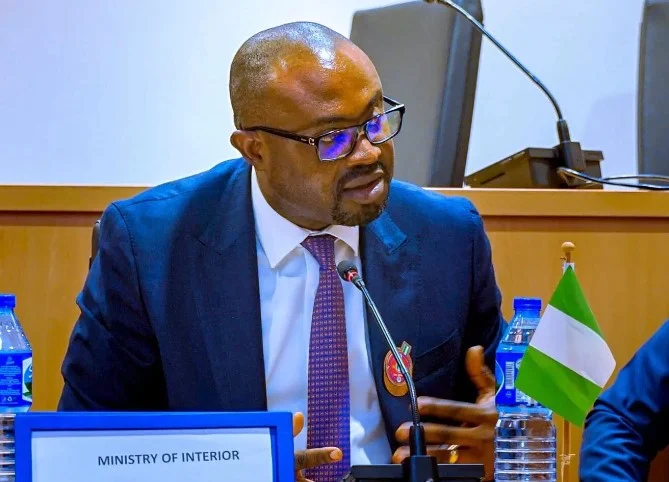
In a statement issued on Monday by Alao Babatunde, Special Adviser on Media and Publicity to the Minister of Interior, Olubunmi Tunji-Ojo, the government clarified that applicants are required to pay only the official fees and reaffirmed its commitment to smoother service delivery for Nigerians in the diaspora. The clarification comes as The iNews Times continues to track developments affecting citizens abroad who rely on these processes for travel, work and family reunification.
In this report, we examine the key developments, reactions from stakeholders, and the broader implications.
Background of the Story
The special passport intervention was designed to give Nigerians resident in the United Kingdom additional convenient options for processing passport applications outside the regular embassy or high commission channels. For years, members of the Nigerian diaspora have faced long processing times, limited appointment slots and logistical hurdles when renewing or obtaining passports. Successive governments have sought to ease these pressures through targeted outreach exercises, particularly in cities with large Nigerian communities such as London, Manchester and others.
The current exercise forms part of wider efforts by the Ministry of Interior and the Nigeria Immigration Service https://immigration.gov.ng to improve access to biometric passports and reduce the backlog that has historically affected citizens living abroad. Applicants have been directed to official fees of 150 dollars for a five-year passport and 230 dollars for a ten-year passport, exclusive of any applicable bank charges. These rates mirror standard charges and were intended to keep the process transparent and affordable.
Key Developments
Complaints emerged publicly on Monday after a social media post by a user known as Oluomo of Derby highlighted difficulties at the Passport Intervention Centre in Manchester. He reported that people who arrived as early as 9:00 a.m. were still waiting without attention by 11:30 a.m., describing the situation as poorly organised. Many applicants, he noted, had taken time off work, travelled considerable distances and already paid for the service.
In response, the Minister of Interior expressed concern and directed that the challenges be addressed. The official statement stressed that neither the Ministry of Interior nor the Nigeria Immigration Service had introduced any fees beyond the published official rates. “It is therefore necessary to clarify that this process does not come with extra costs different from the official fees of $150 and $230 for five-year and ten-year validity passports respectively, exclusive of bank charges,” the statement read.
Officials also confirmed that consultations are ongoing with the Ministry of Foreign Affairs to resolve operational bottlenecks. Applicants have been encouraged to use the contactless biometric passport application system, which the ministry describes as a more seamless alternative for those who can access it.
Reactions from Stakeholders
Minister Olubunmi Tunji-Ojo, through his spokesman, underscored the administration’s broader responsibility to Nigerians both at home and abroad. “This government has demonstrated a high level of responsibility to Nigerians at home and abroad, and remains committed to its promises of providing succour to all,” the statement said.
The social media complaint that triggered the clarification captured a widely shared frustration. Oluomo of Derby wrote that the treatment of applicants who had made significant personal and financial efforts was unacceptable and called for better organisation and clearer communication. His post reflected concerns that have circulated among diaspora communities whenever large-scale passport exercises are rolled out.
While the ministry has not yet detailed the specific operational fixes being negotiated with the Ministry of Foreign Affairs, the public assurance on fees is expected to reduce speculation about hidden costs that often accompany such interventions.
Implications
The episode highlights the delicate balance between expanding access to passport services for the large Nigerian population in the United Kingdom and ensuring that temporary centres operate efficiently and transparently. Delays and unclear communication risk eroding trust in government outreach programmes, particularly among professionals and families who depend on valid passports for employment, education and international travel.
For the Federal Government, rapid clarification of the fee structure helps protect the credibility of the special passport intervention. It also reinforces the message that official rates remain fixed, a point of sensitivity given past experiences of unofficial charges in some service delivery channels. Economically, smooth passport issuance supports the mobility of Nigerians in the diaspora, many of whom contribute significantly through remittances and professional networks.
Politically, the swift response by the Minister of Interior signals attentiveness to diaspora concerns at a time when citizens abroad increasingly expect responsive and modern public services.
What Happens Next
Consultations between the Ministry of Interior and the Ministry of Foreign Affairs are expected to yield practical improvements in staffing, scheduling and information flow at intervention centres. Applicants are advised to monitor official channels for updates and to consider the contactless biometric option where available. Further guidance on centre operations in Manchester and other locations is anticipated in the coming days as authorities work to prevent a recurrence of the reported delays.
The iNews Times will continue to follow the implementation of the special passport intervention and any additional measures announced by the government.
Conclusion
By publicly ruling out extra charges and acknowledging operational shortcomings, the Federal Government has sought to restore confidence in the special passport intervention exercise for Nigerians in the United Kingdom. The coming days will test whether the ongoing consultations translate into tangible improvements on the ground. For thousands of applicants who have already invested time and resources, efficient, transparent and well-organised service remains the ultimate measure of success.