Alex Otti failure claims intensify as NDC official vows 2027 removal over school conditions.
Opposition figure brands Labour Party governor an average performer after video of dilapidated school sparks fresh criticism.
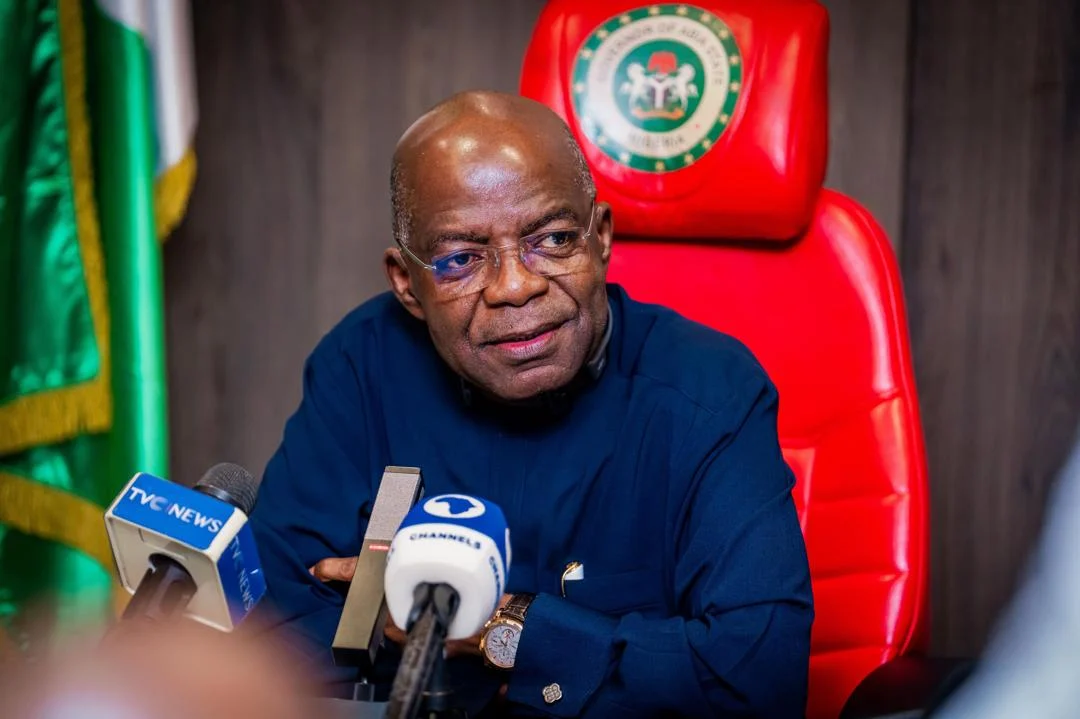
ABIA, NIGERIA — The iNews Times | Fresh political attacks have placed Governor Alex Otti under renewed scrutiny after a senior Nigeria Democratic Congress https://ndcnigeria.com official declared the Abia State governor a failure and vowed to unseat him in the 2027 general elections.
Theo Abu Agada, Director of New Media and Strategic Communications of the NDC, made the remarks on Wednesday while reacting to a widely circulated video showing a man condemning the poor state of a school in Ukwe East Local Government Area. Agada insisted that Otti possesses no special capacity to end what he described as persistent misgovernance in Abia State and across Nigeria.
In this report, we examine the key developments, reactions from stakeholders, and the broader implications.
Background of the Story
Alex Otti assumed office as Abia State governor in 2023 on the platform of the Labour Party, riding on public expectations of improved infrastructure, accountability and a break from previous administrations. Education and school infrastructure have remained sensitive issues in many parts of the state, as in other regions of Nigeria, where ageing classroom blocks and inadequate facilities continue to draw public complaints. Opposition parties have increasingly used such visual evidence to challenge the performance narrative of the current administration ahead of the next electoral cycle.
Key Developments
Agada’s comments were triggered by a video in which a resident highlighted the dilapidated condition of a school in Ukwe East. Responding on X, the NDC official rejected claims that Otti holds any unique solution to governance failures. He described the governor as an average Nigerian governor doing the barest minimum and stated that no child deserves to learn in such an environment. Agada concluded by declaring that the NDC would work to remove Otti from office in 2027 and urged supporters to vote for the party.
Reactions from Stakeholders
In his post, Agada wrote: “This is the person they said has the magic wand to solve misgovernance in Nigeria. An average Nigerian governor doing the barest minimum. No child deserves to learn in this kind of environment. Alex Otti is a failure, and we are kicking him out in 2027. Vote NDC.” The statement positions the NDC as an emerging critical voice against the Abia State government. As of the time of filing this report, there had been no immediate public response from the Abia State Government or the Labour Party on the specific allegations raised by Agada.
Implications
The attack underscores the intensifying political contestation in Abia State more than a year before the 2027 elections. Education infrastructure remains a potent campaign issue capable of mobilising parents, teachers and community leaders. By framing Otti as lacking transformative capacity, the NDC seeks to chip away at the reformist image that helped propel the governor into office. The episode also reflects a broader pattern in Nigerian politics where visual evidence of infrastructural decay is quickly converted into opposition messaging. Sustained criticism of this nature could force the state government to prioritise visible school rehabilitation projects or risk further erosion of public goodwill.
What Happens Next
Political observers expect the Abia State Government to either address the specific school in Ukwe East or issue a broader defence of its education interventions. The NDC is likely to continue leveraging similar videos and reports to build momentum against the governor. As the 2027 campaign season approaches, both sides will intensify efforts to shape public perception of governance performance in Abia. The iNews Times will monitor official responses and further developments closely.
Conclusion
The latest broadside from the NDC against Governor Alex Otti highlights how issues of school infrastructure and everyday governance continue to fuel political confrontation in Abia State. With the next general elections on the horizon, such criticisms are expected to multiply. Whether they translate into electoral consequences will depend on the state government’s ability to deliver tangible improvements and communicate them effectively to residents.