House of Representatives Summons Finance Minister and AGF Over N75bn UBEC Debt.
Lawmakers demand personal appearance and firm repayment timeline after funds meant for basic education were diverted without clear conditions.
ABUJA, NIGERIA — The iNews Times | The House of Representatives has summoned Finance Minister Taiwo Oyedele and Accountant-General of the Federation Shamseldeen Babatunde Ogunjimi over a N75bn UBEC debt, ordering both officials to appear in person before the Public Accounts Committee on Thursday, October 22, to explain how the borrowed Universal Basic Education Commission https://ubec.gov.ng funds will be refunded.
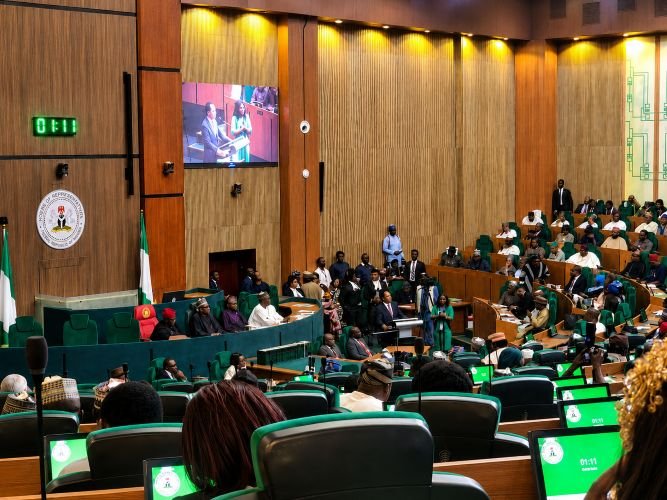
The decision followed a tense hearing in Abuja on Friday, where lawmakers raised sharp concerns about the practice of withdrawing monies belonging to government agencies to meet other obligations without transparent repayment plans or formal terms. The committee, led by its Deputy Chairman, Jeremiah Umaru, insisted that public funds earmarked for one purpose must not be treated as a convenient pool for another.
In this report, we examine the key developments, reactions from stakeholders, and the broader implications.
Background of the Story
The Universal Basic Education Commission manages critical resources meant to improve access, quality and equity in primary and junior secondary education across Nigeria. Over the years, the diversion or temporary borrowing of such dedicated funds has repeatedly drawn legislative scrutiny, particularly when repayment timelines remain vague. The latest controversy centres on the reported borrowing of N75 billion from UBEC resources. Lawmakers argue that even government-to-government transfers require clear conditions, fixed schedules and accountability mechanisms to protect the integrity of sector-specific allocations.
Key Developments
At the Friday hearing, the Public Accounts Committee resolved that both the Finance Minister and the Accountant-General must appear personally rather than send representatives. Deputy Chairman Jeremiah Umaru emphasised that the panel was no longer interested in general explanations. It wanted a concrete commitment on when the N75 billion would be returned so the matter could be closed.
Umaru stated that every borrowing, even within government, ought to carry terms and conditions. “You borrowed money for certain reasons, but you should be willing to return it within a specific period, even without interest, since it is government-to-government,” he said. “The main issue we are looking at is N75bn. We need the Accountant-General to appear in person, and we want the Honourable Minister to appear in person too so that we can get a timeline. We want to agree on when this money will be paid so that we can close this matter once and for all.”
The committee made clear that the absence of a firm repayment plan was unacceptable and that the October 22 appearance would focus squarely on securing that commitment.
Reactions from Stakeholders
Legislators on the committee maintained a firm stance that fiscal discipline must apply equally to inter-agency transactions. Umaru’s comments reflected a broader institutional frustration with the ease with which funds can be moved without corresponding safeguards. While the summoned officials have yet to respond publicly to the summons, the committee’s insistence on personal attendance signals that written submissions or proxy appearances will not suffice.
Education stakeholders watching the process have long argued that any prolonged delay in restoring UBEC resources risks disrupting programmes designed to expand classroom infrastructure, teacher training and learning materials, particularly in underserved states.
Implications
The summons carries significant weight for public financial management. It underscores the National Assembly’s determination to enforce accountability over dedicated education funds at a time when Nigeria continues to grapple with learning poverty and infrastructure deficits in basic education. Politically, the episode places both the Ministry of Finance and the Office of the Accountant-General under direct legislative pressure. Economically, the ability of the government to demonstrate that borrowed agency funds can be repaid on schedule will influence confidence in the management of special-purpose accounts. For the education sector, timely restitution of the N75 billion is essential to avoid further strain on already stretched budgets.
What Happens Next
Both Taiwo Oyedele and Shamseldeen Babatunde Ogunjimi are expected to appear before the Public Accounts Committee on Thursday, October 22. Lawmakers have indicated they will press for a clear repayment timetable rather than open-ended assurances. The outcome of that session will determine whether the committee considers the matter resolved or whether further legislative action, including possible recommendations for stricter controls on inter-agency borrowing, will follow.
Conclusion
The House of Representatives’ decision to summon the Finance Minister and the Accountant-General over the N75bn UBEC debt marks a decisive push for greater transparency in the handling of education-dedicated public funds. By demanding personal appearances and a firm repayment schedule, the Public Accounts Committee has signalled that fiscal convenience cannot override the original purpose of specialised allocations. How the executive responds on October 22 will shape not only the immediate fate of the N75 billion but also the broader standards of accountability that govern Nigeria’s public finances.