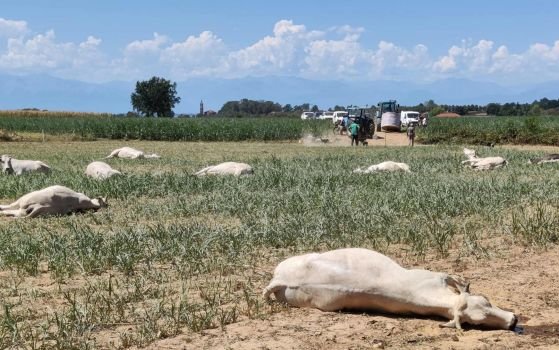
…Poisonous Grasses Cause of Adamawa Cow Deaths – Experts say.
Over 80 cattle perish in Fufore as veterinary authorities warn herders about wild sorghum risk
YOLA, NIGERIA — The iNews Times | Adamawa cow deaths have been linked to suspected cyanide poisoning after no fewer than 80 cattle reportedly died in Chafajaule village, Ribadu District of Fufore Local Government Area, shortly after grazing on poisonous grasses that emerged following the first rainfall of the season.
The incident, confirmed on Monday by the Director of Veterinary Services in the state, Dr. Bartholomew Nyalas, has raised fresh concerns about seasonal hazards facing livestock farmers in Adamawa and other parts of northern Nigeria.
In this report, we examine the key developments, reactions from stakeholders, and the broader implications.
Background of the Story
Livestock farming remains a major economic activity in Adamawa State, with thousands of households depending on cattle rearing for income and sustenance.
However, seasonal transitions often bring environmental risks that many herders may not immediately detect. After the first rainfall, certain grasses and wild plants sprout rapidly across grazing fields, some of which can be toxic to animals when consumed in high concentrations.
One of such plants is wild sorghum, which experts say can contain cyanogenic compounds capable of releasing cyanide when ingested by livestock.
Key Developments
According to Dr. Nyalas, the Adamawa cow deaths occurred after the animals grazed on what is believed to be wild sorghum in Chafajaule village.
He explained that cyanide poisoning is strongly suspected, noting that such incidents are not uncommon during the early rainy season when the plant begins to grow.
“The wild sorghum usually comes up after the first rainfall in the area. When the animals consume the plant in high concentrations, it can lead to their death,” he said.
Dr. Nyalas further disclosed that most of the affected cows were destroyed at the site of the incident.
“Most of the cows were destroyed on the spot of the incident in Chafajaule, Ribadu of Fufore Local Government Area as we visited the Jimeta abattoir in the same division,” he stated.
Veterinary officials have since intensified monitoring efforts in the area to prevent further losses.
Reactions from Stakeholders
Local herders described the incident as devastating, particularly at a time when economic pressures are already mounting due to rising feed costs and insecurity affecting grazing routes.
One cattle owner in the Ribadu District told The iNews Times that the sudden loss has left families financially vulnerable.
“We woke up to find several of our cows already dead. For many of us, this is our only source of income,” he said.
Agricultural extension workers in the area have urged herders to exercise caution and seek professional advice before allowing cattle to graze in newly sprouted fields.
A livestock expert based in Yola noted that awareness campaigns are critical.
“Many pastoralists may not immediately recognize wild sorghum in its early stages. Education is key to preventing recurring Adamawa cow deaths linked to toxic plants,” the expert said.
Implications
The loss of over 80 cattle carries significant economic consequences, not only for the affected families but also for the local meat supply chain.
Adamawa is a major livestock-producing state in northeastern Nigeria, supplying beef to several markets within and beyond the region.
Large-scale cattle deaths can disrupt supply, inflate meat prices, and deepen financial hardship among pastoral communities already grappling with climate variability and grazing constraints.
Beyond economics, the incident underscores the broader challenge of climate-related agricultural risks. As rainfall patterns shift and vegetation cycles change, herders may face increasing exposure to unfamiliar or intensified plant toxins.
What Happens Next
State veterinary authorities are expected to conduct further investigations to confirm the exact cause of the poisoning and provide guidance to livestock owners.
Officials may also step up sensitisation campaigns across grazing communities, particularly as the rainy season advances.
Herders are being advised to monitor grazing areas closely and report unusual animal behavior or sudden deaths promptly to veterinary services.
Preventive education and rapid response mechanisms will likely determine whether similar incidents can be avoided in the coming months.
Conclusion
The tragic episode of Adamawa cow deaths in Fufore Local Government Area highlights the fragile intersection between climate, agriculture, and rural livelihoods.
While suspected cyanide poisoning from wild sorghum appears to be the trigger, the deeper issue remains awareness and preparedness.
As the rainy season unfolds, The iNews Times will continue to monitor developments and provide updates on measures aimed at protecting livestock and safeguarding the economic backbone of pastoral communities in Adamawa State.