Peter Obi Prevented from Condolence Visit After Benue Road Blockade.
Presidential hopeful halted for hours near Air Force Base while attempting to visit victims of recent killings.
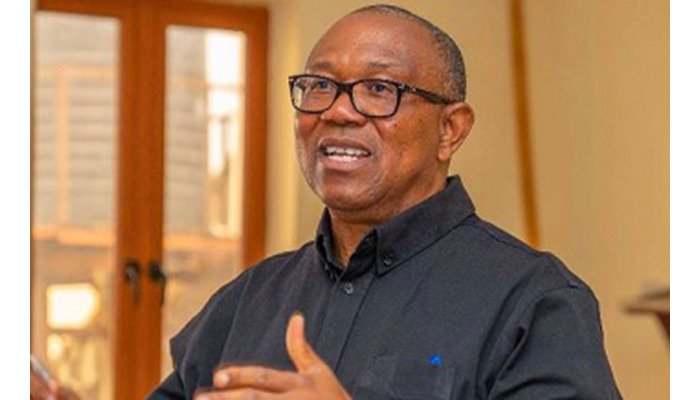
MAKURDI, NIGERIA — The iNews Times | Peter Obi convoy blocked on Tuesday after protesters sealed off Gboko Road in Makurdi, the Benue State capital, preventing the presidential candidate of the Nigeria Democratic Congress https://ndcnigeria.com from continuing his journey.
The demonstrators, chanting “We don’t want Peter Obi,” occupied the stretch of road near the Nigerian Air Force Base and Makurdi Airport for several hours. Traffic ground to a halt as Obi’s vehicles remained stranded, turning a planned condolence visit into a public confrontation captured on video and circulated by News Central Television.
In this report, we examine the key developments, reactions from stakeholders, and the broader implications.
Background of the Story
Benue State has endured repeated cycles of violence linked to farmer-herder conflicts and communal attacks that have claimed numerous lives and displaced communities. Visits by national figures to affected areas often carry both humanitarian and political weight.
Peter Obi, the presidential candidate of the Nigeria Democratic Congress, arrived in the state on Tuesday with the stated intention of offering condolences to victims of recent killings. His itinerary, he later insisted, was known to state authorities and was not conducted in secrecy. The decision to block his path therefore raised immediate questions about coordination, political messaging and the use of young people in street-level confrontations.
Key Developments
Protesters took control of Gboko Road in the vicinity of the Air Force Base and the airport, forming a human barrier that halted Obi’s convoy. The stand-off lasted for hours and created significant disruption for ordinary travellers.
Speaking at the scene in a video released by News Central Television via its X account, Obi explained that he had travelled a long distance that morning specifically to stand with those affected by the killings. He said he was informed that youths, acting under the direction of a Special Assistant to the state government, had been mobilised to ensure he could not proceed.
Obi rejected the blockade as an unacceptable form of political conduct. He argued that the young people involved were themselves victims of poverty and insecurity who deserved genuine livelihood opportunities rather than being deployed as instruments of obstruction.
Reactions from Stakeholders
Peter Obi addressed the situation directly while still at the scene. “I was told that youths, led by an SA (Special Assistant) to the government, have decided to block the road and make sure I don’t go there,” he said.
He continued: “The rascality they are bringing into this country is totally unacceptable. People are being killed every day in Benue. People want to show that they are with them, and I came here all the way this morning, a long distance, only to be told what you are seeing here.”
Obi further stated that the protesters had been mobilised without proper regard for the consequences. “These youths are being used to do this. What they are doing now will take its revenge on them. They don’t know that. And unfortunately, somebody sits in office and allows this to happen,” he added.
He maintained that the blockade should never have occurred and reiterated that his visit was not hidden from the authorities.
Implications
The incident highlights the persistent tension between national political figures seeking to engage with communities affected by violence and local power structures that may view such visits as unwelcome. In a state still grappling with insecurity, the decision to obstruct a high-profile condolence visit risks being interpreted as prioritising political control over solidarity with victims.
It also draws attention to the mobilisation of young people in political contests. When unemployed or insecure youths are directed to form roadblocks, the short-term tactical gain can deepen long-term social distrust and further alienate communities already living under the shadow of violence. For the Nigeria Democratic Congress campaign, the episode provides a vivid illustration of the obstacles facing opposition figures in certain states.
What Happens Next
Security agencies and state authorities will face pressure to clarify the circumstances surrounding the blockade and the alleged role of a government Special Assistant. Further statements from the Benue State Government are expected.
Obi’s team is likely to continue highlighting the incident as evidence of intolerance, while local political actors may seek to frame the protest as an expression of popular will. The iNews Times will monitor official responses and any follow-up visits or investigations.
Conclusion
Peter Obi convoy blocked in Benue stands as more than a momentary traffic disruption. It exposes the friction between the desire of national figures to show solidarity with victims of violence and the readiness of some political operators to convert that moment into a public confrontation. In a country where insecurity remains a daily reality for many, the method by which political disagreement is expressed matters as much as the disagreement itself. The iNews Times will continue reporting on both the human cost of the killings in Benue and the political climate that surrounds efforts to address them.