…NEMA Receives 181 Nigerian Returnees – What They Faced in Libya.
Agency coordinates reintegration support as migration crisis in North Africa persists.
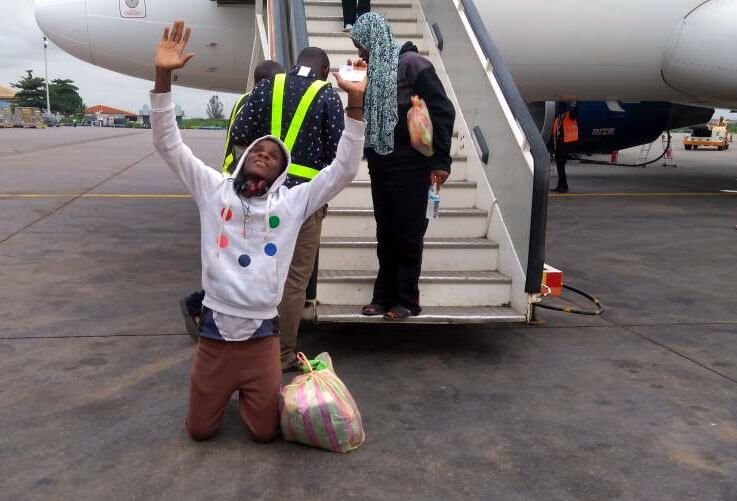
LAGOS, NIGERIA – The iNews Times | NEMA Receives 181 Nigerian Returnees from Libya as the National Emergency Management Agency https://nema.gov.ng confirmed the arrival of 181 Nigerians evacuated from Tripoli under the Assisted Voluntary Return programme facilitated by the International Organisation for Migration in partnership with the Federal Government.
The latest batch of returnees was received by NEMA’s Lagos Operations Office in collaboration with the National Commission for Refugees, Migrants and Internally Displaced Persons, reinforcing ongoing efforts to address irregular migration and humanitarian vulnerabilities affecting Nigerians stranded abroad.
In this report, we examine the key developments, reactions from stakeholders, and the broader implications.
Background of the Story
The Assisted Voluntary Return programme has remained a critical pathway for Nigerians seeking to return home from conflict-prone or economically unstable transit countries, particularly Libya.
Over the past decade, Libya has served as a major transit hub for African migrants attempting to cross into Europe through the Mediterranean. Many migrants, however, face detention, exploitation, human trafficking and harsh living conditions.
Nigeria, through coordinated efforts with international partners such as the International Organisation for Migration, has continued to facilitate voluntary returns aimed at ensuring the safe and dignified repatriation of its citizens.
The latest development, in which NEMA receives 181 Nigerian returnees from Libya, forms part of that broader humanitarian response.
Key Developments
According to NEMA, the returnees arrived on April 27, 2026, at approximately 20:13 hours at the Cargo Terminal of the Murtala Muhammed International Airport, Ikeja, Lagos.
They were conveyed aboard an Air Buraq Airline flight with registration number 5A-BAB from Tripoli, Libya.
The breakdown of the 181 returnees includes 159 adults, comprising 64 males and 95 females. The group also includes 12 children, five males and seven females, as well as 10 infants, six males and four females.
Upon arrival, officials of the Nigeria Immigration Service conducted biometric registration and documentation to ensure proper identification, record-keeping and to facilitate smooth reintegration processes.
NEMA stated that immediate humanitarian assistance was provided in line with the Federal Government’s commitment to ensuring safe, dignified and humane returns.
The support package included food, potable water, medical care, ambulance services, luggage handling and logistics coordination. Counselling services were also offered to help returnees cope with trauma and prepare for reintegration into their communities.
The agency emphasised that the reception exercise was conducted in an orderly manner through effective collaboration among relevant stakeholders.
Reactions from Stakeholders
Officials involved in the operation described the process as seamless and well-coordinated.
A senior NEMA official at the Lagos Operations Office said the agency remains committed to supporting vulnerable Nigerians abroad.
“Our mandate is to ensure that every returning Nigerian is treated with dignity and provided immediate humanitarian support,” the official said. “This operation reflects strong inter-agency collaboration and our shared commitment to reintegration.”
An official of the National Commission for Refugees, Migrants and Internally Displaced Persons noted that sustainable reintegration remains a priority.
“Beyond reception, the focus is on helping these individuals rebuild their lives,” the official said. “We are working with partners to provide psychosocial support and link returnees to reintegration opportunities.”
Migration experts say the steady flow of returnees underscores the urgency of addressing the root causes of irregular migration, including unemployment, insecurity and limited economic opportunities at home.
Implications
The development that NEMA receives 181 Nigerian returnees from Libya highlights both the scale of migration pressures and the ongoing humanitarian responsibilities facing Nigerian authorities.
For many returnees, the journey back home marks the end of traumatic experiences that often include detention, forced labour and abuse. Reintegration, however, presents its own challenges, particularly in communities already struggling with economic hardship.
There are also broader policy implications. The recurring evacuation of Nigerians from Libya raises critical questions about domestic job creation, youth empowerment and public awareness campaigns against irregular migration.
Experts argue that while voluntary return programmes provide relief, long-term solutions must focus on creating viable economic alternatives within Nigeria.
The financial and logistical costs associated with evacuation exercises also place pressure on government agencies, reinforcing the need for preventive strategies.
What Happens Next
Authorities are expected to continue working with the International Organisation for Migration and other partners to facilitate additional voluntary returns as necessary.
Reintegration support, including counselling and possible livelihood assistance, will be central to ensuring that returnees do not attempt risky migration routes again.
The Federal Government is also likely to intensify awareness campaigns highlighting the dangers of irregular migration through North Africa and the Mediterranean corridor.
The iNews Times will continue to monitor developments related to migrant returns and government reintegration initiatives.
Conclusion
As NEMA receives 181 Nigerian returnees from Libya, the event underscores Nigeria’s ongoing effort to protect its citizens abroad while confronting the deeper socio-economic drivers of migration.
While the safe return of these individuals marks a humanitarian success, it also serves as a sobering reminder of the risks many Nigerians undertake in search of better opportunities.
Sustainable solutions, experts say, will require more than evacuation flights. They will demand long-term investments in jobs, security and social stability at home.
For now, 181 Nigerians have returned, carrying stories of survival and the hope of a fresh start.
The iNews Times remains committed to reporting developments that shape the lives of Nigerians at home and abroad.