…says, taxation beyond revenue generation must become the central philosophy of Nigeria’s fiscal architecture.
ENUGU, NIGERIA — The iNews Times reports that the debate over taxation beyond revenue generation took a decisive turn in the South-East as the Manufacturers Association of Nigeria (MAN) declared that Nigeria’s tax reforms must prioritise production, job creation and industrial competitiveness rather than mere revenue collection.
The call was made during a high-level Stakeholders’ Engagement Session organised by the Enugu State Internal Revenue Service (ESIRS) in collaboration with the Nigerian Employers Consultative Association (NECA) and other members of the Organised Private Sector (OPS). The engagement, themed “Understanding and Leveraging the Opportunities in Nigeria’s New Tax Reform,” brought together policymakers, tax administrators and private sector leaders to interrogate the direction of Nigeria’s fiscal reforms.
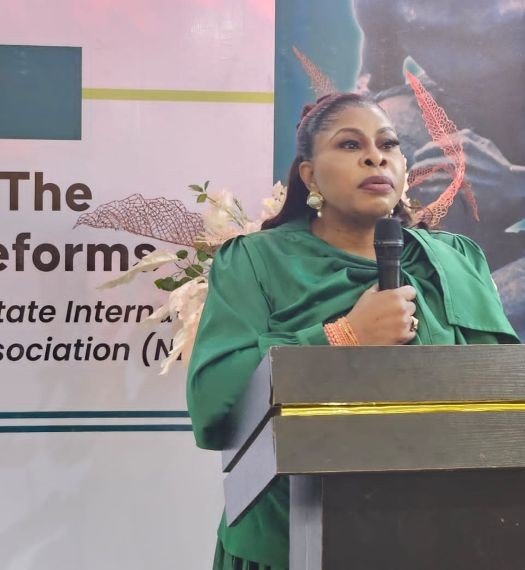
Speaking at the forum, the South-East Chairman of the Manufacturers Association of Nigeria, Lady (Dr.) Adaora Chukwudozie, stressed that taxation beyond revenue generation must become the central philosophy of Nigeria’s fiscal architecture. According to her, taxation should not only serve as a tool for government income but also as a strategic instrument for stimulating production, incentivising local manufacturing, boosting export readiness and encouraging value addition within the economy.
She affirmed that manufacturers in the region are ready to partner with government institutions, not merely to comply with tax obligations, but to contribute meaningfully to designing a system that works effectively for both revenue generation and economic expansion. In her words, the private sector must move “from tax collection to value creation, from enforcement to enablement, and from compliance burden to compliance efficiency.”
Chukwudozie explained that the true success of ongoing reforms would not be measured solely by how much revenue is realised by tax authorities. Instead, she argued, it should be evaluated by how much production is unlocked, how many jobs are created and how competitive Nigerian industries become in both local and global markets. She maintained that a taxation framework that discourages investment through uncertainty or excessive compliance procedures ultimately undermines the nation’s broader economic goals.
The MAN chair identified clarity and predictability as critical pillars for any tax system that aims to encourage industrial growth. She noted that when policies are inconsistent or ambiguous, investors are exposed to unnecessary risks. Such risks, she warned, discourage expansion plans, capital inflows and long-term commitments in the manufacturing sector. A transparent and stable tax regime, she said, creates confidence and enables businesses to plan strategically.
She further emphasised that compliance processes must be simplified to prevent unnecessary diversion of time and resources away from production activities. When compliance becomes overly burdensome, it drains productivity and increases operational costs. A good tax system, she argued, should be easy to comply with yet difficult to evade, thereby ensuring fairness without stifling enterprise.
The engagement session signalled what many participants described as a shift from enforcement-driven taxation to collaborative economic governance. Chukwudozie commended the Enugu State Internal Revenue Service for creating a platform that encourages dialogue between government and industry stakeholders. She described the initiative as essential for building alignment and trust, particularly at a time when Nigeria is implementing significant fiscal reforms.
From the perspective of manufacturers, she explained, tax reforms are not abstract policy instruments. They are operational realities that directly influence production costs, pricing structures, competitiveness and, ultimately, employment levels. Every adjustment in tax rates, procedures or interpretation has ripple effects across supply chains, workforce stability and investment planning.
The central issue before stakeholders, she insisted, is not whether reforms are necessary. According to her, reforms are inevitable and indeed required in a dynamic economy. However, the more pressing question is whether those reforms reduce friction for production or inadvertently increase the cost of doing business. Taxation beyond revenue generation, she maintained, must be anchored on enabling industries to thrive rather than constraining them.
Economic analysts at the forum noted that Nigeria’s manufacturing sector has faced persistent challenges, including high energy costs, infrastructure deficits and foreign exchange constraints. In such an environment, they argued, taxation policy must act as a supportive mechanism rather than an additional burden. Aligning tax reforms with industrial policy objectives could accelerate economic diversification and reduce overreliance on oil revenue.
Participants also underscored the importance of sustained engagement between tax authorities and the private sector to ensure that reform objectives are clearly communicated and properly implemented. Dialogue, they agreed, is vital to preventing misinterpretation and ensuring that policies achieve their intended outcomes.
As Nigeria continues to recalibrate its fiscal framework, the call for taxation beyond revenue generation is gaining momentum across industrial clusters. Stakeholders believe that if properly structured, the country’s new tax reforms can unlock dormant productive capacity, strengthen domestic industries and position Nigeria as a competitive manufacturing hub within Africa.
The iNews Times understands that discussions from the Enugu engagement will feed into broader national conversations on tax administration efficiency and industrial competitiveness. For manufacturers in the South-East and beyond, the message remains clear: a tax system designed solely to collect revenue is insufficient. What Nigeria needs, industry leaders insist, is a fiscal model that actively drives production, job creation and sustainable economic growth.
As the reform process unfolds, attention will remain fixed on whether policymakers can translate the vision of taxation beyond revenue generation into measurable economic outcomes that benefit businesses, workers and the wider Nigerian economy.