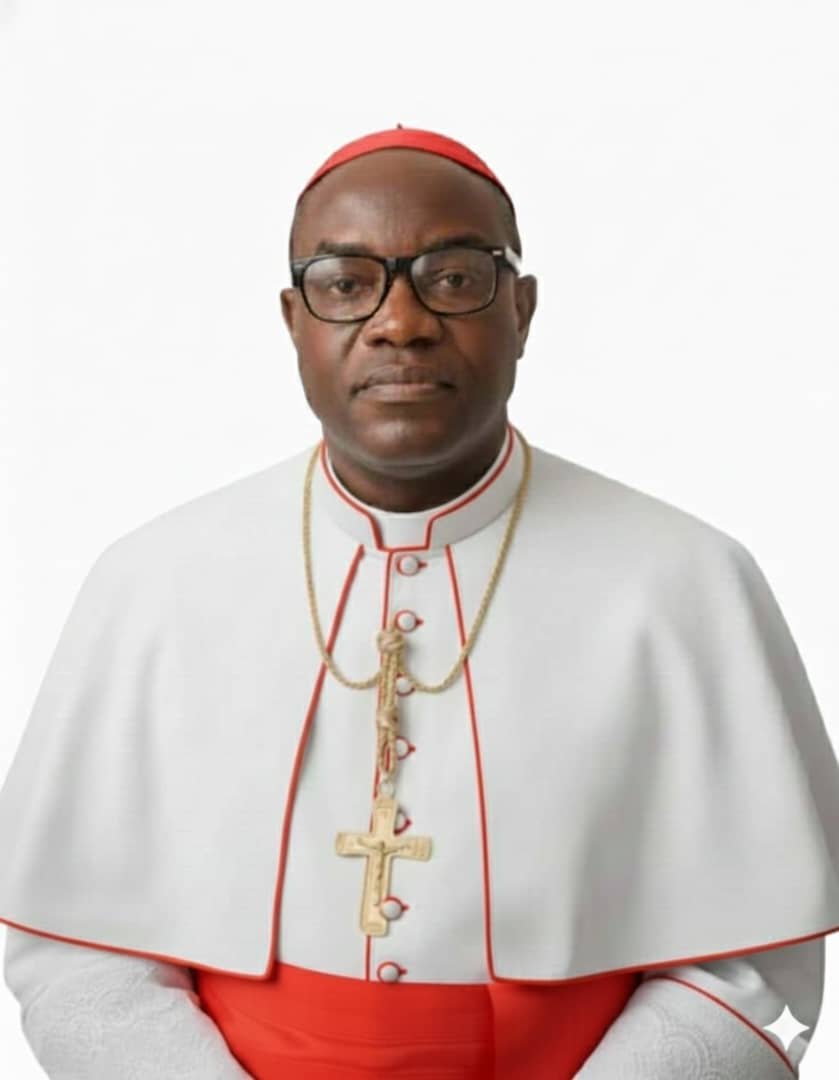
World Communications Day 2026: Cleric Calls for Ethical Media Practice.
Cleric says honesty remains Nigeria’s only path to justice, unity, and national survival.
ADO EKITI, NIGERIA – The iNews Times | World Communications Day 2026 took centre stage in Ado Ekiti as the Presiding Bishop of the Old Catholic Apostolic Church, Most Rev. Oluwaseun Fagbohun, called on journalists and professionals across all sectors to boldly uphold truth in the discharge of their responsibilities.
Marking World Communications Day 2026, the cleric warned that moral compromise, misinformation, and institutional silence are accelerating national decline, insisting that truth remains the only sustainable foundation for justice, unity, and development.
In this report, we examine the key developments, reactions from stakeholders, and the broader implications.
Background of the Story
World Communications Day is observed annually by Christian communities worldwide to reflect on the role of communication in shaping society. The day emphasises ethical media practice, responsible information dissemination, and the moral obligations of communicators in a rapidly evolving digital landscape.
In Nigeria, the commemoration comes at a time when concerns about misinformation, declining public trust in institutions, and professional misconduct across sectors have intensified debates about accountability and transparency.
Against this backdrop, Bishop Fagbohun used the 2026 observance to deliver a sweeping message that transcended journalism and extended to every profession influencing public life.
Key Developments
Speaking during the commemorative event in Ado Ekiti, Bishop Fagbohun stressed that truthfulness must never be compromised under any circumstances, regardless of pressure, intimidation, or personal cost.
He urged journalists, lawyers, judges, medical practitioners, clerics, politicians, artisans, and citizens at large to embrace honesty as a moral obligation rather than a selective virtue.
According to him, “Let journalists speak the truth, let lawyers speak the truth, let judges speak the truth, let doctors speak the truth, let the clerics speak the truth, let politicians speak the truth, let artisans speak the truth, and let everybody speak the truth even at the point of death. It is only the truth that can save the nation.”
He described truth as the bedrock of national survival, warning that societies built on deception inevitably slide into injustice, instability, and disunity.
Reactions from Stakeholders
Media practitioners present at the event acknowledged the relevance of the message, particularly in an era defined by social media virality, artificial intelligence content generation, and the monetisation of sensationalism.
A senior journalist who attended the programme told The iNews Times that the call was timely. “The pressure to break news first sometimes overrides the duty to verify. This reminder reinforces the ethical compass of the profession,” he said.
Legal professionals at the gathering also echoed similar sentiments, noting that judicial integrity and legal transparency remain critical to restoring public confidence in governance.
Implications
The World Communications Day 2026 message delivered by Bishop Fagbohun carries far-reaching implications for Nigeria’s political and social climate.
At a time when citizens frequently question the credibility of public institutions, a renewed emphasis on truthfulness across professions could strengthen democratic processes, reduce corruption, and improve social cohesion.
For journalists in particular, the cleric’s remarks reinforce the centrality of ethical reporting, objectivity, and factual accuracy. In an information age where misinformation spreads faster than verified facts, the responsibility of the media has become even more pronounced.
The message also places moral responsibility on political actors, whose public statements and policy decisions significantly shape national direction. By calling for truth “even at the point of death,” the bishop underscored the gravity of integrity as a non-negotiable principle.
What Happens Next
As Nigeria navigates complex economic, political, and social realities, the challenge remains translating such moral appeals into institutional reforms and professional discipline.
Media organisations are expected to continue strengthening internal editorial standards, fact-checking mechanisms, and accountability frameworks. Professional bodies across sectors may also use the occasion to re-emphasise ethical codes and disciplinary measures against misconduct.
The broader test lies in whether individuals and institutions will internalise the message beyond ceremonial observance and embed truth as a daily operational standard.
Conclusion
World Communications Day 2026 in Ado Ekiti became more than a symbolic celebration; it evolved into a national call for conscience. Bishop Fagbohun’s charge resonates beyond the pulpit, confronting every professional with a simple but profound question: will truth guide our actions, or will convenience dictate our choices?
As Nigeria continues to grapple with trust deficits and institutional challenges, the insistence that “only the truth can save the nation” may well define the moral conversation of the year.