Zoning 2027 Presidency: Can the Opposition Survive This Growing Rift?
Fresh divisions emerge within opposition alliance as parties clash over regional balance, electoral strategy ahead of 2027.
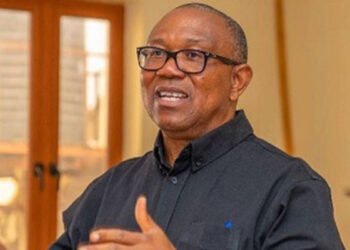
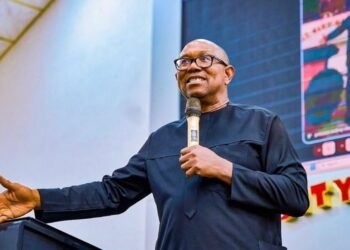
ABUJA, NIGERIA – The iNews Times | Zoning 2027 Presidency has become the defining fault line within Nigeria’s emerging opposition coalition, as loyalists of former Anambra State Governor Peter Obi and ex-Kano State Governor Rabiu Musa Kwankwaso intensify calls for the presidential ticket to remain in the South.
The renewed agitation follows high-level consultations among opposition heavyweights aimed at forming a united front to challenge President Bola Tinubu and the ruling All Progressives Congress https://apc.com.ng in the 2027 general elections. However, what was conceived as a unity project is now confronted by sharp disagreements over whether zoning should guide the coalition’s choice of candidate.
In this report, we examine the key developments, reactions from stakeholders, and the broader implications.
Background of the Story
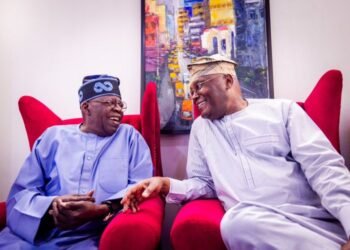
The debate over zoning gained fresh momentum after a high-profile political meeting in Ibadan brought together former Vice President Atiku Abubakar, Peter Obi, Rabiu Musa Kwankwaso, and former Rivers State Governor Rotimi Amaechi, among other opposition figures.
Sources familiar with the discussions said participants explored the possibility of presenting a single presidential candidate to avoid the fragmentation that weakened opposition chances in 2023.
During the last election cycle, multiple strong contenders split anti-APC votes along party and regional lines. Political strategists now argue that without cohesion, the opposition risks repeating the same outcome in 2027.
However, as The iNews Times gathered, the Zoning 2027 Presidency question has quickly emerged as the coalition’s most sensitive issue.
Key Developments
The National Coordinator of the Obidient Movement Worldwide, Dr. Yunusa Tanko, openly called on the African Democratic Congress to zone its presidential ticket to the South, citing Nigeria’s long-standing informal power-rotation arrangement.
Tanko argued that since the current presidency is in the South, any replacement within the same political cycle should logically come from the same region to preserve fairness and continuity.
He further disclosed that Peter Obi had indicated willingness to serve only a single four-year term, a move interpreted by supporters as a compromise designed to reassure other regions about rotational equity.
Tanko expressed confidence that if the coalition settles for a southern consensus candidate, Obi would naturally emerge, citing what he described as widespread youth support and visible public enthusiasm during recent appearances.
Echoing similar sentiments, the National Publicity Secretary of the Obi–Kwankwaso Movement, Justin Ijeh, described zoning as a pragmatic instrument for stability in a multipolar society like Nigeria.
While acknowledging that zoning is not constitutionally mandated, he maintained that it has functioned as a stabilising convention since the return to democratic rule in 1999. According to him, abandoning it in the current climate could trigger avoidable political tension.
Yet, not all coalition partners share this position.
The National Publicity Secretary of the African Democratic Congress, Bolaji Abdullahi, stated that the party had not adopted zoning as a guiding principle. Instead, he said, the ADC would prioritise electoral viability and select the candidate most capable of defeating the incumbent.
His remarks suggest the party may favour an open contest in which popularity, structure, and strategic strength override regional considerations.
The New Nigeria People’s Party struck a middle ground. Its National Publicity Secretary, Ladipo Johnson, argued that consensus and zoning need not be mutually exclusive. He emphasised that national acceptability across both North and South remains critical if the opposition hopes to mount a credible challenge.
Similarly, the National Chairman of the Social Democratic Party, Shehu Gabam, acknowledged that zoning is fundamentally a party decision. However, he declined to confirm whether the SDP would formally align with the coalition, describing discussions as preliminary.
Reactions from Stakeholders
Supporters of the southern zoning position argue that fairness demands continuity within the region currently holding the presidency.
“Given Nigeria’s recent political trajectory, it makes sense for the presidency to remain in the South,” Ijeh insisted, warning that ignoring the zoning convention could create divisive complications.
On the other hand, advocates of an open contest argue that competence and electability must take precedence over regional calculations.
Abdullahi maintained that coalition-building must focus on defeating the ruling party, stressing that the alliance remains workable precisely because no rigid zoning commitment has been imposed.
Political analysts who spoke to The iNews Times noted that beneath the zoning debate lies a deeper contest for influence among opposition heavyweights, each seeking strategic advantage ahead of formal primaries.
Implications
The Zoning 2027 Presidency debate carries far-reaching political consequences.
First, it tests whether the opposition can genuinely subordinate personal ambition to collective strategy. Without internal compromise, attempts at coalition-building may collapse before formal structures are even established.
Second, it raises questions about regional trust. Nigeria’s informal zoning arrangement has often served as a pressure valve in moments of national tension. Altering that balance without broad consensus could heighten suspicion among geopolitical blocs.
Third, the debate directly affects voter mobilisation. Youth-driven movements such as the Obidients remain a potent electoral force, but their enthusiasm must be harmonised with northern political structures if a unified ticket is to succeed nationally.
Ultimately, the coalition’s credibility will depend on whether it can reconcile equity with electability.
What Happens Next
Consultations among opposition leaders are expected to intensify in the coming months. Party executives must determine whether to formalise the coalition, establish a joint selection framework, or allow individual parties to conduct primaries before convergence.
Insiders say back-channel negotiations are ongoing, with possible compromises including single-term agreements, regional balancing formulas, or structured power-sharing arrangements.
Until a clear pathway emerges, however, the Zoning 2027 Presidency question will remain the central obstacle to opposition unity.
Conclusion
As Nigeria inches closer to the 2027 election cycle, the opposition’s ambition to present a single candidate may hinge less on public enthusiasm and more on internal discipline.
The debate over zoning has exposed both the promise and fragility of coalition politics. Whether leaders can transform competing ambitions into a coherent strategy will determine if 2027 becomes a genuine contest or another fragmented race that reinforces the status quo.
For now, the struggle over zoning is not just about geography. It is about power, trust, and the future direction of Nigeria’s democracy.