Nigerian Army Drone Training: Will New Tech Turn the Tide in North West?
8 Division integrates unmanned aerial technology into Operation FANSAN YAMMA to enhance intelligence and force protection.
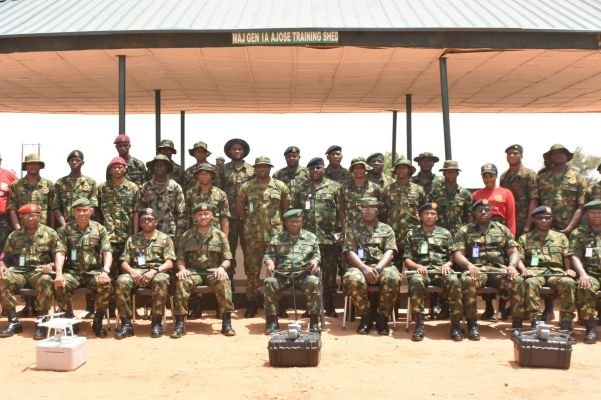
KADUNA, NIGERIA – The iNews Times | Nigerian Army Drone Training received a strategic boost as the 8 Division of the Nigerian Army https://army.mil.ng graduated 27 newly trained drone pilots to strengthen intelligence gathering and operational efficiency across the North West theatre.
The graduation ceremony, held at the Division Training School, Giginya Military Cantonment in Kaduna, marks a significant step in the Army’s integration of modern technology into Operation FANSAN YAMMA, a key security initiative targeting banditry and insurgent threats in the region.
In this report, we examine the key developments, reactions from stakeholders, and the broader implications.
Background of the Story
Nigeria’s North West has faced persistent security challenges, including banditry, kidnapping, and rural attacks that have destabilised communities and strained military resources.
Operation FANSAN YAMMA was launched as a coordinated effort to dismantle criminal networks and restore stability across affected states.
In recent years, global military trends have shifted toward technology-driven warfare, with unmanned aerial vehicles playing a pivotal role in reconnaissance, surveillance, and risk reduction.
Against this backdrop, the Nigerian Army Drone Training programme is part of a broader modernisation drive aimed at enhancing situational awareness and improving force protection.
Key Developments
In a statement posted on its official X handle, the Acting Deputy Director, Army Public Relations for 8 Division and Sector 2 Operation FANSAN YAMMA, Lieutenant Colonel Olaniyi Osoba, described the graduation as a milestone in operational transformation.
The General Officer Commanding 8 Division and Commander, Sector 2 Joint Task Force (North West), Major General Bemgba Paul Koughna, said the initiative reflects the Army’s growing reliance on technology to meet evolving security demands.
“The integration of drones into our operations is no longer optional; it is a necessity,” Koughna stated. “The true strength of any military force lies not just in acquiring advanced equipment, but in effectively integrating them into our operational systems.”
He explained that unmanned aerial vehicles provide improved situational awareness, reduce exposure of troops to danger, and enhance decision-making in complex environments.
According to the Army, the 27 personnel drawn from various units underwent rigorous training that combined theoretical instruction with hands-on practical exercises.
Course Coordinator Captain Samuel Yakubu described the programme as a visionary initiative aimed at giving troops “eyes in the sky.”
“This training has significantly enhanced the operational effectiveness of personnel across different formations within the Division’s area of responsibility,” Yakubu said.
The curriculum covered drone navigation using offline maps, aircraft assembly and disassembly, ground control station setup, aerial surveillance, and imaging techniques.
Trainees also mastered takeoff and landing procedures, tactical manoeuvres, coordinate acquisition, and precision landing exercises.
The course concluded with a live demonstration in which the newly certified pilots showcased surveillance hovering, gimbal control, aircraft handling, and accurate coordinate targeting.
Major General Koughna presented wings to the graduating officers and awarded cash prizes to outstanding participants in recognition of their performance.
Reactions from Stakeholders
Security analysts have welcomed the Nigerian Army Drone Training initiative, describing it as timely given the asymmetric nature of threats in the North West.
A defence expert who spoke to The iNews Times noted that “real-time intelligence gathering significantly reduces blind operations. Drones enable commanders to make informed decisions before deploying ground forces.”
Community leaders in affected areas expressed cautious optimism that enhanced surveillance capabilities could translate into improved security outcomes.
Military observers also emphasised that technology integration must be sustained through continuous training, maintenance, and operational discipline.
Implications
The expansion of Nigerian Army Drone Training carries significant operational and strategic implications.
First, improved aerial reconnaissance reduces risks to personnel by limiting the need for physical scouting in hostile terrain.
Second, enhanced intelligence collection may improve coordination between military formations and other security agencies operating under joint task forces.
Third, the initiative signals a broader institutional shift toward modern warfare doctrine, aligning Nigeria’s military capabilities with global standards in counterinsurgency and counterterrorism operations.
In a region where mobility and concealment have often favoured criminal elements, the deployment of trained drone pilots could tilt the tactical balance.
What Happens Next
The 8 Division is expected to deploy the newly certified pilots across various operational zones within its area of responsibility.
Further training cycles may follow as the Army expands its technology integration strategy to other divisions nationwide.
Military authorities are also likely to monitor the effectiveness of drone-supported operations in reducing response times and improving mission outcomes under Operation FANSAN YAMMA.
Observers say sustained investment in equipment maintenance and data analysis will be critical to maximising the gains of the Nigerian Army Drone Training programme.
Conclusion
As insecurity in the North West continues to test military resilience, the Nigerian Army Drone Training initiative represents a calculated move toward smarter, technology-driven operations.
By equipping troops with advanced surveillance capabilities, the Army aims to enhance intelligence precision, protect personnel, and strengthen mission effectiveness.
Whether this technological edge translates into lasting security gains will depend on disciplined execution and sustained operational commitment in the months ahead.