…as FirstPower Electricity reveals plan to explore alternative sources of power.
OGIDI, NIGERIA — The iNews Times reports that the FirstPower Electricity Stakeholders Engagement meeting took centre stage on Friday as FirstPower Electricity Distribution Company Limited assured customers that it remains committed to improving power supply despite ongoing frustrations in Nigeria’s electricity sector.
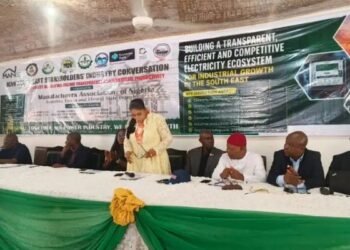
At the engagement session held for customers in the Ogidi, Obosi and Aguleri districts, the company’s Managing Director, Engr. Okechukwu Okafor, warned electricity consumers to beware of fake meter contractors and unauthorised agents operating in the area.
According to him, customers must deal directly with FirstPower to avoid falling victim to extortion and fraudulent schemes. The warning formed a major highlight of the FirstPower Electricity Stakeholders Engagement, which was organised as part of the company’s efforts to strengthen transparency, improve communication, and deepen trust between the distribution company and its customers.
Speaking during the interactive session, Okafor emphasised that the company has not authorised individuals to collect payments outside official channels. He urged residents to report suspicious persons demanding illegal charges for prepaid meters or other electricity services.
Electricity meter fraud has become a recurring issue across Nigeria, particularly in areas where demand for prepaid meters exceeds supply. Distribution companies nationwide have battled complaints about estimated billing, long delays in meter installations, and exploitation by impostors posing as agents.
Okafor stressed that only transactions conducted through approved FirstPower platforms would be recognised, adding that customer protection remains a top priority.
“We’re Frustrated Too” — MD Apologises
In a rare show of empathy, the Managing Director openly acknowledged widespread dissatisfaction in the sector.
“The electricity sector is quite challenging, especially in a developing country like ours. It affects the entire economy because of its sensitivity and necessity,” he said during the FirstPower Electricity Stakeholders Engagement.
He admitted that historical policy missteps and structural weaknesses have contributed to Nigeria’s ongoing electricity supply crisis.
“Nigeria had made certain mistakes in the past, not only in the power sector, but in other aspects of national life. The tension is increasing and we’re very empathetic with customers,” he stated.
Drawing an emotional analogy, Okafor likened the situation to an unemployed father apologising to his children for failing to meet basic needs.
“We’re frustrated as much as you are equally frustrated. But we’re not folding our arms,” he assured participants.
One of the major announcements at the FirstPower Electricity Stakeholders Engagement was the company’s plan to explore alternative sources of power through embedded generation.
Embedded generation involves producing electricity closer to consumers rather than relying solely on the national grid. The approach is widely regarded as a practical solution to Nigeria’s chronic grid instability and generation shortfalls.
Okafor revealed that FirstPower is working with state regulators and private investors to secure approvals for such initiatives.
“We’re desperately looking for other sources of energy supply to meet the demands,” he said.
However, he noted that multiple regulatory approvals are required before such projects can become operational.
Metering remained a central theme throughout the FirstPower Electricity Stakeholders Engagement. Okafor disclosed that the company has established a 2,500 daily capacity meter laboratory in Onitsha to improve meter availability and reduce delays.
The new facility is expected to significantly address complaints linked to estimated billing, one of the most contentious issues in Nigeria’s electricity market.
He also highlighted the ongoing Meter Asset Provider (MAP) scheme, which allows customers to pay for and obtain prepaid meters within approximately 10 working days.

The MAP initiative was introduced nationally to close Nigeria’s massive metering gap, which affects millions of electricity consumers.
“It’s only when you’re metered that you can have righteous metering,” Okafor stated, emphasising fairness and transparency in billing.
During the session, Okafor cited World Bank indices suggesting that households consuming less than 1,000 units of electricity monthly are classified as poor.
He pointed out that electricity tariffs in Nigeria are comparable to those in countries such as Egypt and South Africa, yet Nigerian consumers struggle more due to weaker purchasing power.
Energy experts have consistently argued that Nigeria’s electricity challenge is not solely about tariffs but about generation capacity, infrastructure upgrades, and transmission bottlenecks.
Beyond supply and billing issues, the FirstPower Electricity Stakeholders Engagement also featured presentations on safety standards and the dangers of vandalism.
Company officials warned that destruction of power infrastructure continues to undermine electricity stability and increase operational costs.
Participants engaged in open discussions, asking questions about service delivery, outage management, and future improvement timelines.
Okafor commended customers for attending despite busy schedules and reiterated that continuous dialogue remains essential.
“We keep dialoguing until we achieve our target,” he said.
The iNews Times understands that stakeholder engagement forums have become increasingly important for electricity distribution companies seeking to rebuild public confidence in the wake of persistent supply challenges.
As Nigeria continues reforms in the power sector, initiatives such as the FirstPower Electricity Stakeholders Engagement may prove critical in bridging the trust gap between operators and consumers.