Nigeria Customs Intercepts Stolen Rolls-Royce, Lamborghini at Tin Can Port.
Tin Can Island Port operation exposes global luxury car theft syndicates and strengthens Nigeria–Canada security cooperation.
LAGOS, NIGERIA – The iNews Times | Nigeria Customs intercepts stolen Rolls-Royce and Lamborghini vehicles smuggled from Canada in what authorities have described as a significant breakthrough against international vehicle theft syndicates operating across continents.
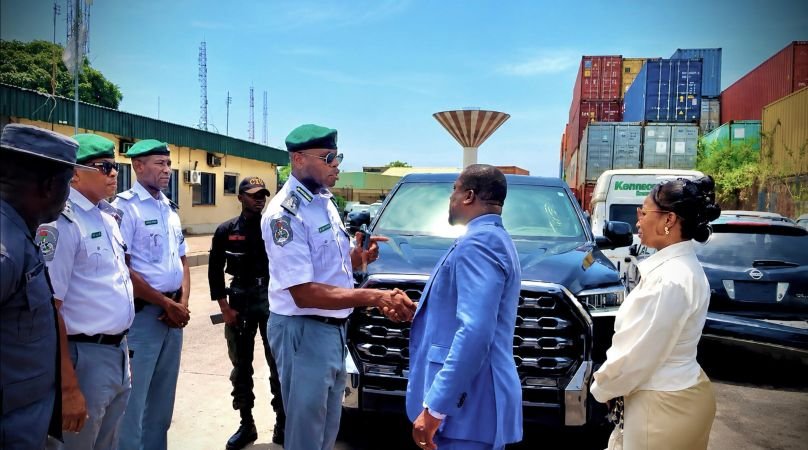
The Nigeria Customs Service (NCS) https://customs.gov.ng formally handed over the recovered luxury automobiles to Canadian authorities at the Tin Can Island Port on Monday, May 4, 2026, marking a decisive moment in ongoing efforts to dismantle cross-border car theft networks.
In this report, we examine the key developments, reactions from stakeholders, and the broader implications.
Background of the Story
The operation followed months of coordinated intelligence sharing between the Nigeria Customs Service and the Royal Canadian Mounted Police after Canadian investigators traced several high-end vehicles stolen within Canada and illegally exported through international shipping channels.
Authorities in Canada had flagged suspicious consignments believed to have been diverted into global maritime routes before resurfacing in Nigeria. Tin Can Island Port, one of Nigeria’s busiest maritime gateways for imported vehicles and containerised cargo, became central to the unfolding investigation.
Internal Customs documents dated May 5, 2026, confirmed that the intercepted vehicles included a 2019 Lexus RX350, a 2019 Mercedes-Benz G550, a 2023 Land Rover Range Rover, a 2019 Lamborghini Huracán, a 2021 Rolls-Royce Dawn Convertible, a 2018 Lamborghini Aventador and a 2026 Toyota Tundra. All were verified as stolen abroad before being smuggled into Nigeria.
Key Developments
The formal handover ceremony took place at Tin Can Island Port, where the Deputy High Commissioner of Canada to Nigeria, Nasser Salihou, received the recovered vehicles from the Customs Area Controller of the Tin Can Island Command, Comptroller Frank Onyeka.
According to a statement issued by the National Public Relations Officer of the NCS, Abdullahi Maiwada, the recovery was the direct result of sustained operational collaboration between Nigerian and Canadian authorities.
Comptroller Onyeka revealed that one of the vehicles, a Toyota Tacoma, had been secretly concealed inside a container carrying other automobiles. The suspicious consignment had not exited Customs custody when intelligence from Canadian authorities triggered immediate enforcement action.
“What looked like a routine cargo movement quickly became an international criminal investigation,” Onyeka said during the ceremony.
He explained that once intelligence reports and shipping documentation were transmitted through official diplomatic and enforcement channels, officers swiftly placed the container under enforcement watch and secured the vehicle pending verification.
The Nigeria Customs Service deliberately delayed the release of the intercepted vehicles until Canadian officials physically arrived in Nigeria to confirm ownership and facilitate official recovery.
“We had people who wanted to step in on behalf of others, but this was too sensitive,” Onyeka stated. “We insisted the handover must be directly to the Canadian government to preserve the integrity of the process.”
Reactions from Stakeholders
Canadian Deputy High Commissioner Nasser Salihou commended Nigerian authorities for their cooperation and professionalism, describing the recovery as evidence of growing trust between both countries in tackling organised transnational crime.
Customs officials emphasised that Nigeria Customs intercepts stolen Rolls-Royce and Lamborghini consignments not merely as isolated seizures, but as part of a broader institutional shift toward intelligence-driven maritime enforcement.
Security analysts say the operation underscores the increasing sophistication of international vehicle theft syndicates, which exploit complex shipping routes, falsified documentation and weak verification systems in emerging markets.
Implications
The successful interception sends a strong signal to global criminal networks that Nigeria’s seaports are no longer easy entry points for stolen luxury automobiles.
Experts note that African ports have increasingly become targets for car theft syndicates due to high demand for exotic vehicles and historically inconsistent verification systems. However, Nigerian authorities argue that recent improvements in cargo profiling, digital tracking and inter-agency cooperation are strengthening surveillance capabilities.
For Nigeria, the case enhances international confidence in its anti-smuggling and cargo intelligence framework. For Canada, it represents the recovery of high-value stolen assets and validation of international enforcement partnerships.
Beyond the immediate seizure, the development may also trigger deeper scrutiny of shipping lines, freight forwarders and clearing agents linked to suspect consignments, potentially widening the investigation into broader criminal networks.
What Happens Next
Authorities are expected to intensify scrutiny of imported automobile consignments, particularly high-end luxury brands frequently targeted by international theft rings.
Further collaboration between Nigeria and Canada is anticipated, including expanded intelligence exchange and maritime security coordination to disrupt similar trafficking attempts.
The Nigeria Customs Service has indicated that enhanced cargo profiling and real-time intelligence alerts will remain central to its enforcement strategy at Tin Can Island Port and other major maritime gateways.
Conclusion
The interception and formal handover of the stolen vehicles mark a defining moment in Nigeria’s fight against organised transnational crime. As Nigeria Customs intercepts stolen Rolls-Royce and Lamborghini shipments traced to Canada, the operation reinforces the country’s growing capacity to police its borders and protect the integrity of global trade routes.
For Nigeria and its international partners, the message is clear: maritime smuggling networks are increasingly under surveillance, and coordinated intelligence is proving to be their greatest threat.