Abuja Coup Plot Trial Shifts to Legality of Confessional Evidence.
Court Orders Joint Trial-Within-Trial as Defence Challenges Confession Videos and Written Statements.
ABUJA, NIGERIA – The iNews Times | Abuja Coup Plot Trial took a dramatic turn on Monday after a Federal High Court in the nation’s capital viewed a video recording in which an Islamic cleric allegedly told investigators he warned suspected coup plotters that their plan to overthrow President Bola Tinubu’s government would fail.
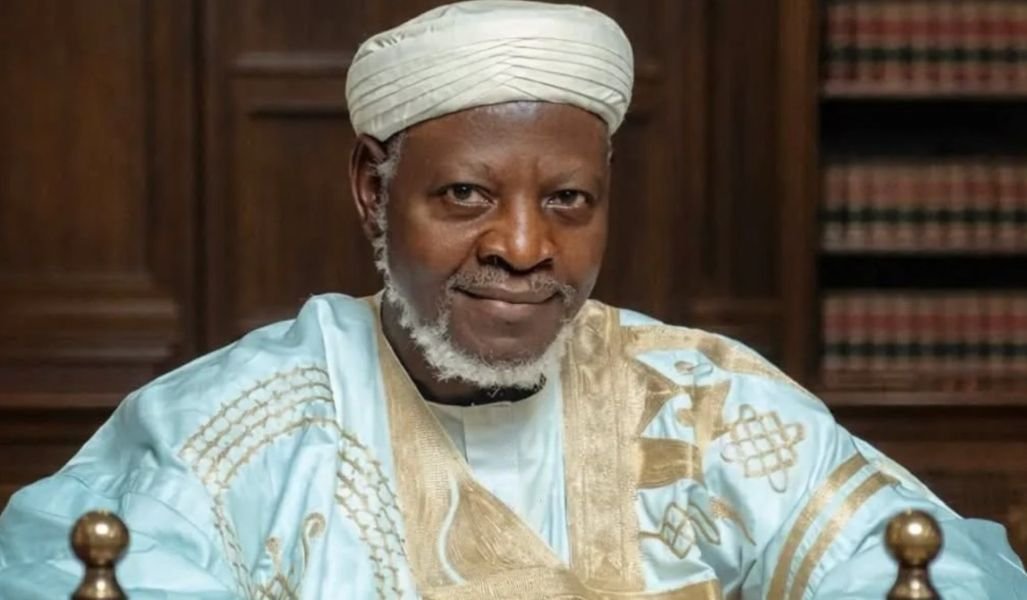
The courtroom fell silent as Sheikh Sani Abdulkadir, identified as the sixth defendant in the high-profile case, appeared in the recorded footage insisting that although he prayed for individuals linked to the alleged conspiracy, he advised them that a coup would not succeed and that betrayal would ultimately expose those involved.
In this report, we examine the key developments, reactions from stakeholders, and the broader implications.
Background of the Story
The Abuja Coup Plot Trial stems from allegations that six individuals conspired to destabilise and possibly overthrow the Bola Tinubu-led administration through a planned military takeover.
Security agencies had earlier announced the arrest of suspects said to be connected to discussions around a coup. The prosecution alleges that some of the accused engaged in planning and coordination activities, while the defence maintains that their clients are victims of overreach and procedural violations.
The trial has drawn national attention because of the gravity of coup allegations in a democratic setting and the sensitive constitutional questions surrounding the admissibility of confessional evidence.
Key Developments
During Monday’s proceedings, the fourth prosecution witness, identified as PW4, remained in the witness box as the alleged confession video of Abdulkadir was played before Justice Joyce Abdulmalik.
In the recording previewed in open court, Abdulkadir described himself as an Islamic cleric who had known the alleged ringleader, Colonel Ma’aji, for less than a year. He said he was approached through a man identified as Sanda, who informed him that his “oga” intended to stage a coup and required spiritual prayers and divination to determine its chances of success.
Abdulkadir told investigators that after conducting prayers, he informed them the operation would fail and that two individuals would betray those involved. According to him, Sanda later relayed a message requesting further prayers to prevent the predicted betrayal.
He stated that money was subsequently sent to him for prayers and charity, alongside names of persons allegedly involved in the plot so they could be included in the spiritual exercise. He insisted in the video that the funds were not payments for supporting a coup but were strictly meant for religious purposes.
The cleric further narrated that shortly after the prayers commenced, Sanda informed him that Colonel Ma’aji had not been seen for four days. He said he later learnt through media reports that arrests had been made in connection with an alleged coup plot.
Abdulkadir admitted he understood that a coup meant a military overthrow of government but said he did not report the alleged discussions because he did not know who to approach.
He also told investigators that his arrest followed a visit to the Economic and Financial Crimes Commission https://www.efcc.gov.ng after discovering that his bank account had been flagged when he attempted to withdraw part of the transferred funds. According to him, he contacted an EFCC deputy director and was invited to the commission’s office, where he explained that the money was meant for prayers.
In the recording, he maintained that while in EFCC custody, he did not make any statement relating to a coup. Before the video ended, Abdulkadir stated that he was neither assaulted nor tortured and that his statements were made voluntarily.
Following the playback, the prosecution moved to tender extra-judicial statements allegedly made by the first to fifth defendants before a Special Investigation Panel and military police authorities, as well as the sixth defendant’s statement before military police investigators.
Reactions from Stakeholders
Counsel to all six defendants immediately raised objections to the admissibility of both the written statements and the accompanying video recordings.
The first defendant’s lawyer argued that the written statement sought to be admitted did not correspond with what was shown in the video regarding voluntariness.
The second defendant’s counsel contended that his client was not informed of his right to legal representation and was denied access to counsel before the statement was recorded. He further argued that the video played in court did not capture the making of the written statement sought to be tendered.
Lawyers to the third, fourth and fifth defendants similarly challenged the admissibility of the statements, alleging violations of the Administration of Criminal Justice Act and the Evidence Act. One defence counsel argued that Sections 15 and 17 of the ACJA, which provide for legal representation during the taking of statements, were breached.
Another alleged that his client was coerced and that the video failed to clearly demonstrate the absence of restraint or inducement at the time the statement was made.
Counsel to the sixth defendant also objected, insisting that both the written and video statements credited to Abdulkadir were obtained through inducement and were not voluntarily made.
Responding, the prosecution urged the court to dismiss the objections and conduct a single trial-within-trial to determine the voluntariness of all disputed statements, arguing that the law does not require separate proceedings for each defendant.
Implications
The Abuja Coup Plot Trial has now shifted focus from the alleged conspiracy itself to the integrity of the evidence presented by the prosecution.
Legal analysts say the court’s decision on admissibility could significantly shape the trajectory of the case. If the statements are admitted, they may form a substantial part of the prosecution’s case. If excluded, the state may need to rely more heavily on independent corroborative evidence.
Beyond the immediate trial, the matter raises broader questions about due process, suspects’ rights under the ACJA, and the balance between national security enforcement and constitutional safeguards.
For many observers, the handling of the trial could influence public confidence in Nigeria’s criminal justice system, especially in politically sensitive cases.
What Happens Next
In her ruling, Justice Joyce Abdulmalik ordered a joint trial-within-trial to determine the voluntariness and admissibility of both the written and video statements of all six defendants.
The matter was adjourned to May 12, 2026, for continuation of proceedings, where the court will begin hearing arguments and evidence specifically focused on whether the contested statements were freely and lawfully obtained.
Conclusion
As the Abuja Coup Plot Trial progresses, the courtroom battle over confession videos and written statements has become the central issue.
With allegations of a coup attempt hanging over the defendants and serious constitutional questions under review, the outcome of the trial-within-trial could define the future direction of one of Nigeria’s most closely watched criminal proceedings.
The iNews Times will continue to provide authoritative and in-depth coverage as developments unfold.