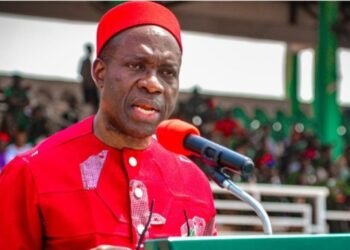
Soludo Reform Agenda Receives Backing from Archbishop Ibezim at Awka Synod.
Church leaders commend free education and infrastructure drive, but warn of rising insecurity and hardship.
AWKA, NIGERIA – The iNews Times | Soludo reform agenda received strong backing from the Archbishop of the Ecclesiastical Province of the Niger https://anglican-nig.org and Bishop of Awka Diocese, His Grace, Most Rev Alexander Ibezim, who has urged Anambra State Governor, Prof Chukwuma Soludo, to remain steadfast in pursuing policies aimed at sustainable growth and prosperity.
The cleric gave the charge during the First Session of the 14th Synod of the Diocese of Awka, held at the Cathedral Church of Saint Faith, Awka, where religious leaders and stakeholders gathered to reflect on governance, youth development and the future of the church.
In this report, we examine the key developments, reactions from stakeholders, and the broader implications.
Background of the Story
The 14th Synod of the Diocese of Awka, themed “Repositioning the Church for the Future: A Focus on Youth Ministry,” attracted more than 45 bishops from across Nigeria.
The gathering served not only as a spiritual convocation but also as a platform to evaluate leadership at both state and national levels.
Over the past years, the Soludo reform agenda has centred on infrastructural renewal, educational reforms, economic restructuring and human capital development in Anambra State.
Key Developments
Archbishop Ibezim commended the state government for what he described as bold steps toward repositioning Anambra for long-term development.
He particularly praised the introduction of free education in public primary and secondary schools, describing it as a landmark achievement that guarantees broader access to quality learning for children across the state.
The Archbishop also acknowledged the recruitment of teachers, road construction projects, promotion of digital literacy and expansion of vocational skills programmes as critical components of the Soludo reform agenda.
While congratulating Governor Soludo and his deputy, Dr Onyeka Ibezim, on their reelection, the Archbishop prayed for divine wisdom and strength to enable them consolidate on existing reforms.
However, he expressed concern over worsening insecurity, inflation and economic hardship across Nigeria, urging the Federal Government and security agencies to intensify intelligence-driven policing and community-based protection strategies.
“The protection of lives and property remains a fundamental responsibility of the state,” he said, adding that swift response to threats must be prioritised.
Reactions from Stakeholders
Other clerics at the synod reinforced the call for societal renewal beginning with the youth.
The Bishop of Aguata Diocese, Rt Rev Samuel Ezeofor, challenged the church, families and society to create environments where young people can freely express themselves and contribute meaningfully to nation-building.
In his sermon, the Bishop of Okene Diocese, Rt Rev Dr Emmanuel Onsachi, referencing 1 Timothy 4:12, urged young people to believe in their abilities and resist discouragement.
“If you believe in yourselves, no one will have any reason to despise you. You are not a nonentity; you are an asset,” he declared, encouraging youths to rise above limitations and unlock their potential.
Implications
The endorsement of the Soludo reform agenda by influential church leaders underscores the growing intersection between governance and faith-based advocacy in Nigeria.
Religious institutions in the South-East remain powerful opinion shapers, and their support could strengthen public confidence in state-level reforms.
At the same time, the Archbishop’s warning about national insecurity and inflation reflects wider frustrations among citizens, signalling that reforms at the state level must operate within a broader national economic framework.
For Anambra, sustained implementation of free education and youth-focused policies could reshape the state’s socio-economic trajectory if effectively managed.
What Happens Next
As Governor Soludo begins another phase of leadership following his reelection, attention will likely shift to how the Soludo reform agenda translates into measurable economic and social outcomes.
Observers expect further investment in education, infrastructure and digital innovation, alongside intensified collaboration with federal security agencies to tackle insecurity.
Church leaders have also signalled their readiness to continue engaging government constructively while holding leaders accountable.
Conclusion
The call by Archbishop Ibezim for steadfast commitment to reform highlights both optimism and caution surrounding Anambra’s development journey.
While commendations reflect visible progress in education and infrastructure, lingering national challenges demand coordinated action at all levels of governance.
As debates on reform, youth empowerment and security continue, The iNews Times will keep monitoring how leadership decisions shape the future of Anambra State and beyond.