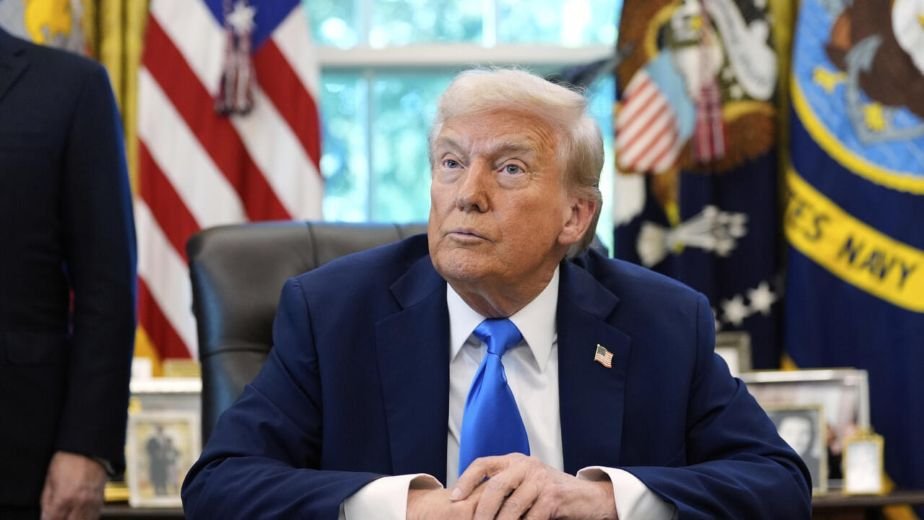
Middle East Peace Deal Nears Completion as Trump Signals Diplomatic Progress.
US president says negotiations are nearing completion, but disputes over Lebanon and regional security continue to threaten progress.
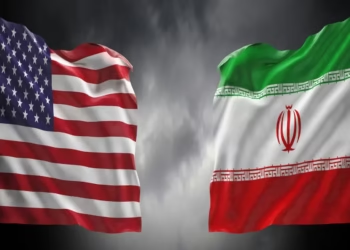
WASHINGTON, UNITED STATES – The iNews Times | A proposed Middle East peace deal may be finalized within days, according to United States President Donald Trump, who expressed optimism that ongoing negotiations involving Iran and Israel are approaching a decisive stage following a temporary reduction in hostilities between the two regional rivals.
Trump’s remarks come as diplomatic efforts intensify to transform a fragile ceasefire into a broader political agreement capable of ending months of military confrontation that have destabilized the Middle East, disrupted global energy markets and heightened fears of a wider regional conflict.
In this report, we examine the key developments, reactions from stakeholders, and the broader implications.
Background of the Story
The latest diplomatic push follows months of tension between Iran and Israel that have repeatedly threatened to draw the wider region into conflict.
Recent weeks have witnessed a series of military exchanges, diplomatic interventions and international mediation efforts aimed at preventing further escalation. Pakistan has played a prominent role in facilitating discussions between key stakeholders, while the United States has continued to engage both allies and regional actors in pursuit of a long-term settlement.
Although previous rounds of negotiations encountered setbacks, renewed diplomatic momentum emerged after both sides signaled willingness to reduce hostilities and explore pathways toward a political resolution.
The conflict has attracted global attention because of its potential impact on regional stability, international trade routes and energy supplies, particularly through the strategically important Strait of Hormuz.
Key Developments
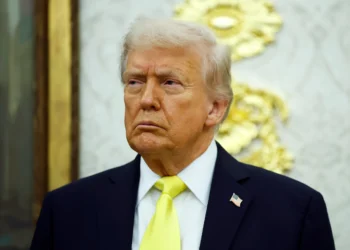
Speaking to reporters after returning to Washington, Trump said negotiations were entering what he described as their final phase.
According to the US president, recent military exchanges between Tehran and Tel Aviv have subsided, creating a more favorable environment for diplomacy and increasing hopes that a comprehensive agreement can be reached.
“We are very close to reaching a good agreement,” Trump said, adding that negotiations could be concluded within “two or three days” if current progress continues.
Trump has repeatedly indicated that both Iran and Israel are seeking an immediate ceasefire while negotiators work toward a broader peace framework. He also suggested that discussions have advanced significantly compared to previous rounds of talks.
However, the situation remains delicate.
A recent exchange of missiles between Iran and Israel underscored the fragility of the current truce. Although reports indicated that the attacks did not result in casualties, the incident served as a reminder that tensions remain high and that any miscalculation could jeopardize ongoing negotiations.
Israeli Prime Minister Benjamin Netanyahu has maintained that Israel reserves the right to respond to future threats, while Israeli Defence Minister Israel Katz has signaled that military operations against Hezbollah targets in Lebanon will continue whenever security concerns arise.
Reactions from Stakeholders
Despite the optimism expressed by Washington, significant differences remain between the parties involved.
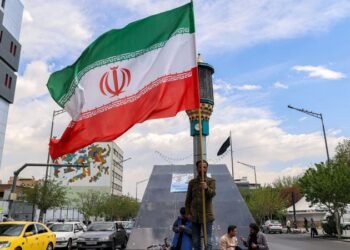
Iranian officials have consistently argued that any durable agreement must address developments in Lebanon, where clashes involving Hezbollah and Israeli forces continue to complicate efforts toward a comprehensive settlement. Reports indicate that Tehran views the Lebanese front as an integral component of any lasting peace arrangement.
Iranian President Masoud Pezeshkian has nevertheless reaffirmed his country’s commitment to diplomacy, signaling that Tehran remains willing to continue negotiations aimed at resolving the crisis through political means.
Meanwhile, US Vice President JD Vance acknowledged that although Washington and Israel maintain a strong strategic relationship, their policy priorities do not always align perfectly on every regional security issue.
Reports from Washington also suggest that Trump personally encouraged Israeli leaders to exercise restraint in order to prevent a broader military escalation while negotiations remain underway.
Implications
The outcome of the proposed Middle East peace deal could have far-reaching consequences beyond the immediate conflict.
A successful agreement would likely reduce tensions across one of the world’s most volatile regions, improve investor confidence and ease concerns about disruptions to global energy supplies.
The Strait of Hormuz, through which a significant portion of the world’s oil shipments passes, remains a critical factor in international markets. Any sustained improvement in regional stability could help stabilize energy prices and reduce uncertainty for governments and businesses worldwide.
For the United States, a diplomatic breakthrough would also represent a significant foreign policy achievement, particularly after months of complex negotiations involving multiple regional and international actors.
However, analysts caution that unresolved issues relating to Lebanon, regional security arrangements and long-term guarantees could still derail the process if compromises are not reached.
What Happens Next
Negotiators are expected to continue intensive discussions over the coming days as efforts focus on resolving outstanding disagreements.
Attention will be centered on whether Iran, Israel and their international partners can bridge differences over Lebanon and broader security concerns.
Observers will also monitor developments on the ground, particularly in southern Lebanon and other sensitive areas where renewed military activity could undermine diplomatic progress.
Should current momentum be sustained, officials believe a framework agreement could emerge within days. However, diplomats remain cautious given the history of failed ceasefires and interrupted negotiations in the region.
Conclusion
The push for a Middle East peace deal has entered what could be its most critical phase, with President Donald Trump expressing confidence that negotiators are close to reaching an agreement. While recent reductions in hostilities have created a rare opportunity for diplomacy, unresolved disputes involving Lebanon and regional security continue to pose serious challenges. Whether the coming days deliver a historic breakthrough or another setback may depend on the willingness of all sides to convert a fragile ceasefire into a lasting political settlement capable of reshaping the future of the Middle East.