Strait of Hormuz Security Operation Signals Renewed Maritime Confrontation.
Tehran-linked forces challenge American naval shield despite declared ceasefire.
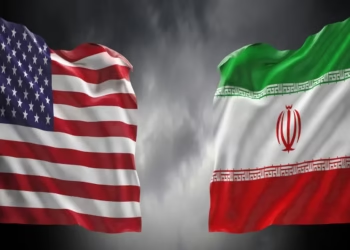
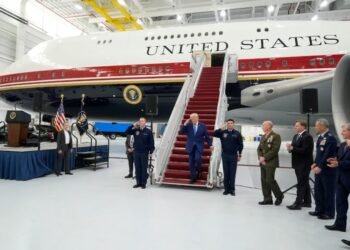
WASHINGTON, UNITED STATES – The iNews Times | The Strait of Hormuz security operation intensified on Monday as the United States military https://www.army.mil confirmed it destroyed six Iranian small boats and intercepted multiple cruise missiles and drones allegedly launched by Tehran, in a high-stakes effort to safeguard global shipping through one of the world’s most strategic waterways.
U.S. Admiral Brad Cooper, head of U.S. Central Command, disclosed that the Islamic Revolutionary Guard Corps had repeatedly attempted to “interfere” with President Donald Trump’s initiative aimed at restoring full commercial navigation across the Strait. His remarks signal a deepening maritime confrontation despite a ceasefire said to have begun on April 8.
In this report, we examine the key developments, reactions from stakeholders, and the broader implications.
Background of the Story
The Strait of Hormuz has long been regarded as a geopolitical pressure point. Roughly a fifth of global oil supplies transit the narrow corridor between the Persian Gulf and the Gulf of Oman, making it indispensable to global energy markets.
Tensions between Washington and Tehran have escalated in recent weeks following reported disruptions to commercial vessels and alleged threats from Iranian-backed forces. The U.S. responded by launching a large-scale maritime stabilization mission, framed as necessary to protect shipping lanes and uphold freedom of navigation.
Although a ceasefire was announced on April 8, ambiguity remains over its scope and durability. Admiral Cooper declined to clarify whether the truce was still operational, underscoring the fragile and fluid security environment.
Key Developments
According to U.S. military officials, Iranian forces launched multiple cruise missiles, drones, and small boats targeting vessels under American protection.
“The IRGC has launched multiple cruise missiles, drones, and small boats at ships we are protecting. We have defeated each and every one of those threats through the clinical application of defensive munitions,” Admiral Cooper stated.
The Pentagon confirmed that six Iranian small boats were destroyed during the engagement. Additionally, American forces intercepted incoming cruise missiles and unmanned aerial systems before they could strike protected vessels.
The Strait of Hormuz security operation reportedly involves approximately 15,000 U.S. troops, Navy destroyers, more than 100 land- and sea-based aircraft, helicopters, electronic warfare systems, and undersea assets. Military commanders on the ground have been granted full authority to defend commercial shipping and U.S. units.
Notably, Cooper clarified that the U.S. is not conducting traditional ship-to-ship escorts. Instead, it has deployed what he described as a “multi-layered defensive arrangement” designed to create a broader security umbrella across the waterway.
“If you’re escorting a ship, you’re playing kind of one on one. I think we have a much better defensive arrangement in this process,” he explained. “We have a much broader defensive package than you would have ever if you were just escorting.”
Meanwhile, a U.S. blockade preventing ships from entering or leaving Iranian territory remains in force. Cooper described the blockade as exceeding expectations, suggesting tighter enforcement and possible economic pressure on Tehran.
Reactions from Stakeholders
American defense officials have framed the Strait of Hormuz security operation as purely defensive, aimed at ensuring global trade flows without disruption.
A senior Pentagon official, speaking on condition of anonymity, said the U.S. “will not tolerate any attempt to weaponize international waterways.”
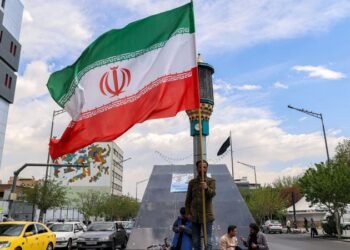
On the Iranian side, state-linked outlets have reportedly criticized Washington’s posture as provocative, arguing that increased military presence risks further destabilization in the Gulf.
Energy analysts have also weighed in. “Even limited skirmishes in the Strait of Hormuz send shockwaves through oil markets,” said maritime security analyst Daniel Reeves. “Insurance premiums spike, freight costs rise, and volatility spreads quickly.”
Implications
The renewed hostilities within the Strait of Hormuz security operation carry far-reaching economic and geopolitical consequences.
Any sustained disruption in the strait could trigger spikes in global oil prices, affecting fuel costs from Lagos to London. For import-dependent economies like Nigeria, volatility in energy markets often translates into fiscal uncertainty, foreign exchange pressures, and domestic inflation.
Diplomatically, the situation tests the credibility of the April ceasefire and raises concerns about potential escalation into a broader regional conflict involving Gulf states or international coalitions.
The ongoing blockade of Iranian ports further intensifies economic strain on Tehran, potentially pushing negotiations toward either compromise or confrontation.
What Happens Next
Military analysts suggest that the coming days will be critical in determining whether tensions subside or spiral further.
If Iranian forces scale back operations, the Strait of Hormuz security operation may stabilize commercial flows and reinforce U.S. maritime dominance in the region. However, additional missile launches or naval confrontations could trigger retaliatory measures.
The absence of formal ship escorts indicates Washington is betting on deterrence through overwhelming presence rather than direct convoy-style protection.
Much will also depend on diplomatic backchannels and whether the April 8 ceasefire can be reaffirmed with clearer enforcement mechanisms.
Conclusion
The Strait of Hormuz security operation marks a decisive moment in U.S.–Iran maritime tensions, combining military precision with strategic signaling. While American forces claim to have neutralized every threat thus far, the fragile ceasefire and ongoing blockade underscore the volatility of one of the world’s most vital shipping corridors.
As global markets watch closely, the balance between deterrence and escalation may define the next phase of this high-stakes confrontation.