Adulterated Alcohol: Police Capture Two Over Fake Drinks in Anambra.
Crackdown on fake alcoholic beverages exposes dangerous syndicate operating mini-factory in the state.
AWKA, NIGERIA – The iNews Times | Adulterated alcohol took centre stage in Anambra State on Monday after operatives of the State Police Command apprehended two suspected producers of counterfeit alcoholic beverages and recovered a cache of fake products and hazardous chemicals allegedly used in the operation.
The suspects, identified as Ikechukwu Okeke, 42, and Okeke Chukwuemeka, 38, were arrested in the early hours of June 15, 2026, by operatives attached to the Rapid Response Squad and the Vehicle Crime Response Unit (VCRU), following what police described as actionable intelligence.
The operation marks a major breakthrough in Anambra’s growing battle against counterfeit consumable products, with authorities warning that such illicit activities pose serious health and economic dangers to unsuspecting consumers.
In this report, The iNews Times examines the key developments, reactions from stakeholders, and the broader implications.
Background of the Story
Counterfeit alcoholic beverages have remained a persistent public health threat across Nigeria, with regulatory agencies repeatedly raising alarm over the circulation of adulterated drinks in local markets.
These fake products are often manufactured in unsafe environments using harmful chemicals and repackaged to mimic trusted brands. Experts warn that consumption can lead to poisoning, organ damage, and in severe cases, death.
In Anambra, recent intelligence-led security operations have increasingly uncovered underground production hubs, highlighting the scale of the problem and the challenge facing law enforcement agencies.
Key Developments
Police Public Relations Officer in the state, SP Tochukwu Ikenga, confirmed the arrest in a statement issued on Monday, disclosing that preliminary investigations linked the suspects to a syndicate specialising in the adulteration and counterfeiting of multiple alcoholic brands.
According to Ikenga, the suspects allegedly confessed during interrogation and subsequently led operatives to a hidden mini-factory where the counterfeit drinks were being produced.
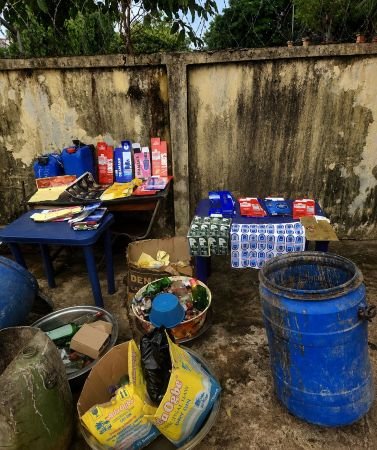
At the site, officers recovered several suspected adulterated products, including Seaman’s Schnapps, McDowell’s, Eagle Schnapps, Elliot Hot Drinks, and Baileys Fresh Cream.
Police also seized dangerous chemicals believed to have been used in the adulteration process, alongside empty bottles, branded labels, and packaging materials intended for continued production.
Investigators say the discovery suggests a well-coordinated operation with the capacity to flood markets with counterfeit beverages disguised as legitimate products.
Reactions from Stakeholders
The Commissioner of Police in Anambra State, Ikioye Orutugu, commended the operatives for what he described as a “timely and strategic operation.”
He warned individuals involved in the production and sale of counterfeit consumables to immediately desist or face prosecution.
“This operation sends a strong message that criminal syndicates endangering public health will not be tolerated. We are committed to dismantling every network involved,” Orutugu said.
Consumer rights advocates have also welcomed the development, stressing that stronger collaboration between law enforcement and regulatory agencies such as National Agency for Food and Drug Administration and Control is necessary to tackle the wider spread of fake products.
Implications
The adulterated alcohol has raised fresh concerns about product safety and market regulation in Nigeria.
Beyond the health risks, counterfeit products hurt legitimate businesses by damaging brand reputation and reducing consumer trust. Industry analysts say the presence of fake alcoholic products can also lead to significant revenue losses for manufacturers and government tax systems.
For consumers, the incident is another warning to verify products before purchase, especially in informal retail outlets where fake goods are more likely to circulate.
What Happens Next
Police say the suspects remain in custody while forensic analysis is being conducted on the recovered exhibits for evidential purposes.
Authorities have also intensified investigations to uncover other members of the syndicate and trace the wider distribution chain across Anambra and neighbouring states.
Security experts believe more arrests may follow as law enforcement deepens its crackdown on counterfeit production rings.
Conclusion
The latest adulterated alcohol arrest in Anambra underscores the dangerous scale of counterfeit beverage production and the urgent need for stronger enforcement, consumer awareness, and regulatory oversight.
As investigations continue, the outcome of this case could shape future anti-counterfeit operations in the state and beyond, reinforcing the message that public health crimes will face serious legal consequences.