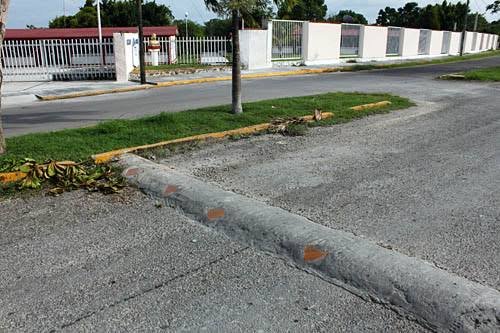
Anambra Government Outlaws Unauthorized Speed Bumps on Public Roads.
Government moves to end indiscriminate installations that damage roads and endanger motorists.
AWKA, NIGERIA – The iNews Times | Anambra bans unauthorized speed bumps as the state government issues a firm warning to residents and communities against constructing them without official approval or outside designated locations.
The directive, announced by the Commissioner for Information and Value Reformation, Law Mefor, follows growing concerns over the uncontrolled proliferation of speed bumps across Anambra’s public roads. These structures, often installed by individuals or neighbourhood groups, have been linked to accelerated road deterioration, increased vehicle damage, and heightened safety risks for drivers and passengers.
In this report, we examine the key developments, reactions from stakeholders, and the broader implications.
Background of the Story
For years, communities across Anambra have taken road safety into their own hands by erecting speed bumps near schools, markets, churches, and residential areas. While the intention was often to slow traffic and protect pedestrians, the absence of regulation led to poorly designed, irregularly spaced, and sometimes dangerously high barriers. The cumulative effect has strained the state’s road network, which already faces pressure from heavy traffic and seasonal weather challenges. The iNews Times has previously reported on the wider struggle to maintain quality infrastructure in the South-East, making this policy a significant step toward standardized road management.
Key Developments
According to Commissioner Mefor, the state government has now outlawed the construction of any speed bump on public roads without prior authorization. Going forward, every proposed speed bump and its exact location must receive formal approval from the Anambra State Government. A uniform design standard will be issued exclusively by the Ministry of Works and Infrastructure to ensure consistency in height, width, and materials. Installation will be restricted to critical zones such as markets, churches, schools, and other sites specifically determined by the authorities. Any deviation constitutes an offence. Residents seeking clarification have been directed to contact the Office of the Commissioner for Works and Infrastructure.
Reactions from Stakeholders
Commissioner Mefor emphasized the public-interest rationale behind the ban. “Individuals and communities are no longer permitted to construct speed bumps on public roads without prior approval,” he stated. “Going forward, all speed bumps and their locations must be approved by the State Government. A uniform design for speed bumps will now have to be sought from the State’s Ministry of Works and Infrastructure. Speed bumps will be restricted to critical areas such as markets, churches, schools, and other locations as determined by the government. It will be an offence to construct speed bumps without authorisation or outside approved locations.”
While formal responses from community leaders and transport unions are still emerging, the policy is expected to draw mixed reactions support from those tired of damaged vehicles and opposition from groups who relied on self-help measures for local safety.
Implications
The decision carries clear implications for road infrastructure longevity, public safety, and the relationship between citizens and the state. By centralizing control, Anambra aims to reduce the financial burden of constant road repairs caused by non-standard speed bumps. It also seeks to lower the risk of accidents linked to unexpected or poorly marked barriers. Economically, the policy could ease costs for motorists and commercial transporters who frequently report vehicle damage. Politically, it reinforces the administration’s authority over public space and signals a broader push for orderly urban and rural development. Socially, it places the onus on communities to engage official channels rather than resort to informal solutions.
What Happens Next
Enforcement is expected to begin immediately, with relevant ministries and local government authorities tasked with monitoring compliance. Existing unauthorized speed bumps may face removal or regularization under the new uniform design. The Ministry of Works and Infrastructure is anticipated to release detailed guidelines on approved designs and application procedures in the coming weeks. Residents and community associations are advised to halt any ongoing or planned installations and seek official clearance.
Conclusion
Anambra’s firm stance against unauthorized speed bumps marks a decisive effort to reclaim control over its road network and prioritize both infrastructure preservation and public safety. As the state moves from reactive repairs to proactive regulation, the success of this policy will depend on clear communication, consistent enforcement, and genuine partnership with the communities it aims to protect. The iNews Times will continue to monitor developments as the new rules take effect across Anambra.