Libyan Authorities Charge Two Nigerians Over Controversial Social Media Activities.
Security operatives in Tripoli intensify digital surveillance as concerns grow over online content linked to public safety.
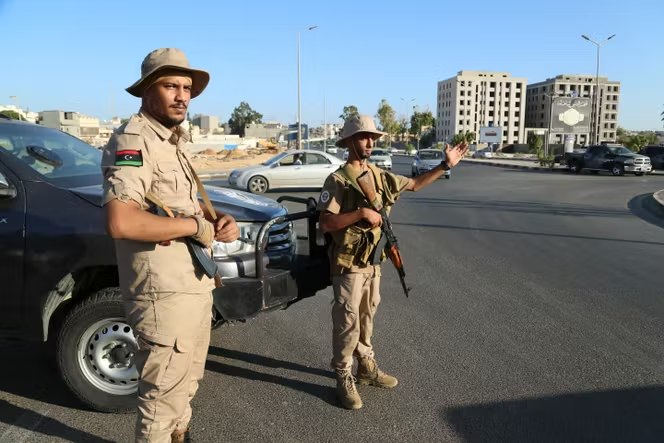
TRIPOLI, LIBYA – The iNews Times | Libyan Authorities have arrested two Nigerian nationals in the coastal town of Qarabouli over alleged inciting social media posts said to promote violence and criminal activities.
The arrests, carried out by security forces in Tripoli, mark another major step in Libya’s tightening grip on online activities as officials increase surveillance of digital platforms to curb threats to public order and national stability.
The incident has also drawn attention to the growing legal risks faced by foreign nationals, particularly migrants, over online conduct in countries with strict security laws.
In this report, The iNews Times examines the key developments, reactions from stakeholders, and the broader implications.
Background of the Story
Over the past few years, Libyan Authorities have strengthened monitoring of social media activities as part of efforts to combat insecurity and maintain stability in a country still navigating years of political unrest.
Following prolonged armed conflict and internal divisions, the Libyan government has treated digital content with increasing caution, especially materials perceived to incite violence or criminal behaviour.
This has led to stricter enforcement actions against both citizens and foreign residents found violating cyber-related laws.
For many African migrants living in Libya, the legal environment remains complex, with security agencies maintaining close oversight of activities both online and offline.
Key Developments
According to security officials, the two Nigerians were arrested after investigations linked them to the circulation of videos and other social media materials considered provocative and dangerous.
The content was described by Libyan Authorities as having an “inciting nature” capable of encouraging violent actions and criminal conduct.
Officials said such materials violate Libyan laws and represent a direct threat to public peace and national security.
Authorities confirmed that formal charges have already been filed against the suspects.
The legal process at the initial stage has been completed, and both individuals have now been referred to the Public Prosecution Office for further investigation and possible prosecution under Libyan criminal law.
The identities of the suspects have not yet been publicly disclosed.
Reactions from Stakeholders
While no official statement has yet been issued by Nigerian diplomatic officials, the development is expected to attract attention from migrant advocacy groups and the Nigerian mission in Libya.
Legal observers say cases involving Nigerians abroad often raise issues of fair trial rights, legal representation, and consular intervention.
A migration policy analyst who spoke to The iNews Times said the arrests reflect a growing global reality where social media behaviour is increasingly treated as a national security matter.
“Many migrants do not fully understand how strict digital laws can be in some countries. Something seen as harmless online could have serious consequences,” the analyst noted.
Implications
The move by Libyan Authorities highlights the broader challenge of balancing freedom of expression with national security concerns.
It also serves as a warning to Nigerians and other foreign nationals abroad about the importance of understanding local laws regarding online activities.
For Libya, the arrests reinforce its message that digital spaces will continue to be monitored closely as part of broader security operations.
For Nigeria, the case may add to ongoing concerns about the welfare and legal vulnerabilities of its citizens living in unstable foreign environments.
What Happens Next
The Public Prosecution Office is expected to continue investigations and determine whether the suspects will face full criminal proceedings.
If convicted, they could face penalties ranging from fines to imprisonment under Libya’s criminal statutes.
Nigerian diplomatic authorities may also step in to monitor proceedings and ensure the suspects are granted legal rights under international law.
For now, the case remains under active review, with more details expected in the coming days.
Conclusion
The arrest of two Nigerians by Libyan Authorities over alleged inciting social media posts underscores the growing role of digital surveillance in modern security enforcement.
As governments across the world tighten regulations around online conduct, the incident serves as a reminder that social media actions can carry serious legal consequences, especially in foreign jurisdictions.
For more updates on international affairs, migration, and legal developments affecting Nigerians abroad, stay with The iNews Times.