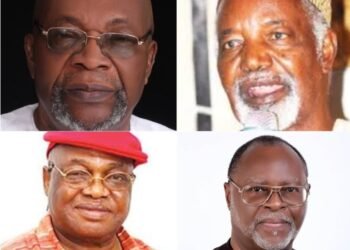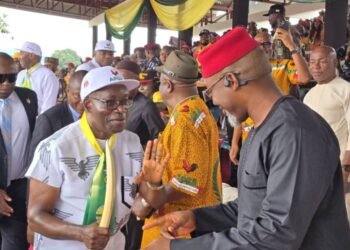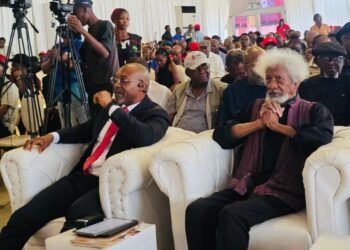
Former Minister Delivers 28th Wole Soyinka Lecture, Inaugurates Seadogs’ Martyrs’ Day.
Former Aviation Minister Osita Chidoka delivers powerful address on equal citizenship, justice and national ideals in Port Harcourt.
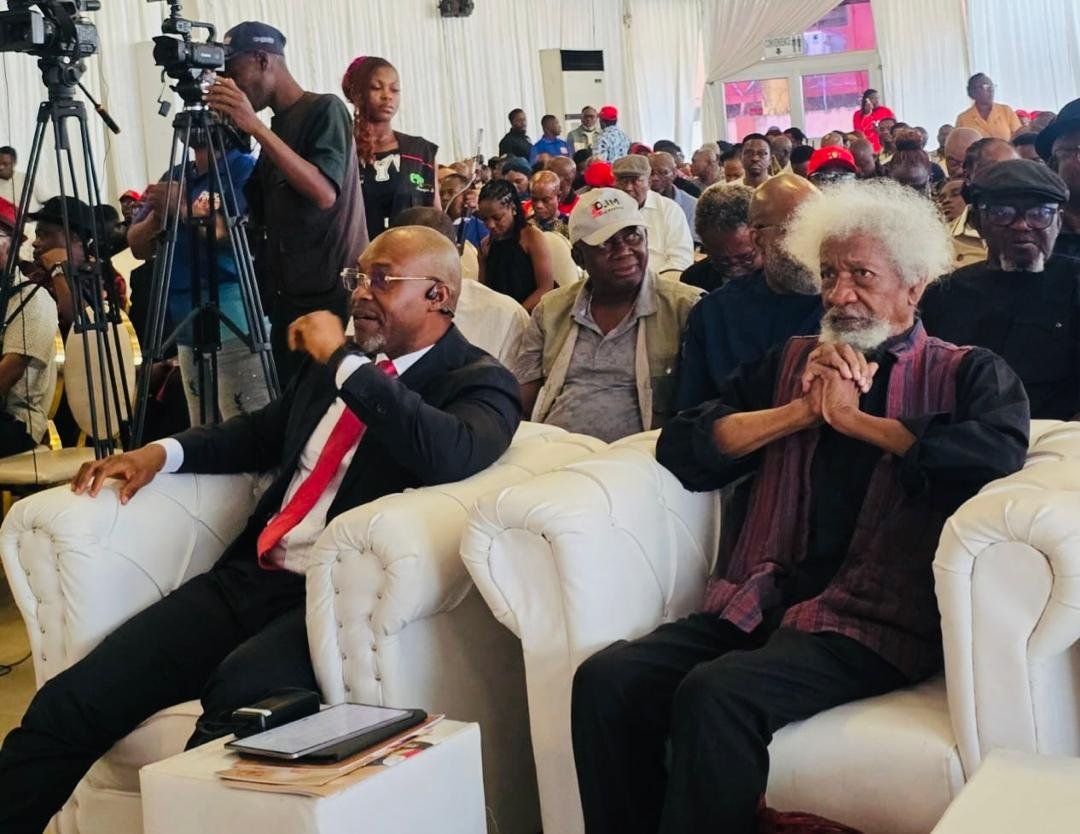
PORT HARCOURT, NIGERIA — The iNews Times | The 28th Wole Soyinka Lecture, delivered yesterday in Port Harcourt by former Aviation Minister Osita Chidoka, doubled as the formal inauguration of the National Association of Seadogs’ Martyrs’ Day and offered a searching examination of the unfinished promise of an accountable and just Nigeria.
Speaking before members of the confraternity and invited guests, Chidoka traced the country’s founding anxieties, the moral language of its independence anthem, and the persistent gap between constitutional ideals and lived experience. The lecture, closely followed by The iNews Times, framed national revival around three interlocking foundations: equal citizenship, answerable public power, and common brotherhood.
In this report, we examine the key developments, reactions from stakeholders, and the broader implications.
Background of the Story
Nigeria approached independence in 1960 carrying both hope and deep-seated fear. Minority ethnic groups worried that regional majorities would dominate the new state. The Willink Commission formally recognised those fears and placed minority protection at the centre of the independence settlement. The national anthem that emerged from the same historic moment supplied the moral vocabulary: “Though tribe and tongue may differ, in brotherhood we stand.” The line did not deny difference; it insisted that difference must never cancel shared belonging. Beneath it lay a single, insistent request – a nation in which no citizen is oppressed.
Nearly sixty-six years later, that founding compact remains incomplete. On 18 February 1997, thirty-three members of the Pyrates Confraternity discovered how unfinished the promise still was when the very state that owed them protection turned against them. The National Association of Seadogs https://www.nas-int.org, the public face of the confraternity founded by Wole Soyinka, has chosen to mark that date as Martyrs’ Day, linking personal sacrifice to the larger struggle for accountable public power.
Key Developments
In his lecture, Chidoka argued that Nigeria was never intended merely as a geographic space occupied by different peoples. It was designed, by deliberate agreement, as a country of equal opportunity in which every citizen would enjoy the protection of the law without needing an ethnic sponsor, political godfather or personal connection.
The central obstacle, he maintained, is the absence of a genuine national consensus on those ideals. Without shared commitment, the principles of the anthem remain decorative rather than operative. Revival, he said, must therefore rest on three foundations: equal citizenship that treats every Nigerian as a rights-bearing individual; answerable public power that subjects authority to transparent rules and consequences; and common brotherhood that refuses to let identity cancel mutual obligation. Accountability, justice and civic courage are the practical means by which those principles move from anthem language into daily experience.
Reactions from Stakeholders
Although the lecture itself was the principal public statement, the decision to inaugurate Martyrs’ Day on the same occasion carried its own weight within the Seadogs community. Members present regarded the dual event as both commemoration and recommitment. Chidoka’s insistence that “it now falls to our generation to give it reality” was received as a direct charge rather than a rhetorical flourish. Outside the hall, the address is expected to circulate among civic groups, student organisations and reform-minded professionals who have long argued that institutional decay cannot be reversed without first restoring agreement on the basic terms of Nigerian citizenship.
Implications
The lecture arrives at a moment when questions of justice, state accountability and inter-group trust remain central to Nigeria’s political conversation. By anchoring contemporary demands in the Willink settlement and the independence anthem, Chidoka linked present grievances to the country’s original moral contract. The emphasis on equal citizenship without ethnic sponsorship challenges patronage networks that still shape access to opportunity and protection. For a generation that has watched institutions weaken, the call for answerable public power and civic courage offers both diagnosis and direction. Politically, the framing places responsibility not only on office-holders but on citizens who must insist that national ideals actually govern the exercise of power.
What Happens Next
The National Association of Seadogs is expected to institutionalise Martyrs’ Day as an annual observance, using it to keep the memory of 18 February 1997 alive while pressing broader demands for justice and accountability. Chidoka’s three foundations – equal citizenship, answerable public power and common brotherhood are likely to be taken up in subsequent public discussions, policy conversations and civic campaigns. Whether the lecture remains a single eloquent statement or becomes a reference point for organised pressure will depend on how widely its arguments are adopted beyond the confraternity’s own ranks.
Conclusion
Osita Chidoka closed by returning to the independence moment: Willink named the fear; the anthem gave the promise its language; the present generation must now give that promise substance. In an era when many Nigerians feel the distance between constitutional aspiration and daily reality has grown rather than narrowed, the 28th Wole Soyinka Lecture and the inauguration of Martyrs’ Day together restate an old but unfinished demand – that Nigeria become, in practice, the country of equal belonging its founders once described. The iNews Times will continue to follow how these ideas travel from the lecture hall into the wider national conversation.