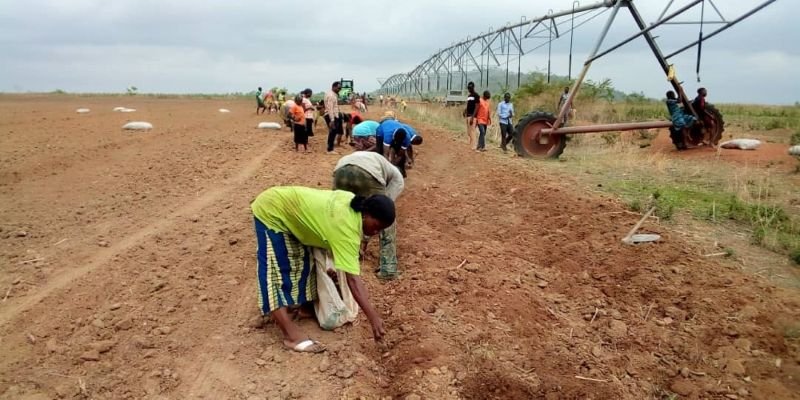
Anambra Agriculture Poised for Transformation as Farmers Urged to Adopt Business Mindset.
Commissioner Odoemena Unveils Strategy to Shift from Subsistence to Market-Driven Production Ahead of 2026 Season.
AWKA, Anambra State – The iNews Times | In a significant push to modernise farming in Anambra State, the Commissioner for Agriculture, Dr Ben Chuks Odoemena, has called on farmers to treat agriculture as a viable business enterprise rather than mere subsistence activity.
This directive, delivered during the flag-off of the 2026 farming season in Orumba North Local Government Area, seeks to address the persistent frustrations faced by Nigerian farmers due to outdated mindsets.
In this report, we examine the key developments, reactions from stakeholders, and the broader implications of this initiative.
Background of the Story
Agriculture remains the backbone of many communities in Anambra State, with several areas, including Orumba North, predominantly agrarian. However, challenges such as seasonal limitations, poor market linkages, and subsistence-focused practices have continued to limit productivity and profitability for farmers across the country.
Governor Prof. Chukwuma Charles Soludo’s Solution Agenda places strong emphasis on transforming the state into a hub for agri-business through deliberate policies and investments.
Key Developments
Dr Odoemena outlined a clear three-pillar programme designed to realise the governor’s vision for a modern, market-oriented, and private sector-driven agricultural economy.
The first pillar focuses on Private Sector-Led Agricultural Development using the Public-Private-Community Partnership (PPCP) model. The second emphasises Irrigation-Led Production to enable year-round farming activities instead of relying solely on rain-fed seasons.
The third pillar targets the development of Competitive Agricultural Value Chains, with emphasis on structured commodity supply systems driven by actual market demand.
The commissioner stressed that farmers must first identify market needs before deciding what to cultivate. “The moment we see farming as business, we farm for the market and not for the stomach,” he said.
Reactions from Stakeholders
Orumba North Local Government Mayor, Rtd Captain Casmir Nwafor, welcomed the state government’s intervention, noting that the area is largely agrarian and has been supporting farmers through distribution of improved, high-yielding inputs, particularly targeting youths and women.
He announced plans to establish a model Farm Institute along the Ufuma-Awa-Ndiukwuenu axis and a model Vegetable Farm in Oko.
The highlight of the event was the distribution of high-yielding farm inputs, including Pro-vitamin A cassava stems, maize, and rodent deterrents locally known as mvólî.
Implications
This renewed focus on Anambra agriculture carries significant economic and social implications. A shift to commercial farming could boost food security, create jobs for youths and women, reduce post-harvest losses, and position Anambra as a major player in Nigeria’s agricultural value chain.
Experts believe such market-driven approaches could attract more private investment and enhance the state’s competitiveness in agri-business.
What Happens Next
Farmers in Orumba North and across Anambra are expected to align with the new directives as they prepare for the 2026 season. The ministry has called for mutually beneficial partnerships with local government authorities, farmers’ cooperatives, and community leaders to ensure successful implementation of the three-pillar programme.
Conclusion
As Anambra State intensifies efforts to revolutionise its agricultural sector, the message from the Commissioner for Agriculture is clear: the future belongs to farmers who embrace business principles. The iNews Times will continue to monitor developments in Anambra agriculture and bring readers timely updates on how these policies translate into improved livelihoods for farmers and economic growth for the state.

![Fulani Herders Cut Plateau Farmer’s Hand After Dispute Over Fallen Cow [Photo]](https://inewstimes.com/wp-content/uploads/2026/09/Cattle-Grazing-350x250.webp)