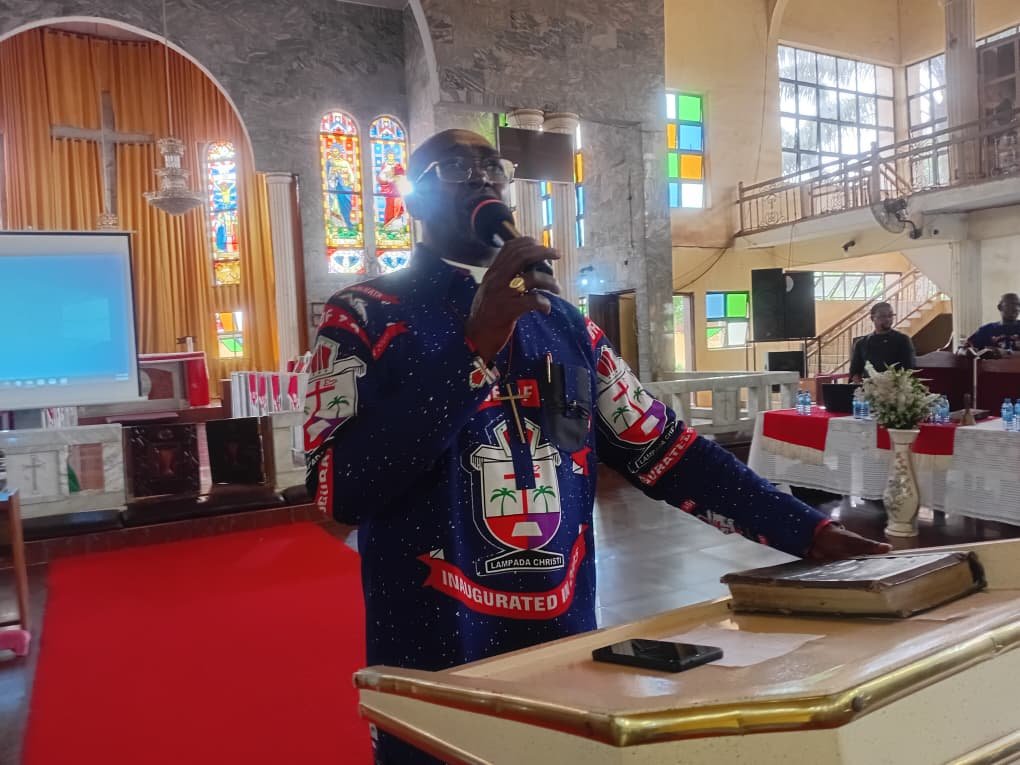
Bishop Ezeofor Decries Rising Idolatry Among Youths Despite Church Growth.
Anglican leader warns of rising traditional practices among young people despite growing number of churches.
EKWULOBIA, NIGERIA – The iNews Times | Bishop Ezeofor leads fight against idolatry among youths as the Anglican Bishop of Aguata Diocese, Rt Rev Samuel Ezeofor, raised alarm over the increasing embrace of idolatrous practices by young people even as churches multiply across society.
Speaking on Saturday during the official opening of the maiden Aguata Diocesan lecture series themed “Culture, Tradition and the Gospel” at the Cathedral Church of Saint John, Ekwulobia, the bishop placed responsibility on both parents and ministers of God. He urged priests to take decisive action to reverse the trend and properly guide the younger generation.
In this report, we examine the key developments, reactions from stakeholders, and the broader implications.
Background of the Story
The tension between Christian faith and indigenous cultural practices has long shaped religious discourse in Igbo land and across Anambra State. While many communities celebrate their heritage, some traditional elements have been viewed with suspicion by sections of the church. At the same time, a noticeable number of youths have begun returning to ancestral practices, a development church leaders attribute to disappointment with contemporary Christianity and a search for identity. The Aguata Diocese’s decision to launch a dedicated lecture series reflects a deliberate effort to address this complex intersection of culture, tradition and the gospel in a structured public forum. The iNews Times notes that such conversations are becoming increasingly urgent as identity questions deepen among the younger generation in the South-East.
Key Developments
Bishop Ezeofor, who also serves as National Chairman of the Evangelical Fellowship in the Anglican Communion (EFAC), explained that the diocese chose to pioneer the lecture series to clarify distinctions that many young people find confusing. He described culture as a people’s identity and warned against misconceptions that could threaten social cohesion. Christians, he stressed, must live as the gospel in action by engaging in behaviours capable of winning souls for Christ.
Professor Kanayo Nwadialor of the Department of Religion and Human Resources at Nnamdi Azikiwe University, Awka, delivered a lecture titled “Building Ancestral Heritage and Christian Faith.” He expressed regret over the gradual disappearance of respect for elders in Igbo society. Nwadialor argued that there is nothing inherently wrong with baptising children with Igbo or native names, noting that many such names arise from specific family circumstances. He also dismissed the notion that the use of kola nut in church celebrations constitutes idolatry and called on Christians to support cultural practices that do not conflict with development or the gospel.
Venerable Dr Emmanuel Uzuegbunam, also of Nnamdi Azikiwe University, criticised what he described as the callous and exploitative tendencies of the present-day church. He linked the return of many youths to idolatry directly to disappointment caused by the church’s own actions. Identifying identity crisis as a core problem facing Ndigbo, Uzuegbunam advocated a return to personal sacrificial orientation as a means of rescuing the present generation.
The chairman of the Aguata Diocesan lecture committee, Ven Dr Steve Nnadi, described the series as an opportunity for deeper exposition on culture, tradition and the gospel. He urged participants to maintain clear distinctions between the three in order to foster societal development.
Reactions from Stakeholders
Bishop Ezeofor stated: “Aguata Diocese decided to take the lead in organizing lecture series on Culture, Tradition and Gospel because there is need to enlighten the youths more on the difference between culture, tradition and the gospel.” He further cautioned against confusion that could endanger the society and called on believers to embody the gospel through their daily conduct.
Professor Nwadialor emphasised the compatibility of certain cultural expressions with Christian faith, while Ven Uzuegbunam was more critical of the church’s current posture, declaring that many youths are turning to idolatry “because the church has disappointed them through actions.” Ven Nnadi reinforced the educational purpose of the gathering, stressing the need for participants to differentiate the concepts for the betterment of society.
Implications
The conversation carries significant social and spiritual weight for Anambra and the wider Igbo community. By openly addressing the rise of idolatry among youths, church leaders are confronting both a pastoral challenge and a cultural identity question. The debate touches on parental responsibility, the credibility of the contemporary church, and the delicate balance between preserving ancestral heritage and upholding Christian doctrine. Economically and socially, a generation that feels alienated from both traditional values and institutional Christianity risks further disconnection, with potential consequences for community cohesion and moral formation. The lecture series positions Aguata Diocese as an active voice seeking to reclaim intellectual and spiritual leadership on these matters.
What Happens Next
Further editions of the Aguata Diocesan lecture series are expected to continue exploring the relationship between culture, tradition and the gospel. Church leaders will likely intensify teachings aimed at clarifying boundaries and offering young people a coherent Christian identity that does not require the complete rejection of beneficial cultural elements. Parents, priests and community stakeholders have been challenged to take greater responsibility. Observers anticipate ongoing discussion within Anglican and other Christian circles across Anambra as the issues raised gain wider attention.
Conclusion
Bishop Ezeofor’s decision to place Aguata Diocese at the forefront of the fight against idolatry among youths signals a deliberate institutional response to a growing concern. The maiden lecture series has opened a necessary conversation about identity, faith and cultural continuity at a time when many young people appear caught between competing worldviews. How the church, parents and the wider society engage this challenge will help determine whether the next generation finds a stable spiritual and cultural footing. The iNews Times will continue to follow the outcomes of this important dialogue in Anambra State.