South-East 2027 election will see sharp shift from 2023 pattern, Umahi insists.
Minister links Tinubu’s infrastructure drive and appointments to expected “joy” vote after region’s “anger” ballot.
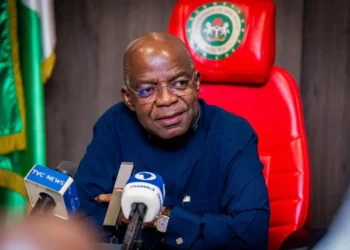
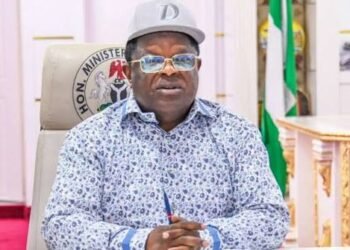
ABUJA, NIGERIA — The iNews Times | The South-East 2027 election is poised for a decisive change in voting behaviour, Minister of Works David Umahi has declared, describing the region’s massive support for Peter Obi in 2023 as an “accident of history” driven by accumulated grievances rather than a permanent political realignment.
Speaking in an exclusive interview with ARISE News published on Friday, the former Ebonyi State governor argued that President Bola Tinubu’s deliberate investments in federal infrastructure and strategic appointments have fundamentally altered the region’s outlook, setting the stage for voters to reward the administration rather than protest against past perceived neglect.
In this report, we examine the key developments, reactions from stakeholders, and the broader implications.
Background of the Story
The South-East delivered one of the most one-sided regional results in the 2023 presidential election, with Peter Obi and the Labour Party sweeping the five states by overwhelming margins. That outcome was widely interpreted as a rejection of the ruling All Progressives Congress https://apc.com.ng and a protest against what many in the region described as long-standing marginalisation in federal appointments, security architecture, and infrastructure allocation under previous administrations.
Umahi, who served two terms as Ebonyi governor before joining the Tinubu cabinet, has consistently positioned himself as a bridge between the South-East and the centre. His elevation to the Ministry of Works placed him at the heart of the federal government’s road and bridge projects, giving him both political capital and a platform to defend the administration’s record in the region.
Key Developments
In the ARISE interview, Umahi framed the 2023 result as an emotional reaction rather than a settled political preference. “In 2023, it was an accident of history,” he said. “It was a demonstration of the anger of the people of South East on how they were treated.”
He maintained that the sense of exclusion that fuelled that anger has been addressed. “We’ve been marginalised in the past, but it’s no longer so.” Pointing to expanded federal road projects and increased representation in the current administration, Umahi insisted that the South-East 2027 election would reflect gratitude rather than grievance.
“If in 2023 they demonstrated their anger, in 2027 they are going to demonstrate their joy on how the President has treated them,” the minister declared. He further noted that serving and former governors, traditional rulers, and other influential voices in the region were increasingly aligning with Tinubu, signalling a broader elite consensus that ordinary voters would find difficult to ignore.
Umahi rejected the idea that supporting the incumbent amounted to a betrayal of either the region or Obi. He argued that South-East political interests should not remain permanently tied to a single candidate and warned that social media attacks on leaders who engage the presidency only weaken the region’s bargaining power.
When pressed on whether Tinubu would defeat Obi in the South-East in 2027, Umahi was emphatic: “Why do you say I believe? That is what is going to happen!”
Reactions from Stakeholders
While the ARISE interview itself did not feature immediate rebuttals, Umahi’s remarks have already sharpened the contest for the region’s political soul. Supporters of the minister view his comments as a realistic assessment of power and delivery. Critics, particularly those still loyal to the 2023 Obi movement, are expected to interpret the statements as an attempt to rewrite the narrative of the last election and to normalise elite accommodation with the centre.
Traditional rulers and serving governors who have publicly engaged the Tinubu administration are likely to welcome Umahi’s defence of pragmatic politics. At the same time, residual Labour Party structures and online mobilisers who still regard the 2023 vote as a moral statement may intensify their criticism of South-East leaders perceived as drifting toward the ruling party.
Implications
Umahi’s intervention carries weight because it comes from inside the federal executive and from a figure with deep roots in the South-East. By framing the 2023 result as temporary anger rather than permanent rejection, he seeks to lower the psychological barrier for voters who may feel conflicted about returning to the APC fold.
Politically, the remarks signal that the ruling party intends to contest the South-East aggressively in 2027 rather than concede it as a Labour or opposition stronghold. Economically, the minister’s emphasis on roads and appointments underscores the administration’s strategy of using visible projects as political currency. Socially, the debate he has reignited touches the sensitive question of how the South-East balances principle, protest, and pragmatic engagement with other parts of Nigeria if it hopes to produce a president in the future.
What Happens Next
Attention will now turn to how other South-East political actors respond. Expect counter-statements from Obi’s network, sharper online mobilisation, and quiet consultations among governors and traditional institutions. The federal government is also likely to accelerate the visibility of ongoing road projects in the region as tangible proof of the “joy” Umahi predicts.
By mid-2027, the true test will be whether infrastructure delivery and elite realignment can overcome the emotional residue of 2023. Umahi has drawn a clear line: the circumstances that produced the last result, he insists, no longer exist.
Conclusion
The South-East 2027 election is no longer a distant prospect; it has become an active political battlefield. Minister David Umahi has placed the region’s voting intention at the centre of national conversation, arguing that Tinubu’s projects and appointments have replaced anger with appreciation. Whether voters ultimately accept that narrative will shape not only the presidential contest but also the South-East’s long-term strategy for influence within the Nigerian federation. The iNews Times will continue to track every development as the 2027 contest gathers pace.