…the Electoral Reform Dialogue comes at a strategic moment.
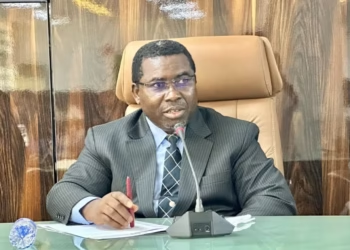
ABUJA, NIGERIA — The iNews Times reports that the upcoming Electoral Reform Dialogue will place Nigeria’s electoral integrity under national scrutiny as the Chairman of the Independent National Electoral Commission (INEC), Prof. Joash Amupitan (SAN), prepares to deliver a keynote address at a high-level stakeholders’ policy meeting scheduled for April 29, 2026.
The event, organised by Abuja-based law firm Law Corridor, will hold at the Abuja Continental Hotel and is expected to bring together political party leaders, civil society organisations, policy experts, and both local and international election observers to examine pressing issues affecting Nigeria’s electoral system ahead of the 2027 general elections.
With less than two years before Nigerians return to the polls, the Electoral Reform Dialogue comes at a strategic moment. Analysts say early conversations on electoral reforms are essential to preventing last-minute legislative amendments and operational disruptions that have historically complicated election planning.
According to the organisers, the policy dialogue aims to foster collaboration among stakeholders across the public and private sectors, with a focus on addressing structural and procedural challenges within the electoral process.
The Managing Partner of Law Corridor, Henry Kelechukwu Eni-Otu, described the timing as critical.
“This year’s Policy Dialogue is so critical considering its proximity to the 2027 general elections. For this reason, the need to address certain issues regarding Nigeria’s electoral process becomes germane,” he said.
He added that stakeholder engagement remains key to strengthening transparency and restoring public confidence.
The Electoral Reform Dialogue is expected to attract prominent legal minds, media figures, and governance experts.
Notable participants include Muyiwa Atoyebi (SAN), Seun Okinbaloye, Bala Maiyaki (SAN), Ahmed Raji (SAN), Patrick Ikwueto (SAN), Alhassan Umar (SAN), Dantele Yusuf, and Bukola Idowu, among others.
The diversity of participants reflects the multi-dimensional nature of electoral reform discussions, which extend beyond election-day logistics to include campaign finance oversight, dispute resolution mechanisms, voter education, technology deployment, and institutional accountability.
INEC’s Role in Strengthening Electoral Credibility
As Nigeria’s electoral umpire, the Independent National Electoral Commission remains central to any meaningful reform conversation.
In recent election cycles, INEC introduced technological innovations such as the Bimodal Voter Accreditation System (BVAS) and the INEC Result Viewing Portal (IReV) to enhance transparency and credibility. While these innovations were widely praised as progressive steps, they also generated debates over technical glitches and implementation challenges.
Observers expect that Prof. Amupitan’s keynote at the Electoral Reform Dialogue will provide clarity on lessons learned from previous elections and outline strategic reforms aimed at strengthening operational efficiency before 2027.
Unlike conventional conferences, the Electoral Reform Dialogue is structured to produce tangible outcomes. Organisers disclosed that a comprehensive policy brief containing recommendations and a reform roadmap will be released after the event and submitted to relevant government ministries and agencies.
This approach is intended to ensure that stakeholder deliberations translate into actionable policy proposals rather than remaining theoretical discussions.
“We believe the engagements among stakeholders within the electoral process will chart a way forward to further guarantee the integrity of the electoral process,” Eni-Otu noted.
Policy briefs from similar engagements in the past have contributed to legislative reviews and administrative adjustments within Nigeria’s democratic institutions.
The organisers recalled that the previous edition of the policy engagement was presided over by the Chairman of the Economic and Financial Crimes Commission, Ola Olukoyede, with discussions focusing on regulatory challenges in the real estate sector.
This year’s Electoral Reform Dialogue, however, shifts attention squarely to Nigeria’s democratic architecture, reflecting growing national interest in ensuring that the 2027 general elections are conducted in a credible and transparent manner.
Nigeria’s democratic journey since 1999 has recorded notable progress, yet recurring issues such as voter apathy, electoral violence, litigation, and logistical bottlenecks continue to test institutional resilience.
Political analysts argue that sustained engagement through platforms like the Electoral Reform Dialogue could help reduce pre-election tensions, promote consensus-building, and strengthen public trust in the electoral process.
With preparations gradually intensifying for 2027, the upcoming dialogue may prove pivotal in shaping conversations around electoral governance, institutional reforms, and technological improvements.
At The iNews Times, we will continue to monitor developments from the Electoral Reform Dialogue and provide in-depth analysis of recommendations that could redefine Nigeria’s electoral framework ahead of the next general elections.