…Atiku’s camp appears to be positioning it as part of the broader narrative shaping the 2027.
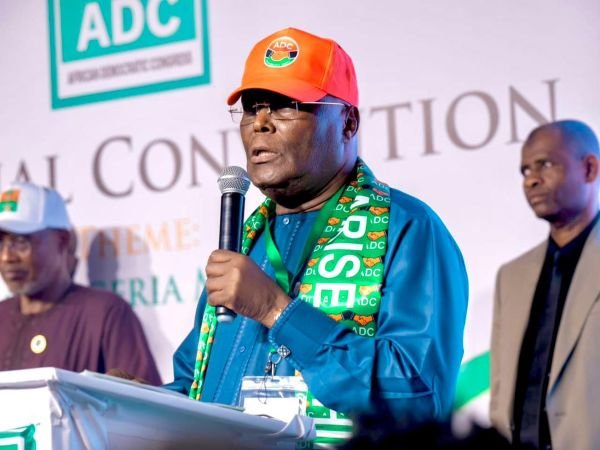
ABUJA, NIGERIA — The iNews Times reports that the 2027 political tension between former Vice President Atiku Abubakar and President Bola Ahmed Tinubu intensified on Thursday, as Atiku questioned Tinubu’s academic history, asking how he could have attended a school “two years before it was established.”
The sharp exchange marks a fresh escalation in what is shaping up to be an early 2027 political rivalry, even as Nigeria navigates pressing economic and governance challenges.
The controversy erupted after President Tinubu reportedly criticized Atiku’s credentials and economic management during his tenure as vice president between 1999 and 2007.
Responding through his spokesperson, Phrank Shaibu, Atiku described the president’s remarks as a “reckless tirade” driven by desperation and historical distortion.
“Atiku Abubakar’s attention has been drawn to the latest reckless tirade by President Bola Ahmed Tinubu a performance that exposes not just desperation, but a troubling pattern of hypocrisy and historical amnesia,” the statement read.
In what appears to be a strategic political counterattack ahead of the 2027 general elections, Atiku raised longstanding questions about Tinubu’s educational background.
Central to the dispute is the claim that Tinubu once attended a school in Lagos before the institution was officially established.
“It is not our fault that the president does not and cannot read, because Bola Tinubu has a history of attending a school in Lagos two years before it was founded,” the statement alleged.
The controversy over Tinubu’s academic records, including debates surrounding his qualification from Chicago State University, has surfaced repeatedly in Nigeria’s political discourse, particularly during the 2023 presidential election litigation.
By reviving the issue, Atiku’s camp appears to be positioning it as part of the broader narrative shaping the 2027 electoral landscape.
Beyond academic credentials, the statement also reopened debates over Nigeria’s privatization programme and economic reforms.
Atiku, who has long advocated market-driven reforms, defended his record during the Obasanjo administration, particularly regarding the privatization of state-owned enterprises.
He reiterated that he supported the privatization of the Nigerian National Petroleum Corporation (NNPC) and the sale of refineries to credible private investors as part of a structured effort to dismantle inefficiency.
The statement referenced documented reform efforts captured in The Accidental Public Servant by Nasir El-Rufai, arguing that the privatization programme during that era was transparent and policy-driven.
According to Atiku’s camp, the current administration’s approach amounts to “privatization without accountability.”
Political analysts believe the renewed exchange signals that the battle lines for 2027 are already being drawn.
Although the next general election remains years away, the rhetoric between both political heavyweights suggests early positioning for what could be another fiercely contested race.
Observers note that public debates over economic reforms, fuel subsidy removal, exchange rate policies, and institutional transparency may dominate political discourse leading into 2027.
The latest confrontation underscores how historical records and reform legacies may play a central role in shaping voter perception.
President Tinubu has consistently defended his administration’s economic decisions, including subsidy removal and foreign exchange unification, as necessary steps to stabilize Nigeria’s economy.
While critics argue that the reforms have increased hardship in the short term, supporters insist they are foundational measures for long-term growth.
The exchange with Atiku now adds a political dimension to ongoing policy debates, further intensifying Nigeria’s evolving political climate.
As Nigeria moves closer to another election cycle, political rhetoric is expected to grow sharper. The renewed spotlight on academic records and privatization history highlights the enduring rivalry between two of Nigeria’s most prominent political figures.
At The iNews Times, we remain committed to delivering balanced, fact-driven reporting as the 2027 political landscape continues to unfold.
With tensions rising and narratives competing for public attention, Nigerians will be watching closely to see how this high-stakes political rivalry develops in the months ahead.