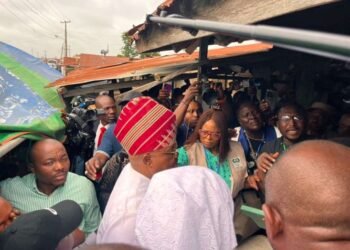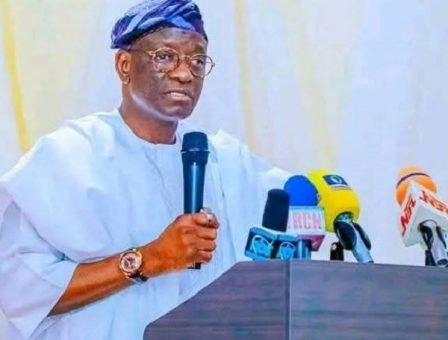
…Al-Makura, Adamu Oppose Early Endorsement as Nasarawa APC Crisis Escalates.
Early endorsement of Senator Ahmed Wadada ignites internal rebellion, zoning debate, and fresh succession battle ahead of 2027 elections.
LAFIA, NIGERIA — The iNews Times | Nasarawa APC Crisis Deepens following Governor Abdullahi Sule’s public endorsement of Senator Ahmed Aliyu Wadada as his preferred successor for the 2027 governorship election, a move that has fractured party unity and triggered open dissent among influential stakeholders.
What was initially projected as a strategic political alignment ahead of the 2027 general elections has instead exposed fault lines within the ruling All Progressives Congress (APC) in Nasarawa State, setting the stage for a potentially bruising primary contest.
In this report, we examine the key developments, reactions from stakeholders, and the broader implications.
Background of the Story
Last Thursday, Governor Sule publicly declared Wadada, who represents Nasarawa West Senatorial District, as his anointed candidate for the 2027 governorship race.
The governor described the senator as the embodiment of the “Muje Maha” philosophy, a governance approach anchored on unity, inclusiveness, and political cohesion, which has defined his administration.
“We have to look for people who have the capacity to win this election. If we are sincere about Muje Maha, then this is the period that Muje Maha is Wadada,” Sule stated during the endorsement.
However, the announcement appears to have been made before the APC released official guidelines for the 2027 primaries, a factor that has fueled accusations of premature endorsement and procedural breach.
Key Developments
The Nasarawa APC crisis took a dramatic turn when former governor and APC strongman, Umaru Tanko Al-Makura, publicly distanced himself from the endorsement.
Al-Makura disclosed that he was neither consulted nor carried along before Wadada was presented at the Presidential Villa to President Bola Ahmed Tinubu.
“I was never consulted. This is an aberration. It is too hasty at a time when the party has not even released guidelines,” he said.
He clarified that while he holds no personal grievance against Wadada, due process and stakeholder engagement must guide the party’s succession plan.
Governor Sule, through his media aide, swiftly rejected claims of imposition.
“This is careful, deliberate leadership, not imposition,” the governor’s camp insisted, arguing that informing the party’s national leader was both strategic and appropriate.
Meanwhile, former Inspector General of Police, Abubakar Adamu, who is also eyeing the APC ticket, has declared that the endorsement does not equate to victory, vowing to contest and defeat Wadada in a transparent primary.
Reactions from Stakeholders
The Majority Caucus of the Nasarawa State House of Assembly, led by Speaker Danladi Jatau, has aligned firmly with the governor’s position.
“We are fully supporting and backing Senator Wadada as Governor Sule’s successor. We remain loyal to the party and the governor’s decision,” the lawmakers declared, urging other aspirants to unite for party stability.
However, dissenting voices have grown louder.
Douglas Otaru, a former Nasarawa APC Publicity Secretary, warned that the governor’s decision could undermine the credibility of the primary process.
“By presenting his friend as the preferred candidate, the governor automatically disqualifies himself from overseeing a fair primary. If he values his integrity, he should step aside,” Otaru argued.
Political analyst Charles Agum questioned Wadada’s preparedness for executive leadership, criticizing his recent media engagement.
“Instead of focusing on solutions, he seemed more interested in attacking fellow aspirants. That exposed a worrying lack of readiness,” Agum noted.
Implications
Beyond internal politics, the Nasarawa APC crisis has revived long-standing zoning and power rotation debates in the state.
Since 1999, the governorship seat has rotated among the three senatorial districts. Nasarawa South has already produced leaders for a combined 12 years, including Umaru Tanko Al-Makura and the late Aliyu Akwe Doma.
Governor Sule insists equity demands zoning to Nasarawa West, Wadada’s district.
However, a coalition of religious, political, and indigenous stakeholders has pushed back, arguing that equity should be assessed at the federal constituency level, not just senatorial zones.
In a joint statement led by Alhaji Ali Baba Nasarawa and Mallam Abdulrahman Sani Toto, the group insisted that the Nasarawa/Toto Federal Constituency remains the only bloc yet to produce a governor.
“It is unjustifiable to return the governorship ticket to the same federal constituency. Equity demands inclusion,” the coalition said.
The group warned that any perceived imposition could trigger electoral backlash and weaken APC’s dominance in the state.
What Happens Next
As the 2027 elections approach, party leaders face mounting pressure to manage the growing tensions within the APC.
The release of official primary guidelines will likely determine whether the endorsement solidifies into consensus or escalates into open factional warfare.
Observers say the party must urgently convene reconciliation meetings to prevent defections, parallel structures, or internal sabotage that could cost the APC its grip on Nasarawa State.
Conclusion
The unfolding Nasarawa APC crisis underscores the delicate balance between political succession planning and democratic procedure.
While endorsements remain a common feature of Nigerian politics, the manner and timing often determine whether they consolidate unity or fracture alliances.
As 2027 draws closer, how the APC navigates this internal storm may ultimately decide not just its governorship ticket, but its political future in Nasarawa State.
For continuing in-depth political analysis and exclusive election insights, stay with The iNews Times.