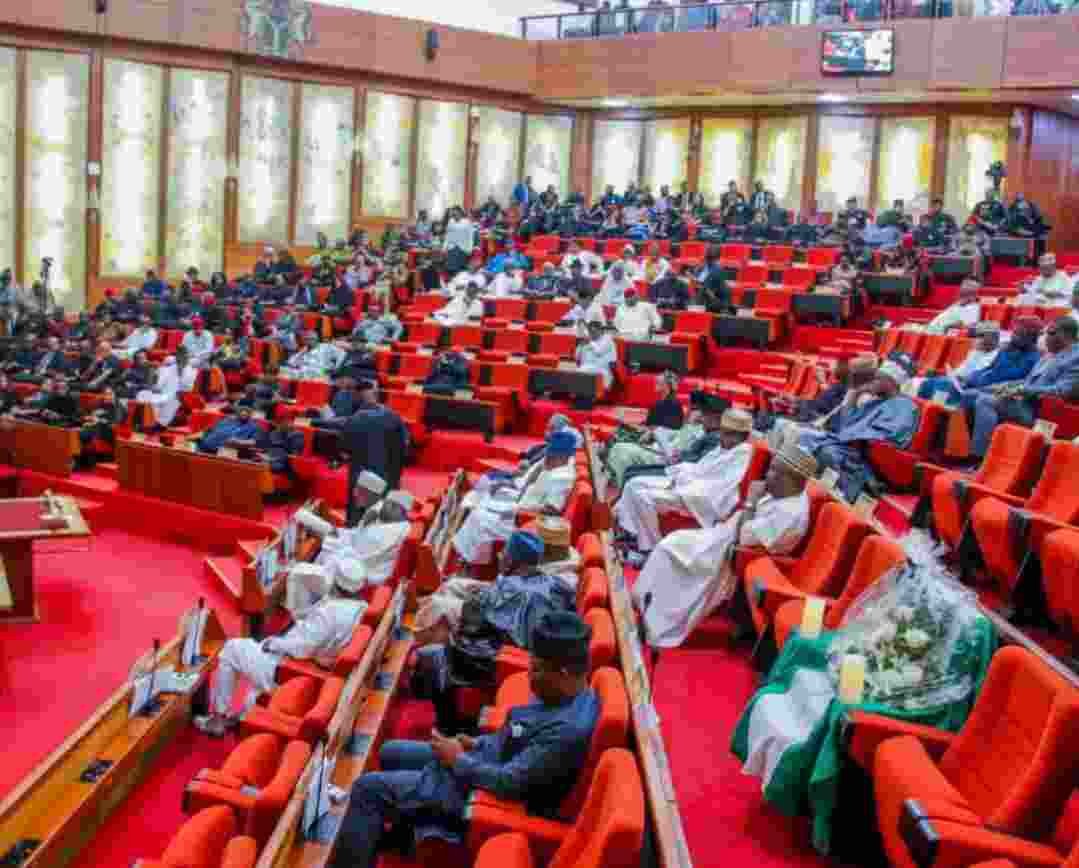
…following deliberations, the Senate unanimously approved the bill for further legislative consideration.
ABUJA, NIGERIA- The iNews Times| The Senate on Tuesday took a major step toward regulating Nigeria’s growing digital asset sector by advancing a bill aimed at creating a comprehensive legal framework for virtual assets and related service providers.
The proposed legislation, sponsored by Deputy Senate President Barau Jibrin, passed its second reading during plenary after receiving unanimous support from lawmakers.
Presenting the bill on behalf of the sponsor, Senate Chief Whip Mohammed Tahir Monguno said the measure seeks to establish clear regulations for virtual assets, including cryptocurrencies and blockchain-based financial products, as well as businesses operating within the sector.
According to Monguno, Nigeria ranks among the leading countries in the adoption and use of virtual assets, yet the industry continues to operate without a dedicated legal framework.
He noted that while innovation in digital finance has expanded rapidly, regulatory oversight has not kept pace, creating the need for legislation that protects consumers, promotes transparency, and strengthens compliance within the financial system.
Following deliberations, the Senate unanimously approved the bill for further legislative consideration.
In a related development, another proposal sponsored by Barau Jibrin, the Nigeria Communications Commission (Amendment) Bill, 2026 successfully passed its first reading.
The Senate also turned its attention to the country’s textile sector, adopting a motion that called on the Federal Government to urgently implement measures aimed at reviving the once-thriving industry.
The motion, sponsored by Senator Sunday Marshall Katung and co-sponsored by Barau Jibrin and other lawmakers, highlighted the economic consequences of the industry’s decline.
Contributing to the debate, Barau said the collapse of the textile sector had resulted in widespread unemployment and the loss of livelihoods for thousands of Nigerians.
He expressed concern over Nigeria’s heavy dependence on imported textile products, arguing that the situation continues to create employment opportunities abroad while limiting job creation and industrial growth within the country.
Lawmakers maintained that revitalising the textile industry would boost local manufacturing, generate employment, and contribute significantly to economic development.