Senate Standing Rules Reversal Reopens Race for 11th National Assembly Leadership.
Fresh twist follows clash between Akpabio and Oshiomhole as eligibility barriers for principal offices are lifted.
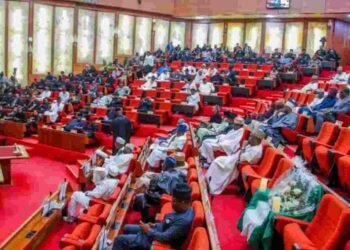
ABUJA, NIGERIA – The iNews Times | Senate Standing Rules Reversal has reshaped the political calculations within the Red Chamber https://nass.gov.ng after lawmakers voted to undo a controversial amendment that had restricted eligibility for key leadership positions in the 11th National Assembly.
The decision, taken during plenary, effectively reopens the contest for principal offices such as Senate President and other strategic leadership roles, widening the field beyond ranking senators who had previously met the now-scrapped criteria.
In this report, we examine the key developments, reactions from stakeholders, and the broader implications.
Background of the Story
The controversy traces back to an earlier amendment of the Senate’s Standing Orders, which limited eligibility for principal offices strictly to ranking senators. Under that framework, only lawmakers who had served at least two terms with one being the immediate past term could contest for top positions.
The amendment was widely interpreted as a move to consolidate leadership within a select group of experienced legislators, effectively shutting out first-term senators from vying for the Senate presidency and other influential offices.
However, the provision sparked discontent among some lawmakers who argued that it curtailed democratic competition within the chamber.
Key Developments
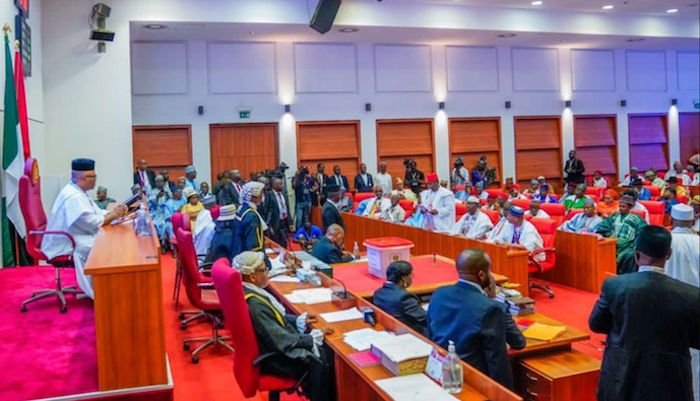
The reversal followed a motion sponsored by Senate Leader Opeyemi Bamidele, which was adopted during plenary under the supervision of Deputy Senate President Jubril Barau.
With the adoption of the motion, the restrictive eligibility clause was removed, restoring broader participation rights for senators regardless of tenure status.
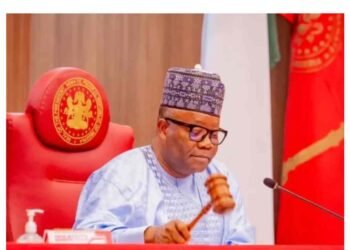
The development comes on the heels of a tense exchange between Senate President Godswill Akpabio and Senator Adams Oshiomhole of APC, Edo North, over the interpretation of the amended rules.
The disruption began when Akpabio commenced reading the Votes and Proceedings of Tuesday’s sitting. Oshiomhole raised a point of order, but the Senate President ruled him out of order, citing the 2023 Standing Rules, which prohibit such interruptions at that stage of proceedings.
The disagreement highlighted deeper tensions surrounding the application and legitimacy of the amended rules.
Reactions from Stakeholders
Although there has been no formal statement from Senate leadership beyond the plenary proceedings, sources within the National Assembly told The iNews Times that the reversal was aimed at “protecting the integrity of internal democracy.”
A senior senator, who spoke on condition of anonymity, described the move as “a necessary correction.”
“The Senate must not be seen as restricting participation unfairly. Experience is valuable, but democracy also demands openness,” the lawmaker said.
Political observers note that the reversal may alter existing alliances within the chamber as new aspirants reconsider their prospects.
Implications
The Senate Standing Rules Reversal could significantly reshape the power dynamics within the 11th National Assembly.
By broadening eligibility criteria, the Senate has reopened political maneuvering for leadership roles, potentially triggering fresh alignments among lawmakers and political blocs.
The move may also have implications for party strategies, particularly within the ruling APC and opposition parties, as lawmakers reassess their chances of securing influential positions.
Analysts argue that the reversal reinforces the principle that parliamentary rules must balance institutional stability with democratic inclusivity.
What Happens Next
With the eligibility restrictions lifted, senators previously barred from contesting principal offices can now formally position themselves for leadership roles.
Attention is likely to shift to behind-the-scenes negotiations and consultations among lawmakers as potential contenders test their support base.
Observers expect intensified lobbying in the coming days, especially as the chamber seeks to maintain unity amid evolving internal dynamics.
Conclusion
The Senate Standing Rules Reversal marks a decisive moment in the evolving politics of the 11th National Assembly.
By scrapping the restrictive amendment, the Senate has not only reignited the leadership race but also reaffirmed the central role of inclusivity in parliamentary democracy.
As events unfold, The iNews Times will continue to provide authoritative updates on the shifting power equations within Nigeria’s highest legislative chamber.