Nebo, Shekarau call for unity among University of Nigeria Alumni Association members in Delta.
Former ministers under Jonathan administration stress purpose over personality as University of Nigeria Alumni Association seeks stronger national cohesion.
ASABA, NIGERIA — The iNews Times | Former Power Minister Prof Chinedu Ositadinma Nebo and former Education Minister Senator Ibrahim Shekarau have renewed the call for alumni associations unity across Nigeria, insisting that shared institutional identity must override personal differences.
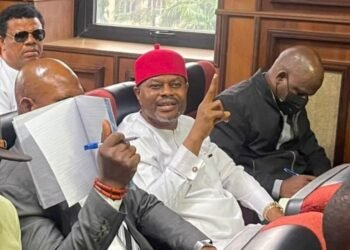
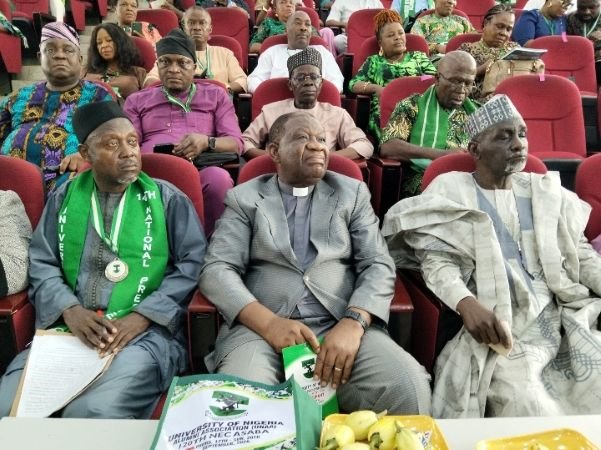
The appeal came during the 120th National Executive Council meeting of the University of Nigeria Alumni Association held at Dennis Osadebe University, Anwai, and hosted by the Asaba Branch under Dr Joy Ugomma Ogu. Alumni from various states and the Federal Capital Territory gathered under the theme “Reconciliation, unity and renewed commitment: Building a stronger University of Nigeria Alumni Association together.”
In this report, we examine the key developments, reactions from stakeholders, and the broader implications.
Background of the Story
The University of Nigeria, Nsukka, https://www.unn.edu.ng founded in 1960 at the dawn of national independence, was conceived as a symbol of education, self-reliance and human dignity. Its graduates have since occupied influential positions in government, business, medicine, law, engineering, the church and diplomacy.
Over the decades, however, alumni bodies across Nigerian universities have occasionally struggled with internal disagreements, leadership contests and regional tensions. The UNAA meeting in Delta State provided an opportunity for senior figures to address these challenges directly and position the association as a model of national cohesion.
Prof Nebo, a former Vice Chancellor of UNN and pioneer Vice Chancellor of the Federal University Oye-Ekiti, has long been regarded as a moral voice within the alumni community. Senator Shekarau, who received an honorary doctorate from UNN in 2009 while serving as Kano State governor, has maintained close ties with the association, culminating in the election of his former aide, Dr Kani Sanusi, as the 14th National President.
Key Developments
In his keynote address, Prof Nebo described UNN as “a great idea that must continue to live” and urged members to treat the alumni body as a movement rather than a mere association. He warned that individual differences must never destroy the common identity of the alma mater.
“Established in 1960 at the dawn of Nigeria’s independence, UNN embodied the vision of a nation that believed in education, knowledge, innovation, self-reliance and human dignity,” he said. “We moved from being students to becoming custodians, ambassadors, mentors, benefactors and advocates of the institution.”
Nebo called for deliberate mentoring across generations, stating that the wisdom of experience must meet the creativity of youth. He charged the gathering to place purpose above personality, institution above individual interest, and the future above the quarrels of the past.
Senator Shekarau, who left the campaign trail for the APC senatorial ticket in Kano Central to attend the meeting, reinforced the message. He recalled his long association with Nebo dating back to their service in President Goodluck Jonathan’s Federal Executive Council.
“Unity does not necessarily mean uniformity,” Shekarau told the delegates. “We may not have uniformity in our various aspirations but must ensure that we live peacefully in one country called Nigeria. So be mindful of the peace and unity of Nigeria.”
Delta State Governor Sheriff Oborevwori, represented by his Chief Strategist Dr Festus Okunbor, formally declared the event open. He praised UNN alumni for their contributions to the development of Delta State and pledged continued support for the association’s activities within the state.
National President Dr Kani Sanusi reaffirmed UNAA’s commitment to the growth of the university, listing unity, institutional stability and a strong branch network as the priorities of his tenure. He also congratulated his predecessor, Lady Dr Doris Okoro, on her recent appointment as Provost of the Federal College of Education (Technical), Omoku, Rivers State.
Grand Patron and Asagba of Asaba, HRM Prof Epiphany Chigbogu Azinge, SAN, charged members to live out the founding vision of the university. He observed that the goal of restoring the dignity of man and promoting the greatest happiness of the greatest number remains largely unrealised in a country still grappling with hunger and poverty amid plenty.
Reactions from Stakeholders
Mr Chukwuemeka Dunamis, Secretary of the University of Benin Alumni Association, Asaba Branch, described UNAA as the most detribalised alumni body in the country. He pointed to the composition of the national executive, with a National President from the North and a Deputy from the East, as evidence of deliberate inclusiveness.
Awards were presented to several distinguished alumni, including Marcellus Ifeanyi Attama, Prof Josephine Anene-Okeakwa, Rainoil Group Executive Chairman Gabriel Ifeanyi Ogbechie, DESTMA Director-General Dr Benjamin Okiemute, and others. A posthumous award of excellence was conferred on the late Dr Maryam Ndidi Babangida in recognition of her contributions to Asaba’s development, women empowerment and humanitarian service.
The meeting was chaired by Obi (Lt.) Chukwuemekalim Onyemanaogeme Ajufoh.
Implications
The renewed emphasis on alumni associations unity carries significance beyond the University of Nigeria. At a time when Nigerian public life is frequently fractured by ethnic, regional and political fault lines, elite networks such as university alumni associations remain among the few platforms capable of fostering cross-regional trust.
For the University of Nigeria itself, a cohesive alumni body translates into stronger advocacy, improved fundraising capacity and more effective mentoring of current students. The presence of high-profile figures from both the North and South at the Delta meeting signals an intentional effort to model the national integration the institution has always claimed to represent.
Politically, Senator Shekarau’s decision to prioritise the alumni gathering over campaign activities underscores the continuing soft power of university networks in Nigerian elite circles.
What Happens Next
Dr Kani Sanusi’s leadership is expected to intensify efforts at branch consolidation and conflict resolution before the end of his tenure. Further national executive meetings and regional outreach programmes are likely to follow as the association seeks to convert the rhetoric of reconciliation into measurable organisational stability.
Observers will also watch whether the spirit of inclusiveness demonstrated in Asaba influences other major alumni associations facing internal strains.
Conclusion
The 120th NEC meeting of the University of Nigeria Alumni Association has placed alumni associations unity firmly back on the national conversation. Through the voices of Prof Nebo, Senator Shekarau and other stakeholders, the gathering reminded Nigerians that institutions survive only when their products place the common good above personal ambition. As The iNews Times continues to track developments in Nigeria’s higher education community, the test for UNAA will be whether the commitments made in Delta translate into lasting cohesion and stronger support for the university that produced them.