Sokoto Education Intervention: Can €1m Rescue a Generation at Risk?
24-month initiative targets over 20,000 displaced and vulnerable children amid insecurity in North-West Nigeria.
SOKOTO, NIGERIA – The iNews Times | Sokoto Education Intervention has received a major boost as the United Nations Children’s Fund UNICEF https://www.unicef.org and the European Union unveiled a €1 million programme aimed at restoring access to learning for thousands of conflict-affected children across the state.
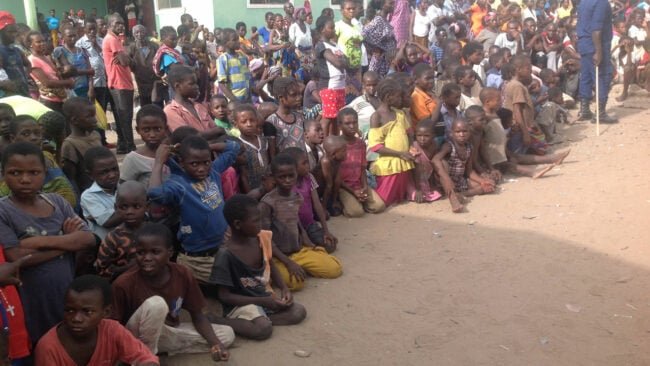
The 24-month initiative, funded through the European Union’s humanitarian arm, European Civil Protection and Humanitarian Aid Operations (ECHO), is expected to reach more than 20,000 children aged five to 17 living in internally displaced persons camps and host communities.
In this report, we examine the key developments, reactions from stakeholders, and the broader implications.
Background of the Story
Sokoto State, like several parts of Nigeria’s North-West, has grappled with persistent insecurity in recent years.
Banditry, village attacks, and kidnappings have displaced families, disrupted livelihoods, and severely undermined access to essential services, particularly education and healthcare.
The humanitarian crisis has compounded long-standing educational challenges in the region, where poverty, limited infrastructure, and socio-cultural barriers have already contributed to high numbers of out-of-school children.
Education stakeholders warn that prolonged school closures and displacement not only interrupt academic progress but also expose children to child labour, early marriage, and recruitment into criminal networks.
Against this backdrop, the Sokoto Education Intervention is being positioned as both an emergency response and a resilience-building strategy.
Key Developments
According to officials, the programme will focus on reintegrating out-of-school children into formal classrooms while providing remedial learning support for those already enrolled but academically behind due to disruption.
It will also upgrade water, sanitation, and hygiene facilities in selected schools to create safer and more conducive learning environments.
Psychosocial support services will form a core component of the initiative, recognising the trauma experienced by children exposed to violence and displacement.
Teachers will undergo specialised training in crisis-sensitive instructional methods designed to help them identify and respond to mental health challenges among pupils.
The intervention will further establish child-friendly spaces that offer safe environments for learning, play, and emotional recovery.
Community-led enrolment campaigns are expected to identify vulnerable children and facilitate their return to school, while coordination mechanisms for education in emergencies will be strengthened at both state and local government levels.
Reactions from Stakeholders
Head of ECHO in Nigeria, Alexandre Castellano, described the initiative as critical to protecting the future of children impacted by conflict.
“No child should have their future determined by conflict. When learning stops, the consequences can last a lifetime. Through this partnership, the European Union and UNICEF will help communities protect their children, enable them to learn in safe spaces, and reclaim their right to education,” he said.
UNICEF representative Wafaa Saeed emphasised the urgency of the Sokoto Education Intervention, noting that insecurity continues to threaten learning opportunities for thousands of children.
“As insecurity threatens learning opportunities for thousands of children in Sokoto State, this initiative will ensure that affected children can continue their education and build the life skills they need for a brighter future,” she stated.
Local education advocates welcomed the programme, describing it as timely but cautioning that sustained investment will be required to address the scale of disruption in the region.
A school administrator in Sokoto told The iNews Times that restoring learning must go hand-in-hand with improving school safety to prevent further withdrawals.
Implications
The Sokoto Education Intervention carries significant humanitarian and socio-economic implications.
Educational disruption has long-term consequences, including reduced earning potential, increased poverty cycles, and heightened vulnerability to exploitation.
By prioritising both access and quality, the initiative seeks to prevent a “lost generation” scenario in which prolonged instability erodes human capital development.
Improved WASH facilities are also expected to enhance school attendance, particularly for girls, who often face additional barriers linked to inadequate sanitation infrastructure.
From a governance perspective, the programme reflects growing international recognition that education in emergencies is not optional but central to stabilisation efforts.
What Happens Next
Implementation will roll out over the next two years, with phased activities across IDP camps and host communities.
Monitoring and evaluation frameworks are expected to track enrolment rates, retention, learning outcomes, and psychosocial recovery indicators.
Development partners say the success of the Sokoto Education Intervention will depend on close collaboration with state authorities, community leaders, and civil society groups.
If effectively executed, the programme could serve as a model for similar education-in-emergency responses across Nigeria’s conflict-affected regions.
Conclusion
As insecurity continues to test the resilience of communities in North-West Nigeria, the Sokoto Education Intervention offers a lifeline to thousands of vulnerable children.
By combining reintegration, psychosocial care, and infrastructure support, UNICEF and the European Union aim not only to return children to classrooms but to restore hope and stability.
In a region where conflict has too often dictated life trajectories, the true measure of success will be whether this intervention secures uninterrupted learning and lasting opportunity for the next generation.