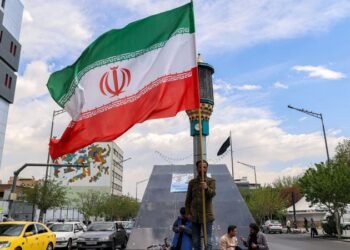
…the Strait of Hormuz Crisis has already sent ripples across global markets.
TEHRAN, IRAN — The iNews Times reports that the Strait of Hormuz Crisis intensified on Thursday after Iran reaffirmed its refusal to reopen the vital waterway while a United States naval blockade remains in place, even as a fragile ceasefire was extended to allow further diplomatic engagement.
The crisis escalated after Iran announced the seizure of two vessels attempting to navigate the strategic strait, one of the world’s most critical maritime chokepoints through which roughly one-fifth of global oil supply passes daily. The development comes amid heightened military and diplomatic tensions between Tehran and Washington.
The US Central Command (CENTCOM) said late Wednesday that it had directed 31 vessels to turn around or return to port as part of what it described as a blockade against Iran. The move is seen as part of Washington’s strategy to increase economic pressure on Tehran without formally resuming full-scale hostilities.
Iranian authorities responded firmly, declaring that reopening the Strait of Hormuz would be impossible under what they described as a violation of the ceasefire.
“A complete ceasefire only has meaning if it is not violated through a naval blockade,” said Iranian Parliament Speaker Mohammad Bagher Ghalibaf, who led Tehran’s delegation during the first round of talks in Islamabad. “Reopening the Strait of Hormuz is not possible amid a blatant violation of the ceasefire.”
The Strait of Hormuz Crisis has already sent ripples across global markets. Oil prices surged sharply before easing slightly in volatile trading. Benchmark US crude, West Texas Intermediate (WTI), climbed more than four percent to $96.73 per barrel, while Brent North Sea crude rose 3.62 percent to $105.63 before retreating minutes later. Analysts say the price swings reflect market anxiety over supply disruptions should the standoff escalate further.
US President Donald Trump had earlier indicated he would maintain the truce temporarily to allow space for Pakistani-mediated peace negotiations. Trump told the New York Post that discussions could resume in Pakistan within days, although Iran has not confirmed participation. Vice President JD Vance reportedly put his planned travel to Islamabad on hold.
While Tehran welcomed Pakistan’s mediation efforts, it refrained from formally endorsing Trump’s announcement. Tensions remain high, with both sides accusing each other of violating ceasefire terms.
The Strait of Hormuz Crisis took another dramatic turn when Iran’s elite Islamic Revolutionary Guard Corps (IRGC) confirmed it had intercepted and redirected two ships in the strait. In a statement, the Guards identified the vessels as the Panama-flagged container ship MSC Francesca and the Liberia-flagged Epaminondas.
Panama’s foreign ministry condemned the seizure of MSC Francesca as a serious attack on maritime security and an unnecessary escalation. Maritime security monitors in the United Kingdom also reported incidents involving commercial vessels encountering Iranian gunboats in the narrow waterway. According to UKMTO, a container ship reported being fired upon approximately 15 nautical miles northeast of Oman, sustaining bridge damage but no casualties.
Under orders from Trump, the US Navy has sought to prevent vessels from heading to or departing from Iranian ports. The US Defense Department confirmed earlier that American forces had intercepted and boarded a stateless sanctioned vessel allegedly linked to Iranian activity.
In a parallel development, the Pentagon announced that Secretary of the Navy John Phelan would leave his position immediately, though no official reason was provided. The sudden departure adds to a series of high-level changes within the US defense leadership.
Iran has stated that vessels must now seek permission to enter or exit the Gulf through the strait, reversing earlier assurances of free passage during the ceasefire. Officials in Tehran argue that the US blockade undermines the spirit of the truce and justifies Iran’s defensive posture.
Beyond the Strait of Hormuz Crisis, regional tensions remain volatile. Following the ceasefire with Iran, the United States helped broker a truce between Israel and Lebanon, including the Iranian-backed Hezbollah movement. Despite the declared ceasefire, Israeli strikes reportedly killed five people on Wednesday, according to Lebanese media.
French President Emmanuel Macron confirmed that a second French soldier wounded during an ambush against UN peacekeepers in Lebanon had died. The attack, blamed on Hezbollah though denied by the group, further complicates diplomatic efforts.
Israel and Lebanon are scheduled to hold a second round of talks in Washington, with Lebanon expected to request a one-month extension of the ceasefire and seek commitments to halt Israeli bombardment in contested areas. Lebanese authorities say Israeli attacks have killed more than 2,450 people since the conflict began.
As diplomatic negotiations continue, the Strait of Hormuz Crisis remains a central flashpoint with global economic implications. The strategic waterway’s stability is vital not only to Gulf nations but also to oil-dependent economies worldwide.
The iNews Times will continue to monitor the Strait of Hormuz Crisis, global oil market reactions, and diplomatic developments shaping the fragile ceasefire in the Middle East.