…NYSC Member Killed in Abuja: What Really Happened Inside That Room?.
Grief and controversy trail Guards Brigade operation as eyewitnesses dispute Army’s crossfire claim.
ABUJA, NIGERIA – The iNews Times | NYSC Member Killed in Abuja has sparked outrage and grief after the family of Abdulsamad Jamiu alleged that military operatives admitted his death was a mistake during a late-night operation in Shagari Estate, Dei-Dei.
Sani Jimoh, father of the deceased member of the National Youth Service Corps NYSC https://nysc.gov.ng, said soldiers from the Guards Brigade Quick Response Force told him his son’s killing was an error while pursuing suspected robbers. The tragedy occurred in the early hours of Saturday, April 25, 2026, while Jamiu was at home.
In this report, we examine the key developments, reactions from stakeholders, and the broader implications.
Background of the Story
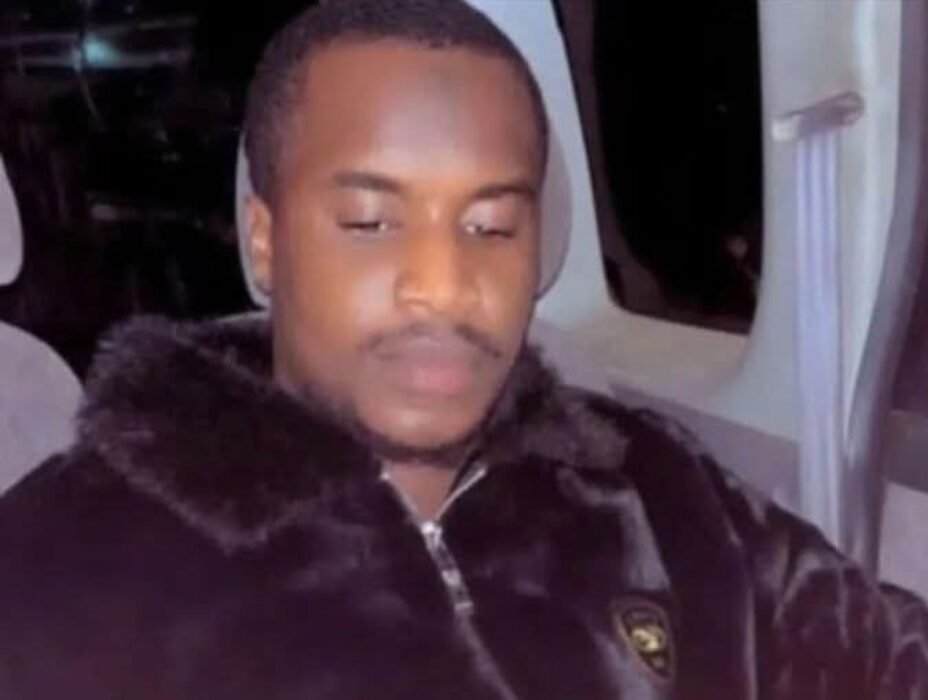
Abdulsamad Jamiu was a serving Corps member deployed to Nasarawa State before the fatal incident in Abuja. According to his father, he and his wife were in Kogi State attending his mother’s funeral when their daughter called around 2 a.m. with distressing news that soldiers had invaded their home.
The military, in an earlier statement issued by the Guards Brigade Headquarters, maintained that troops responded to a distress call from residents reportedly under attack by armed robbers. The Army claimed that upon arrival, its personnel came under gunfire from fleeing suspects, leading to a “brief but intense exchange” during which Jamiu was allegedly caught in crossfire.
However, the family’s account sharply contradicts this version.
Key Developments
Speaking to reporters during a visit to the family residence in Dei-Dei, Jimoh disclosed that military personnel explained they were chasing a thief who they believed had jumped into his compound after noticing altered barbed wire.
“They said they were pursuing a thief but couldn’t see him,” Jimoh recounted. “They went through the back, saw the barbed wire was altered, and assumed someone had entered my compound.”
According to him, the soldiers said they found the main door seemingly unlocked and attempted to force open Jamiu’s bedroom door. He questioned how a pursuit operation escalated into a fatal shooting inside a private room.
“When I asked how this turned into my son being killed, they told me, ‘Oga, calm down, it was a mistake,’” he said.
Jimoh also revealed that the Divisional Police Officer of the Dei-Dei Police Division described the incident as an unfortunate and careless error. The police reportedly demanded a written statement and an undertaking before releasing Jamiu’s body for burial.
The circumstances surrounding the operation have raised fresh concerns over rules of engagement and the conduct of military personnel in civilian neighbourhoods.
Reactions from Stakeholders
Family members have rejected the Army’s crossfire narrative, insisting that physical evidence at the scene contradicts claims of an exchange of gunfire.
Jamiu’s sister, Farida, who said she witnessed parts of the incident, alleged that soldiers dragged her outside after gunshots rang out.
“I pleaded with them not to harm me,” she said. “They showed me the barbed wire and a broken window and asked if it was like that before. I said yes.”
Farida said she initially believed the soldiers would inform her that her brother had escaped. Instead, she claimed she discovered him lying in a pool of blood after his room was forced open.
“I saw that part of his brain was on the floor beside him,” she said. “I was screaming, and one of the soldiers threatened me and told me to keep quiet.”
She further alleged that soldiers called local vigilantes to clean bloodstains inside the house and buried part of her brother’s remains nearby.
Jamiu’s mother, Habiba Abubakar, who had travelled to Okene before the incident, said she received the devastating news from a neighbour around 2:30 a.m.
“Maybe he woke up from sleep to check who was banging on the door, and they shot him,” she said, adding that she observed bullet holes on the door.
A close friend of the deceased, Yusuf Enesi, described him as peaceful and sociable. He said they had spent Friday evening together at a relaxation centre where Jamiu co-managed a game hub.
“He played tennis, chess and snooker that night,” Enesi said. “His last game was tennis. Hours later, I got a call that he had been shot in his room.”
Implications
The NYSC Member Killed in Abuja incident has intensified scrutiny of military operations in residential areas, particularly the deployment of rapid response units in civilian communities.
Security experts argue that urban pursuit operations require strict adherence to rules of engagement, especially when entering private homes. Any deviation risks not only tragic loss of innocent lives but also erosion of public trust.
The case also revives longstanding debates about accountability mechanisms within Nigeria’s security architecture. Allegations of evidence tampering, if proven, could further inflame public anger and deepen mistrust between citizens and security agencies.
Beyond the immediate family’s grief, the killing of a serving Corps member touches a sensitive national nerve. The NYSC scheme symbolizes national unity and youth development, and incidents involving corps members often trigger nationwide reactions.
What Happens Next
At the time of filing this report, there has been no indication of an independent probe beyond the military’s statement.
Legal analysts say the family may demand a judicial inquiry or civil action, depending on the outcome of any internal military investigation.
Civil society groups are also expected to weigh in, particularly on allegations of forced entry, excessive force, and post-incident cleanup efforts.
The iNews Times will continue to monitor developments and provide verified updates as more details emerge.
Conclusion
The NYSC Member Killed in Abuja tragedy has left a family shattered and a community questioning the conduct of those sworn to protect them. While the military maintains that the operation targeted armed robbers, the family’s claims of an admitted mistake and alleged cover-up demand thorough, transparent investigation.
For many Nigerians, this case is not just about one life lost. It is about accountability, trust, and the sanctity of the home in a nation grappling with insecurity.
As the dust settles in Shagari Estate, one question lingers: how did a young corps member, asleep in his room, become the fatal casualty of a security operation?
The iNews Times remains committed to uncovering the truth.